-
There's a reason (or several) for their being no root password. You have to understand the original target audience of knoppix to understand why there is no root password by default. Part of the original target audience for knoppix, if I'm correct, was for recoveries, and as a utilities distro, among others. And to scratch Klaus's itch. And it is important for some that the distro remain without a root password, for various reasons. I won't get into all of them. That can be discussed in another area of the forums, if it hasn't been already. One more obvious one is that because of the way knoppix works, a password is useless if ANYONE has physical access to your computer. If they have physical access, they have root access. When you can understand why this is true (any console automatically logs in as root, any shell opened, knoppix user can su without a password even after one is set), then you will have a better understanding of how knoppix works, and why a password for root is useless locally.
This is what you need to understand:
1. There is no password by default.
2. Some applications require a password to work, such as kusers, the screensaver, and others. One other one that you seem to have discovered.
3. In order to use applications that require a root password, you must set one. This is how:
a. If you are logged into runlevel 5 (you have kde running in front of you), open a shell by clicking on the picture of the monitor on the toolbar (which is the "kicker" process btw), and when you hover over it with your mouse pointer, it says "Terminal-Emulation". Click on it once, and select, "shell", and click on that. A shell will open, that gives you a command prompt that says, " knoppix@ttyp2[knoppix]$" or something similar. When you get this prompt, type "su" without the quotes. Hit enter.
b. You will have, "root@ttyp2[knoppix]#" without the quotes. You are now logged in as root. You will be setting the root password, and then exiting root, and continuing your work as knoppix, or as other users you have created, not root. If you stay logged in as root unnecessarily, that is how damage can be done, and how you can make your system insecure.
c. type: "passwd" without the quotes. You will immediately get this:
Enter new UNIX password:
d. Do what it says. Type in your password. You will immediately get this:
Retype new UNIX password:
e. Do what it says. Retype your password. If they don't match, you will get this:
Sorry, passwords do not match
passwd: Authentication information cannot be recovered
If they do match, you will get this:
passwd: password updated successfully
root@ttyp2[knoppix]#
f. Then type "exit" (without the quotes), and hit enter. You will get this:
knoppix@ttyp2[knoppix]$
g. Congratulations. You have successfully set a password for root. You can now use the application you were using, as well as applications such as the gui user tool, kusers to add users, change groups, etc.
You should be able to do the same for knoppix, and you should, so that you can easily stop the screensaver or whatever else. If you don't have a password for knoppix, and the screensaver is activated by some mysterious person, what you do then is use CTRL-ALT F2, F3, or F4 to switch to a console (same as runlevel 3), where you will be at a command prompt, and you will be logged in as root. You can do one of two things at this point. You can either use "top" to find the process number for the screensaver, and kill it while running top, or stop top and type, "kill -9 processnumber" substituting the actual process number for "processnumber" (kill -9 2202, if 2202 is the process number), or instead of using top, you can type, "ps aux | less" and use your arrow keys to go up/down/left/right to see which process number is the correct one to kill for the screensaver.
An alternate method is to switch to one of the consoles, F2, F3, F4, where you will be logged in as root, and su into knoppix, by typing "su knoppix", and you will then be logged in as knoppix instead of root, and set a password. When this is done, you return to your X session (kde), by typing simultaneously, CTRL-ALT-F5, which puts you back at the screensaver, where you can enter the new password you just set.
If you understand the last paragraph, it should be obvious why a password is useless locally. Anyone can type CTRL-ALT-F2, get a console, and type "passwd" and set a NEW password, which gives them access to the entire system, because they have root. Why isn't this a big deal? Because anyone that has local access can get access to your system using other methods (install their own hard drive, use your hard drive as secondary, get root, access, reboot from a knoppix cd without scanning for the configuration file, copying and pasting known password from another system into the correct configuration file in your system (this is true of most other distros as well), etc.
Once you have local access to a computer, its trivial in most circumstances to get access to everything. If security is a major concern, you lock everything up, use an encrypted swap partition and an encyrpted data partition, use the security enhanced linux version, leave a thoroughly checked out guard at the premises, leave another guard to watch the first guard, leave a family member to watch the 2nd guard, make sure it isn't a spouse that knows you are cheating, buy a shredder, install a fireplace/incinerator, install cameras, and so on.
Similar Threads
-
By SurfThaNet in forum General Support
Replies: 2
Last Post: 09-24-2004, 03:54 PM
-
By CyberShadow in forum General Support
Replies: 1
Last Post: 04-05-2004, 06:49 AM
-
By blaxe in forum General Support
Replies: 5
Last Post: 03-14-2004, 04:00 PM
-
By reubensant in forum General Support
Replies: 2
Last Post: 08-10-2003, 01:36 PM
-
By DavidTempler in forum General Support
Replies: 5
Last Post: 05-08-2003, 08:14 PM
 Posting Permissions
- You may not post new threads
- You may not post replies
- You may not post attachments
- You may not edit your posts
-
Forum Rules

GIGABYTE A520M DS3H AC AMD AM4 Motherboard mATX
$59.99
Intel H310 LGA1151 8-9th Gen DDR4 M.2 NVMe mATX Motherboard IO Shield Battery
$54.99
ASUS ROG STRIX X870E-E GAMING WIFI
$289.99
Intel H81 Motherboard M.2 NVMe LGA 1150 mATX w/ IO Shield (Random Slot Color)
$29.90
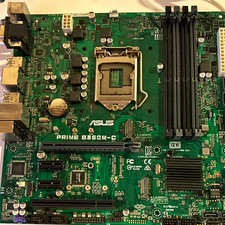
ASUS PRIME B360M-C MicroATX Intel LGA1151 DDR4 HDMI VGA USB RJ-45 Audio
$34.99
GIGABYTE B365 HD3 LGA1151 Intel 9th Gen motherboard
$59.99
ASRock B550M PRO4 AM4 AMD B550 SATA 6Gb/s Micro ATX AMD Motherboard
$76.49
ASRock B650M Pro RS WiFi AM5 AMD B650 SATA 6Gb/s Micro ATX Motherboard
$101.99
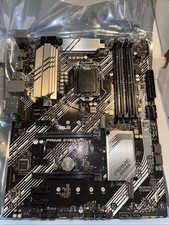
ASUS PRIME Z490-V Motherboard Intel Z490 10th gen DDR4 LGA 1200 ATX w/ IO Shield
$84.99
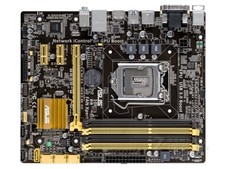
ASUS B85M-G / B85M-G PLUS LGA1150 DDR3 Micro ATX Motherboard HDMI Support 4thCPU
$45.00



 Reply With Quote