-
Junior Member
registered user
> 2.6.5
Thank you for this necessary context.
> Host scsi1 Channel: 00 Id:00 Lun:00
> Vendor: IOMEGA Model: ZIP 100 Rev: 0.3H
> Type: Direct-Access ANSI SCSI revision: ffffffff
Very good sign. That says your host can read enough bytes from the Zip drive to see that the name of its firmware is "IOMEGA" "ZIP 100" "0.3H" .
The game now is discovering what name your host gave to the device, and then trying to read bytes from an inserted Zip disk.
Myself, I'd next proceed to try to use my own:
http://members.aol.com/plscsi/linux/
I'd ask what is the result of: sudo plscsi -w
Also what is the result of: sudo plscsi /dev/sd[abcd]
However, I am already aware of the proper caution, I quote:
----- http://members.aol.com/plscsi/
...
Learning to use a tool like PLScsi will probably remind you of the need to backup often. If you won't enjoy that lesson, then please don't pick up the tool. Potential side effects include kernel panics, destroyed discs, destroyed devices, and even imperceptibly subtle forms of data corruption. Storage devices differ from modems first by being designed to record your mistakes permanently, and second by defining some commands or sequences of commands to mean self-destruct.
We have not yet heard of anyone hurt by trying `plscsi -w`, which lists all devices to which your O.S. has given one of the well-known SCSI device names. We do recommend first trying `plscsi -w` only while no drives are sleeping, spinning up, or spinning down.
...
-----
Similar Threads
-
By jphartmann in forum Hdd Install / Debian / Apt
Replies: 0
Last Post: 04-10-2005, 01:43 PM
-
By Eradicator in forum General Support
Replies: 2
Last Post: 04-21-2004, 05:29 PM
-
By JohnnyH in forum General Support
Replies: 9
Last Post: 03-15-2003, 01:23 PM
-
By Mycroft1855 in forum Customising & Remastering
Replies: 1
Last Post: 02-27-2003, 05:23 PM
-
By Sucker in forum Hdd Install / Debian / Apt
Replies: 2
Last Post: 02-19-2003, 03:54 PM
 Posting Permissions
- You may not post new threads
- You may not post replies
- You may not post attachments
- You may not edit your posts
-
Forum Rules

KNOPPIX 9.1 Linux Install & Live DVD 32bit & 64bit
$19.99
Windows XP, Vista, 8.1, Linux Knoppix, Office XP, (6 CDS)
$12.00

Knoppix Live GNU Linux System 9.1 on Bootable CD / DVD / USB Flash Drive
$5.99
KNOPPIX USB DVD OS , BEST OF ALL HIGHLY RECOMENDED
$11.99
Knoppix NSM 1.2
$8.00

VINTAGE SOFTWARE | KNOPPIX STD 0.1 (SECURITY TOOLS DISTRIBUTION)
$7.97
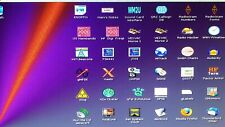
Hamshack Live DVD-ROM
$7.00
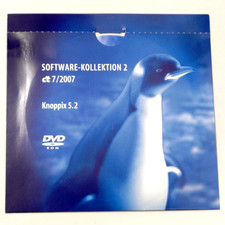
Vintage Linux DVD - Knoppix 5.2 - c't Magazine - 7 / 2007 - Software Collection 2
$8.08

Knoppix 5.0.1 ULTRA RARE Linux DVD - Linux Pro Extra August 2006
$34.64



 Reply With Quote