-
Senior Member
registered user
Re: Takes a long time to image a drive with dd
--First off, you say you used Kpx to boot a machine with (1) hard drive. Did you put a 2nd hard drive in it? If not, then trying to do *anything* to /dev/hdb will only waste time and cause error messages.
--2nd, please post results of ' fdisk -l ' as root.
--In general:
' hdparm -c1 -d1 -u1 /dev/hda ' == Set up DMA transfers and 32-bit mode
' hdparm -c1 -d1 -u1 /dev/hdb ' == Do the same for the other HD (IDE primary slave)
--NOTE that hdparm settings **are not** guaranteed to work reliably, and **can** cause errors on older systems that don't support DMA in their IDE chipsets. Modern computers (IDE 66 or better) shouldn't have this problem however, unless the drive itself is bad.
--General tip #2: You can use ' hdparm -t /dev/hda ' to test the drive speed after setting up DMA.
--General tip #3: When using 'dd', you can speed things up by specifying a larger blocksize.
' time dd if=/dev/hda of=/dev/hdb bs=1M count=20 ' == To test. This sets blocksize to 1MByte and only does 20 R/W's, not the entire drive.
--You can alter the "bs=" to successively larger values and time how long it takes for the write to complete. Once you have a decent/optimum blocksize setting, take out the "count=" part and it will then proceed to dd the entire dataspace.
--You don't have to worry about the BS being too large unless you're memory-limited. And 'dd' will automatically compensate for the last write to make things fit without over- or under-flow. (Like if you're dd'ing a floppy (1.44MB) and use a BS of 2M, it won't hurt anything.) You can use a BS of 100M if you want, just make sure you have plenty of RAM and aren't doing anything else -- if you're doing a DD you probably don't even need to boot with a GUI, just use ' knoppix 2 ' + whatever other cheatcodes you normally use, to boot into runlevel 2.

Originally Posted by
brentokc
Am reasonably new to Linux and completely new to Knoppix. Just used Knoppix to boot an XP machine with 1 hdd and 3 partitions(NTFS). There was an error message on boot up that the drive partition table could not be read. Mount did not list an hdd and using mount with hda did not work. However I went ahead and used "dd if=/dev/hda of=/dev/hdb". It seemed to work, although it was a 40 Gig drive and I did not do a by file comparison. Thing is it was still running after about 8 hours - isn't this too long - did I make some setup error? Also is there a way to image a drive of say 40 gig to a partition on a 80 Gig drive so that multiple smaller drives could be imaged onto the single larger drive. Really appreciate any help.
Similar Threads
-
By cintra in forum The Lounge
Replies: 3
Last Post: 11-17-2004, 11:24 AM
-
By BeJ in forum Networking
Replies: 2
Last Post: 11-02-2004, 05:53 PM
-
By poldervaart in forum Hdd Install / Debian / Apt
Replies: 0
Last Post: 10-12-2004, 05:47 PM
-
By cumulus in forum Networking
Replies: 2
Last Post: 09-23-2004, 03:57 AM
-
By andreas_w in forum General Support
Replies: 3
Last Post: 05-01-2003, 12:57 PM
 Posting Permissions
- You may not post new threads
- You may not post replies
- You may not post attachments
- You may not edit your posts
-
Forum Rules

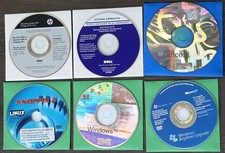
Windows XP, Vista, 8.1, Linux Knoppix, Office XP, (6 CDS)
$10.00
KNOPPIX 9.1 Linux Install & Live DVD 32bit & 64bit
$19.99
Knoppix Live GNU Linux System 9.1 on Bootable CD / DVD / USB Flash Drive
$5.99
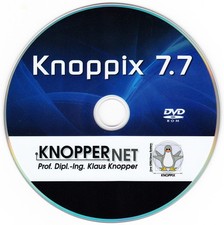
KNOPPIX USB DVD OS , BEST OF ALL HIGHLY RECOMENDED
$11.99
Knoppix Linux Bootable OS v8.6 "Original Live Operating System" 16G USB Stick
$20.85
Knoppix Linux Bootable OS v8.6 "Original Live Operating System" 32G USB Stick
$21.42

VINTAGE SOFTWARE | KNOPPIX STD 0.1 (SECURITY TOOLS DISTRIBUTION)
$7.57
Knoppix NSM 1.2
$8.00
Hamshack Live DVD-ROM
$7.00
Knoppix 5.0.1 ULTRA RARE Linux DVD - Linux Pro Extra August 2006
$33.58



 Reply With Quote