

 Reply With Quote
What exactly does lilo look like, and why didn't it work the first time? DO you have to enable LILO to start up or something after installing it?


Yes, it was the one on hdb5 I was interested in.
You can comment out the unnecessary ones for windows:
# other=/dev/hda1
# label="Windows(hda1)"
other=/dev/hda2
label="WinXP/2K(hda2)"
# other=/dev/hdb1
# label="WinXP/2K(hdb1)"
I've always had windows on hda1 so I'm not really sure if you need hda1 or hda2???
You could of course leave them uncommented to try which one boots with:
other=/dev/hda1
label="Windows(hda1)"
other=/dev/hda2
label="WinXP/2K(hda2)"
# other=/dev/hdb1
# label="WinXP/2K(hdb1)"
And then do:
- Boot cd
- open a terminal
- type: mount /dev/hdb5 /mnt/hdb5
- type: sudo su (cr@p! I think I forgot this before)
- type: chroot /mnt/hdb5/
- type: cd /
- type: kedit /etc/lilo.conf (make the changes)
- type: lilo -v
- type: ctrl-d (to exit from chroot)
- type: ctrl-d (to exit from su)
- reboot
What exactly does lilo look like, and why didn't it work the first time? DO you have to enable LILO to start up or something after installing it?
Can't say. Which Knoppix version are you using? Some fixes were made to the installer after the first 3.4 was released. Not sure if Lilo was included in the fixes.why didn't it work the first time?
No. It's supposed to run at bootup after being installed.DO you have to enable LILO to start up or something after installing it?
If you mean the graphical part of Lilo in action, it's just a splash picture with a menu. Although you can also add some kernel parameters in Lilo.What exactly does lilo look like
If you mean mine, this is it after I snipped off some outcommented irrelevant parts:...
# /etc/lilo.conf - See: 'lilo(' and 'lilo.conf(5)',
# --------------- 'install-mbr(
# and '/usr/share/doc/mbr/'.
# Support LBA for large hard disks.
#
lba32
# Specifies the boot device. This is where Lilo installs its boot
# block. It can be either a partition, or the raw device, in which
# case it installs in the MBR, and will overwrite the current MBR.
#
boot=/dev/hda
# Specifies the device that should be mounted as root. ('/')
#
root=/dev/hdb1
# compact
# Default menu for Debian. (Using the images from debian-bootscreen)
# from Philipp Wolfer <[email protected]>.
bitmap=/usr/share/lilo/contrib/debian.bmp
bmp-colors=1,,0,2,,0
bmp-table=120p,173p,1,15,17
bmp-timer=254p,432p,1,0,0
install=bmp
delay=20
prompt
timeout=50
map=/boot/map
vga=normal
default="Windows2K(hda1)"
image=/boot/vmlinuz-2.4.26-mppe-ar
label="Linux(2.4)-1"
append="ramdisk_size=100000 lang=us apm=power-off hda=scsi hdb=scsi hdc=scsi hdd=scsi nomce "
read-only
# If you have another OS on this machine to boot, you can uncomment the
# following lines, changing the device name on the 'other' line to
# where your other OS' partition is.
other=/dev/hda1
label="Windows2K(hda1)"
 Posting Permissions

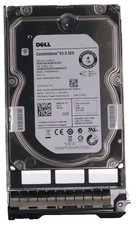
Dell 6P85J 4TB ST4000NM0063 7.2k 6Gb/s 3.5” SAS SED Hard Drive with Tray
$39.99
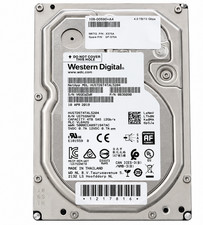
Western Digital HUS726T4TAL5204 4TB 7.2K SAS 12Gb/s 3.5" 512e HDD NetApp X375A
$64.00

Western Digital 1TB 3.5" SATA III 7200RPM Desktop Hard Drive
$34.99
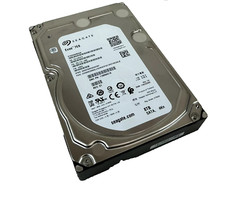
(ST8000NM0045) SEAGATE ENTERPRISE 8TB 7200RPM 4Kn SATA 6Gb/s 3.5" HARD DRIVE
$199.99
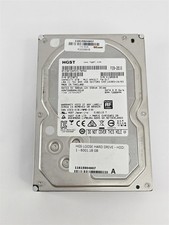
HGST 0F23072 Deskstar NAS 6TB SATA III 7200RPM 128MB 3.5in HDD
$84.99
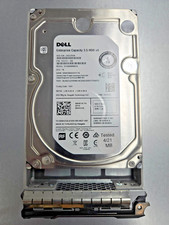
Dell ST6000NM0034 1HT27Z-150 NWCCG 6TB SAS 3.5 7.2K ENTERPRISE SERVER DRIVE
$68.99
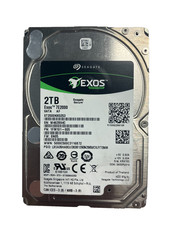
Seagate Exos ST2000NX0253 HDD 2TB SATA 7.2K 2.5" 512b/s
$55.00
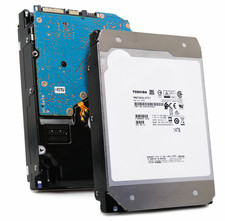
Toshiba 14TB MG07 MG07ACA14TEY 7.2K RPM SATA 6Gb/s 512e 3.5" Enterprise HDD
$339.00

DELL 2TB Enterprise HDD (7200RPM, 3.5", SATA III, 128MB Cache) HUS722T2TALA600
$49.95
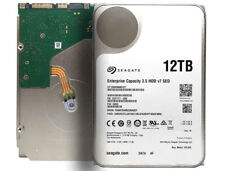
Seagate ST12000NM0127 12TB 256MB 7200RPM 3.5" SATA 6.0Gb/s Enterprise Hard Drive
$318.99