-
Junior Member
registered user
Life Expectancy of Flash Memory Sticks
Yesterday, my PNY Atache flash memory stick drive started to fail on me. It can read all files just fine. So I managed to tar all the files into a backup.
I can reformat it in Win2000 or Knoppix just fine. But when putting files (of any kind) onto it will lock up the computer (W2k or Knoppix) every time after about a minute or so of writing to the device. It does this on two different computers that I've tried.
Conclusion: The drive is bad.
My query is: Does anyone know about how long one should expect one of these type drives to last under daily use as a Knoppix persistant home directory? Anyone know of any utilities to lock out a bad memory cell/sector?
I thought since these things don't have moving parts (other than moving from place to place) they should last quite a while and be very reliable from data loss. Guess I was wrong.
Anyone else run into problems with flash memory?
Thanks.
Kenneth Lantrip
-
Junior Member
registered user
I think the memory has something like 100000 writes then it start giving up.
So if you have it as a scratch pad for photoshop or a home dir for knoppix i think it will wear out quick.
Yes there are no moving parts but they slowly werar out, just like normal memory.
-
Haven't checked if noatime is added to fstab for sda stuff when running from CD, but it should be IMO.
Without it the access time is written to the stick every time you/knoppix read a file from it which will shorten it's lifetime. Perhaps not significantly so, but unnecessarily.
My line is: /dev/sda1 /mnt/sda1 vfat noauto,users,exec,noatime,umask=000,uid=markus,gid =markus 0 0
You could probably get by with: /dev/sda1 /mnt/sda1 vfat defaults,noatime 0 0
-
Re: Life Expectancy of Flash Memory Sticks

Originally Posted by
Bothersome
Conclusion: The drive is bad.
Hi,
Interestingly, Flash Memory is actually a kind of EEPROM (Electrically Erasable Programable Read-Only Memory). It differs by way of only requiring a low voltage for programming. EEPROM's ussually require 12 - 14vdc to program and Flash only needs 3.3v or 5v.
Flash, pretty much universally, has a manufacturer guranteed life expectancy of 100k writes but this is conservatism on behalf of most manufactureres and it is not uncommon for Flash to last >1m Write cycles.
The cells that accept a programming voltage eventually desensitise and are unable to correctly store a Binary "0" (A bin "1" is stored as a "0" or 'low' voltage in Flash but it doesn't matter in this context, this is done because as 1's are more common in data it saves write time and speeds up the device. Simple but effective). Flash is not a Volatile memory and repeatedly writing to a single location causes that desensitivity.
In-fact there are algorithms used to ensure that the write load is spread evenly over the entire capacity of the Flash to ensure that no one location recieves more of a hammering than other storage locations. So, theoretically, the bigger the capacity of Flash and the lower the storage utilisation, the greater the life expectancy.
When Flash Memory "sort of" fails it is refered to in the profession as "Going Flakey". Flash is really great for user controlled or infrequent writes and heavy reads. However if you setup something such as swap file that is constantly paging and witing to memory locations withing the Flash then it will have an extremely short lifespan. You are better off dynamically setting up a swap file on a Ramdisk IMHO.
-
Junior Member
registered user
The drive in question is only about 3 months old.
It doesn't have a swap file or partition on it. It was only used for the knoppix persistant home directory.
The drive size is 512MB. I would think that would be plenty of extra cells to use for exchanging use. It only had about 200MB of stuff on it.
My main concern was if this is the normal behaviour for flash drives that are being used as a persistant home directory, then this isn't viable technology for this purpose.
At this moment, I'm using a compact flash (512MB) (Kingston generic chip) for the replacement. I'm willing to bet that the Attache' drive from PNY was just a lemon that I, as my luck would have it, have successfully removed it from the buying populace.
According to the warranty, It has a 1 year warranty. To replace, one should return to vendor. Which I intend to try a replacement at Best Buy (where I bought it).
Thanks for the insight on how flash memory works.
Kenneth
-
Hi Kenneth,
In that case, it sounds to me like you were unlucky enough to get a flakey lemon. Flash is normally pretty robust and I am with a company that designs products that use the stuff.
Best of luck.
Similar Threads
-
By jjbergdolt in forum Hardware & Booting
Replies: 1
Last Post: 07-20-2005, 06:58 AM
-
By gosain_sanjay in forum Ideas
Replies: 0
Last Post: 01-01-2005, 05:13 PM
-
By fhatuwani in forum Tips and Tricks
Replies: 1
Last Post: 06-14-2004, 08:00 PM
-
By jpmierau in forum General Support
Replies: 4
Last Post: 12-26-2003, 09:25 AM
-
By robbika in forum Ideas
Replies: 13
Last Post: 10-08-2003, 11:36 PM
 Posting Permissions
- You may not post new threads
- You may not post replies
- You may not post attachments
- You may not edit your posts
-
Forum Rules

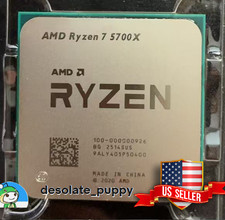
(New) AMD Ryzen 7 5700X 8 Core 16 Thread AM4 Unlocked 3.4 GHz CPU OEM Tray
$174.99
Intel Core i7-6900K SR2PB 8-Core 3.20GHz CPU LGA 2011 (Socket R)
$60.00
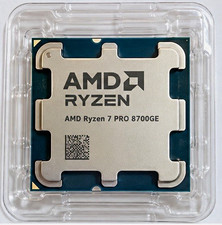
AMD Ryzen 7 PRO 8700GE 8-Core/16-Thread Up to 5.1GHz AM5 (FL1)
$189.00

SGIN 17.3" Laptop Intel Quad-Core Up to 2.4 GHZ 8GB RAM 256GB SSD HD
$229.99
Apple Macbook Pro 13" M1 8-Core 16GB 512GB - Good
$464.99
Intel Xeon E5 - 2667V2 / SR19W 3.30GHz 25MB 8-Core CPU Socket LGA2011
$30.00
AMD Ryzen 7 9700X 8-Core 16-Thread 40MB Cache Socket AM5 9000 Series Processor
$245.99
AMD Ryzen 7 9800X3D 8-Core 16-Thread AM5 Zen 5 Desktop Processor NEW
$399.00
Dell OptiPlex 5070 SFF i7-9700 (8-Core) 3.0GHz 16GB 256 SSD Windows 11
$250.00
DELL Optiplex 780 SFF CORE2DUO 3.0GHz 8GB RAM 250GB HDDDVDRW NO OS
$99.99



 Reply With Quote