-
Senior Member
registered user

Originally Posted by
gowator
In computing terms the CISC chips are a perfect example....
Intel is a product of brute force and weight of numbers yet supremely sucessful. However Japan for instance has just designed a new chip for genetic calculations...
I'm not going to get involved in this particular debate, except to point out that, as you know, the technology that becomes the most successful in the marketplace is not necessarily the "best" technology (although, of course, "best" is always debatable). Betamax vs. VHS, for example.
It's fairly obvious (to me at least), that the reason the x86 architecture "won" in the marketplace (and Windows, along with it) is that the architecture became easily clonable and essentially "open." Anyone can go into business making and selling x86-compatible motherboards, cases, hard drives, peripherals, etc. This is, at the core, why "Wintel" won out over Apple.
A couple of interesting factoids regarding RISC CPUs: RISC CPUs are nothing new. Wikipedia says the first example of what we'd call a RISC-based computer today was a Cray designed in 1964.
Even more interesting (to me at least), is an article I found buried among a bunch of sales and marketing materials on an Apple reseller CD from 1991. It's an MS Word document entitled "The great RISC/CISC debate," which would indicate that years before Apple switched to PowerPC CPUs (in 1994), they had an internal debate going on about it.
("RISC" = Reduced Instruction Set Computing. "CISC" = Complex Instruction Set Computing. Intel and AMD x86 chips are CISC CPUs. See Wikipedia.com for more info.)
Similar Threads
-
By istoleapig in forum Hardware & Booting
Replies: 2
Last Post: 02-19-2005, 09:28 AM
-
By ziggyrafiq in forum General Support
Replies: 0
Last Post: 09-12-2004, 10:40 PM
-
By nashjc in forum Customising & Remastering
Replies: 0
Last Post: 05-12-2004, 12:14 AM
-
By Lame_Duck in forum Customising & Remastering
Replies: 0
Last Post: 02-08-2004, 05:19 PM
-
By bgristwo in forum Networking
Replies: 3
Last Post: 06-17-2003, 05:29 PM
 Posting Permissions
- You may not post new threads
- You may not post replies
- You may not post attachments
- You may not edit your posts
-
Forum Rules

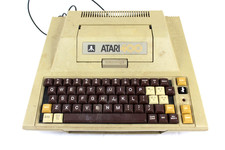
VTG Atari 400 Home Computer System ** Sold "AS-IS" for Parts or Repair
$88.75
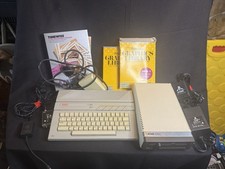
Atari 130 XE/Atari 1050 Bundle W/ Cords And Extras (Powered On)
$300.00
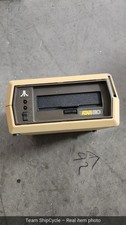
DEFECTIVE Atari 810 Vintage Computer Disk Drive powers on Unit Only Boo G3D
$49.29

UNOCART-2600 SD card Multi Rom Cartridge for ATARI 2600 with CASE
$34.25
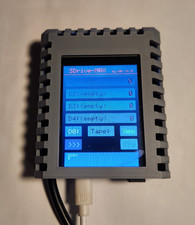
SDrive Max Floppy Drive Emulator Atari 8-Bit 400/800/XL/XE Firmware 1.5 USB C R2
$70.00
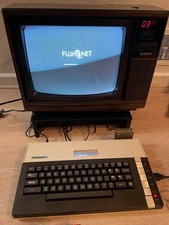
Fujinet 1.7.1 Atari 400 800 800XL 130XE 65XE XEGS Assembled, Tested, Working
$99.99
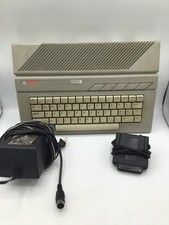
Atari XE 130XE Computer NTSC with Power Supply Powers On Untested
$159.95
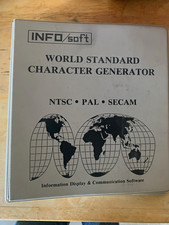
INFO/soft Character Generator Manual for Atari 3000/5000/7000 NTSC
$40.00
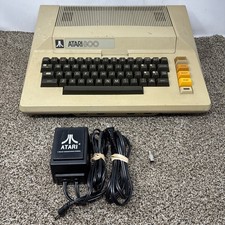
Atari 800 8-bit Computer System Fully Tested Great Condition 48k READ
$350.00

Atari 1200xl Original ROM And MMU set
$20.00



 Reply With Quote