-
Senior Member
registered user
There is a file prepared for that:
Run it on boot isn't wise, because you may boot sometimes without networking.
There are several runlevels, by convention:
Code:
S   SingleUser rescue mode (or Superuser?)
1    Single user without networking
2    Multi user wo. net
3    Multiuser + networking (here we need ssh)
4    ? reserved for special purpose
5    Multiuser + net + X11 (here too)
6    Reboot
...
For every level there is a rcX.d - directory, usually in /etc or in a subdir of /etc
(Replace the X with S, 1...6)
If you switch the runlevel, for the level you leave its kill-Scripts are called, and for the new, its Start-scripts are called.
Surprisingly, both scripts, the kill script and the start scripts are identical!
How's that?
Well - they are called with a parameter, which they evaluate.
Code:
fooManShoe -start
fooManShoe -stop
If you switch to runlevel 3 or 5, you need the start-script to be called, and if you leave them, the Kill-scripts should be called.
Therefore you create a symbolic link from the /etc/init.d/ssh to /etc/rc3.d/S44ssh and to rc5 accordingly.
The number - 44 in my example, decides the order in which the scripts are called. Lower numbers first.
I don't know if ssh needs a kill-script, if yes, you would use /etc/rc3.d/K44ssh too.
There is a graphical tool, which does this in a userfriendly way.
SysVinit or something similiar.
In either way, you have to be root to do this.
Similar Threads
-
By Mr.45er in forum General Support
Replies: 2
Last Post: 10-06-2004, 01:21 AM
-
By Zero_1984 in forum Hdd Install / Debian / Apt
Replies: 6
Last Post: 09-28-2004, 04:57 AM
-
By paradox87 in forum Hdd Install / Debian / Apt
Replies: 2
Last Post: 06-16-2004, 11:38 PM
-
By lothario in forum General Support
Replies: 6
Last Post: 04-29-2004, 09:47 AM
-
By hokiegal99 in forum General Support
Replies: 1
Last Post: 12-11-2003, 01:23 AM
 Posting Permissions
- You may not post new threads
- You may not post replies
- You may not post attachments
- You may not edit your posts
-
Forum Rules


RAM-HOL-SAM52CPU RAM USB-C Powered Dock Samsung Tab Active4 Pro & Tab Active Pro
$81.99

Samsung Galaxy Tab S10+ 5G SM-X828U - 256GB, 12.4", Gray (AT&T)
$315.00

New Samsung 512GB FIT Plus USB 3.2 Gen 1 Type-A Flash Drive MUF-512AB/AM NEW
$120.00

Samsung Galaxy Tab S11 Ultra SM-X930 - 256GB, Wi-Fi, 14.6" - Gray /Open Box
$869.99

RAM-HOL-SAM60CPU RAM USB-C Powered Dock for Samsung Tab Active5 - 3 - 2
$81.99

RAM-GDS-SKIN-SAM54-NG-1 RAM Mounts IntelliSkin® Next Gen for Samsung Tab Active4
$93.99

Samsung Galaxy Tab SCH-1800 7" 4GB Wi-Fi + Verizon Tablet Working
$30.00
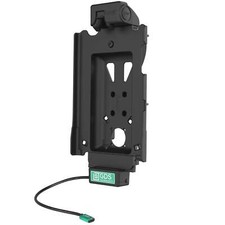
RAM-GDS-DOCK-SAM88CPU RAM GDS® Tough-Dock™ for Samsung Tab A9+
$174.99
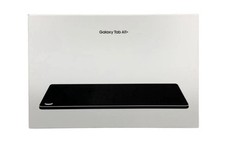
Samsung Tab A11+ - Brand New Sealed - Metro Locked
$170.00

Samsung 24" S3 Essential IPS 100Hz Monitor | Sealed | Fast shipping
$50.00



 Reply With Quote