-
Senior Member
registered user
Ask and ye shall receive....
The isolinux.conf file is derived from the boot directory of the .iso . Edit: I copied my LiveCD into a file called CD(x) in archlinux desktop: the file is 680+ MB and is edited to make the changes in isolinux.conf.
Open the isolinux.conf file in an editor.
You will find many listings of boot possibilities arranged in groups, LABEL....KERNEL...APPEND.
Each grouping defines a boot set-up.
The APPEND permits the addition of cheat codes in the desired kernel, probably 2.6 in your case.
The first listing is a default, usually a 2.4 kernel is default. This entry can be changed to a single character i.e, ....."\" .
Then mosey down to the LABEL , KERNEL , and APPEND for the 2.6 kernel.
Change the LABEL to the character you selected.
Enter the cheat codes one after the other at the tail end of the APPEND statement.
Check your spelling and verify similarity to the other listings as to spacing and syntax.
Save the modified isolinux.conf file and quit the editor.
You should now have a new .iso file ready for mkisofs.
Mkisofs for Kernel 2.6 follows;
The spacing is important..the symbol * in the listing signifies a "space" and is not part of the command...
mkisofs*-pad*-l*-r*-J*-v*-V*"KNOPPIX"*-no-emul-boot*-boot-load-size*4*-boot-info-table*-b*boot/isolinux/isolinux.bin*-c*boot/isolinux/boot.cat*-hide-rr-moved*-o*/root/knoppix.iso*/root/CD(x)
---------------------------------------------------------------------------------------------------------------------------------------------------------------------------------------------------------------------------------------------------
The reference to knoppix.iso must be your .iso and the /root/CD(X) your file to place the new .iso to be burned.
You may wish to keep a copy of the original .iso before beginning the modification.
Mkisofs will produce the .iso at good speed in a 1500mhz computer. I burn my .iso files in k3b but nero is usable as well.
Best of luck!! I hope I have given you enough detail to complete the mod.
-
Junior Member
registered user
Thanks. I'll try that as soon as I get the opportunity.  Those instructions are clear enough.
One of my web pages was very popular recently - a couple of places blogged it. But my media coding failed on Linux systems, because it called for software available only on Windows and Mac. It didn't have to fail on Linux, as I now know, and I re-coded the page.
I tried Linux (Mandrake) about a year and half ago, but since it was not self-configuring, I was baffled. I couldn't even get on the Internet. Worse, it was hard to remove, since I don't really need a Lilo-type double boot. But Knoppix really does the job.
-
Junior Member
registered user
Follow-up: I did the edits, as suggested above, and it worked! Now, I can go grab a coffee when switching from Windows to Knoppix (in 5 minutes, as advertised), and when I return, the desktop is just the way I like it Thanks!
What I actually did was (1) Split the original, unburned ISO into 50Mb parts. (2) Edited the first part, which has the necessary boot info, in a hex editor. I also lowered the timeout to 30 (didn't have the courage to try 0 or omit the timeout). The number of hashes was adjusted to keep the file size the same (necessary for glueing the parts pack together). (3) Re-assembled the parts, then burned the edited ISO using Alex Feinman's ISO Recorder.
All of the above was one entirely within Windows. For those who didn't know, the Return(Enter) uses different codes in Windows and in Linux, so the hex editor was more sure-fire.
After testing the edited Knoppix, I returned to Windows, removed my Knoppix home and configuration files (zipped and renamed them, so Knoppix couldn't find them), then re-booted the modified Knoppix. The missing home and config didn't seem to hurt the built-in cheat codes home=scan and myconfig=scan. Without the necessary files present, Knoppix simply booted to its original state. Later, then the home and config files were restored, my personalized version worked again.
-
Junior Member
registered user
Another follow-up: I liked the edits so much that I did some more editing. Now, my default will load home and configuration from my hard drive, as above. I also created a cheat code "hd" that will not only load my home and configuration, it will load Knoppix from my Poor Man's Install. So all I have to do is type "hd".
I can lend the CD-ROM to someone who doesn't already have Knoppix and would like to try it. With no codes entered, it looks for the non-existent home and configuration, but does not crash.
Similar Threads
-
By killozap in forum Networking
Replies: 0
Last Post: 09-29-2005, 08:41 AM
-
By djtwok in forum Hardware & Booting
Replies: 3
Last Post: 08-22-2004, 10:43 AM
-
By bongski55 in forum Hdd Install / Debian / Apt
Replies: 6
Last Post: 09-06-2003, 05:58 AM
-
By manghat in forum Customising & Remastering
Replies: 2
Last Post: 05-15-2003, 11:54 PM
-
By andyed in forum Hdd Install / Debian / Apt
Replies: 6
Last Post: 01-12-2003, 04:36 AM
 Posting Permissions
- You may not post new threads
- You may not post replies
- You may not post attachments
- You may not edit your posts
-
Forum Rules

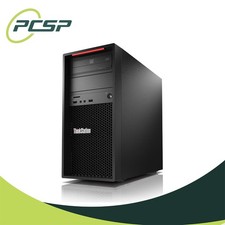
Lenovo ThinkStation P520c Intel Xeon W-2133 6-Core 3.60GHz -NO RAM/ HDD/ GPU/ OS
$127.54
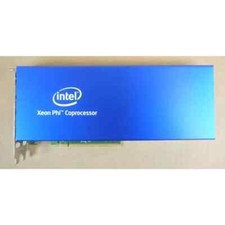
Intel Xeon Phi 5110P 60-Core 1.053GHz Coprocessor
$50.00
Dell EMC PowerEdge R440 Xeon silver 4215 2.5GHz 16 GB ram 2x 550W PSU No HDD
$275.00

Dell Precision Tower 7810 Xeon E5-2630 v3 @ 2.40GHz , 32GB Ram, NO HDD, NO OS
$239.99
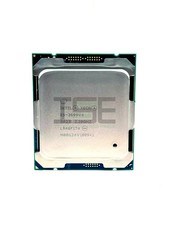
Intel Xeon E5-2699 V4 2.20GHz 55M 22-CORES LGA2011-3 Server Processor 145W SR2JS
$84.49
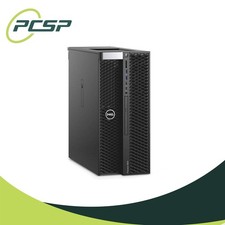
Dell Precision T5820 Workstation 3.70GHz W-2135 No RAM/ GPU/ HDD/ OS
$179.98
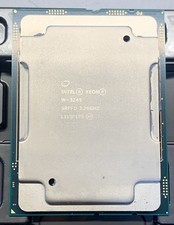
Intel Xeon W-3245 16-Core 3.2GHz (SRFFD) Apple MAC PRO A1991 CPU Processor
$199.99

Intel Xeon E5-2680 V2 2.8GHz 10-Core 25MB 8GT/s SR1A6 LGA2011 B Grade Server CPU
$7.95
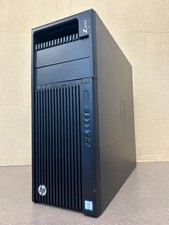
HP Z440 Workstation TWR Xeon E5-1603 v3, 8GB RAM, NVS310, SB1570, NO SSD/OS #95
$89.99
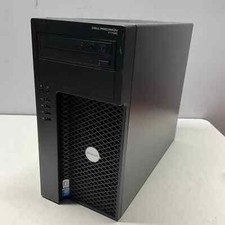
Dell Precision T1700 Workstation Intel Xeon 16G Ram 256GG SSD Nvidia 600 Win 10
$109.99



 Reply With Quote