-
Junior Member
registered user
Whay are they called Cheatcodes?
I understand there are a good number of 'cheatcodes' available for Knoppix which allows for a wide range of startup options.
Why are they called cheatcodes? It's hardly 'cheating' is it? Quite the opposite it's quite OK and smart to customize the way an OS starts itself upon boot.
Just wondering. 
JP
-
Senior Member
registered user
Re: Whay are they called Cheatcodes?

Originally Posted by
JPWhite
Why are they called cheatcodes? It's hardly 'cheating' is it? Quite the opposite it's quite OK and smart to customize the way an OS starts itself upon boot.
Well .. basicly only the language setting isn't a cheating 'cheatcode'. The rest sh/could be infered from the state of the hardware.
So it is kind of cheating if you need to tell the hardware detection what it should see, heh?
-
Senior Member
registered user
The kernel, the runlevel, whether to use acpi or apm, whether to enable scsi or not, pcmcia or not, using a graphic-resolution and which desktop, use some configuration saved to ... - that might all dependend on user-whishes.
-
Senior Member
registered user
Good question, and, believe it or not, never gave it much thought, why? Just know it is, kind of thing...
Here is, my attempt, of rational, on the subject...
If you hard drive install Knoppix, the only way to get "boot" options added, or removed, at least with the LILO boot loader, is through the "append=" line. When you boot off the CD, that "append=" line is placed directly on the "boot:" prompt - thus, if you wanted to "test" if a configuration would work, for your hard drive install, you could boot the CD, and test your options out "before" you actually "commit" them to your real booted operating system, thus, you are cheating with the boot codes. Since, a good portion of these "boot codes" do not actually change the physical boot of the OS, I think they just used a more "generalized" term, cheat codes... And, with a lot of things in Linux, the term stuck, and has been carried down all this time, as "cheatcodes".
I made the mistake of using the term "cheatcodes" when I was trying to get my ALSA working, or when I post a question in a "pure" Debian newsgroup - they completely "freaked", they couldnt fathom the thought of using "boot codes" to "tweak" either the boot, or the configuration of the operating system, and, from what I gather, Knoppix, and I would think, Kanotix, are about the only distro's to use this "term".
This could be a further explaination of the term "cheatcodes", when you take ALSA for instance - in a "pure, true" Debian install, the way to get ALSA running is by compiling the source code of ALSA and its drivers into your kernel, then configuring it - whereas, in Knoppix, you can provide the alsa cheatcode on the boot: prompt, and get ALSA working without all that work. ( so, in the reasoning of ALSA, it is a "cheatcode" )
All this is conjecture though, I really dont have a "real" answer, but, I can guess pretty good 
Ms. Cuddles
-
I've just thought it's to make the concept sound easier than kernel parameters as in /usr/src/kernel-source-2.6.7/Documentation/kernel-parameters.txt.
-
Senior Member
registered user
Originally Posted by
Cuddles
This could be a further explaination of the term "cheatcodes", when you take ALSA for instance - in a "pure, true" Debian install, the way to get ALSA running is by compiling the source code of ALSA and its drivers into your kernel, then configuring it - whereas, in Knoppix, you can provide the alsa cheatcode on the
boot: prompt, and get ALSA working without all that work. ( so, in the reasoning of ALSA, it is a "cheatcode" )
All this is conjecture though, I really dont have a "real" answer, but, I can guess pretty good
Ms. Cuddles
Acually, in knoppix ALSA is already compiled into the kernel (acually I think its a module), But in a true Debain install you need to call up Alsa-config to set up it. The "Cheatcode" just calls up this command at boot (I doubt its the alsa-config command but it does the same thing).
Also I agree with Markus. Knoppix is made a little simplier, and telling people to enter "kernel-parameters" would just scare them away. Cheatcodes sounds better. I think thats really the only reason.
-
Senior Member
registered user
Boot-options would be very clear, but not so interesting for the kids with gaming-experience.
Boot-options would be more serious, and I would prefer it, but now it has made its way and it's too late to change, I guess.
Similar Threads
-
By Maud_Dib in forum Hardware & Booting
Replies: 6
Last Post: 07-05-2005, 01:49 AM
-
By wahab101 in forum General Support
Replies: 1
Last Post: 12-02-2004, 01:58 AM
-
By pelican in forum General Support
Replies: 0
Last Post: 11-26-2004, 09:43 PM
-
By ubub in forum Networking
Replies: 1
Last Post: 03-07-2004, 10:23 PM
-
By manjo in forum The Lounge
Replies: 1
Last Post: 11-28-2003, 12:50 AM
 Posting Permissions
- You may not post new threads
- You may not post replies
- You may not post attachments
- You may not edit your posts
-
Forum Rules

Western Digital HUS726T4TAL5204 4TB 7.2K SAS 12Gb/s 3.5" 512e HDD NetApp X375A
$64.00
Western Digital WD15EVDS-63V9B0 1.5TB
$79.90
WD Re 3TB Enterprise 3.5" HDD SATA 6Gb/s 7200RPM 64MB Cache
$70.00
HGST Ultrastar HUS726040AL5210 4TB 7200RPM SAS 12Gb/s Enterprise HDD
$41.00
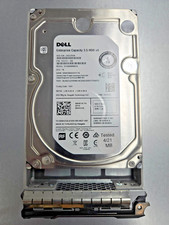
Dell ST6000NM0034 1HT27Z-150 NWCCG 6TB SAS 3.5 7.2K ENTERPRISE SERVER DRIVE
$68.99
Toshiba MG03ACA400 4TB 7200 RPM SATA 6.0Gb/s 3.5" Enterprise HDD (V6313)
$61.56
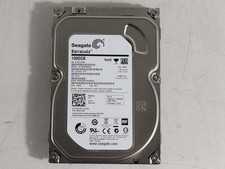
Seagate Barracuda ST1000DM003 1 TB SATA III 3.5 in Desktop Hard Drive
$23.99
HGST HUS724040ALA640 4TB 7200 RPM SATA 3.5" Internal Desktop Drive 100% Health
$78.00

Seagate ST8000NM0075 Enterprise Capacity 3.5 HDD 8TB SAS Hard Drive 8TB EXOS
$184.99

DELL 2TB Enterprise HDD (7200RPM, 3.5", SATA III, 128MB Cache) HUS722T2TALA600
$49.95



 Reply With Quote