-
Senior Member
registered user
Here's a brief overview of installing packages in a Debian based system:
Actual package installation is done by dpkg. This is a text based application. For an already downloaded package you could do 'dpkg -i <path & package name>. But this may fail because there may be dependencies which dpkg does not know how to find and has not been told to install.
So the next level is apt-get which will search the net for the packages it needs (including dependency packages), download and install them. It uses dpkg to do the actual install and maintains a file called /etc/apt/sources.list to know where to search for packages. This file must be updated regularly as packages get moved around in the internet repositories. This is done with the command 'apt-get update'.
But to use apt-get you must know what packages are available, so you will need a 'package browser list.
The most basic of these is dselect, which is text based and not overly user friendly. It also maintains a package available database file which must be updated regularly with 'dselect update'. I've been told that dselect update will update both the dselect database and the apt-get sources.list so it is preferable to use this instead of the 'apt-get update' command which only updates sources.list.
More user friendly alternatives for seaching for packages are the gui based applications Kpackage and Synaptic. Both of these provide information on the packages available and can download and install the package.
Dselect, Kpackage and Synaptic all use apt-get to do the actual downloading & installing.
Debian based systems must use either Debian packages or applications compiled from source. To install an RPM package, first convert it to a .deb using 'alien'.
ie: alien -d <rpm packagename>
So, for an already download package, you can try dpkg -i <package> but be prepared for dependency problems which you will have to solve yourself by manually tacking down and installing any required dependencies.
Better way is to use apt-get & let it redo the download:
First, you must become 'root'. Permissions are a big thing in Linux, only root (administrator level permissions) is allowed to install things. So, type 'su' to become root. Then do 'dselect update'. Usually the first time it is run it will need to download quite a bit & some of the downloads may fail. If this happens, just run the command again, eventually it will get all the data it needs.
then 'apt-get install <package>'. It should download the application & all required dependencies & install the application.
Selecting <package> from Kpackage & following the install procedure (check mark & install marked, etc) should do the same thing. But you do have to 'dselect update' first. Kpackage is going to ask you for a root password so you will have to set one before you run it. Open a terminal & type 'sudo passwd', then enter your new root password.
For more detailed information on the commands avaiable for apt-get & dpkg type 'man apt-get' or 'man dpkg' to view the manual pages. Also see the apt-get/dpkg tutorial post in the HDD install section of this forum.
Similar Threads
-
By tr in forum Customising & Remastering
Replies: 0
Last Post: 10-03-2005, 08:50 AM
-
By dominican2589 in forum General Support
Replies: 6
Last Post: 06-10-2005, 03:27 PM
-
By Ranger24 in forum Hdd Install / Debian / Apt
Replies: 0
Last Post: 05-21-2005, 03:26 PM
-
By sennachie in forum Customising & Remastering
Replies: 0
Last Post: 04-06-2005, 09:24 AM
-
By konfused in forum Hdd Install / Debian / Apt
Replies: 2
Last Post: 05-05-2004, 09:28 AM
 Posting Permissions
- You may not post new threads
- You may not post replies
- You may not post attachments
- You may not edit your posts
-
Forum Rules

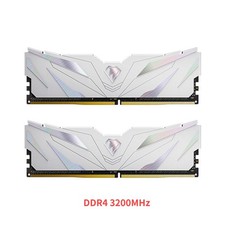
Netac DDR4 32GB 16GB DDR4 3200MHz UDIMM C16 Desktop Internal Memory RAM Kit
$99.99
Patriot Viper 4 Blackout 64GB 2x32GB DDR4-3600 CL18 PVB464G360C8K RAM Kit #P2
$349.00
A-Tech 8GB DDR3 1600 PC3-12800 Laptop SODIMM 204-Pin Memory RAM PC3L DDR3L 1x 8G
$21.68
Major Brand 16GB (2x8GB) PC3-12800U DDR3-1600MHz DDR3-12800 DESKTOP RAM NON-ECC
$29.99
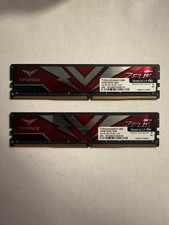
TEAMGROUP T-Force Zeus 64GB (2x32GB) DDR4 2666MHz PC4-21300 Desktop RAM Kit
$199.99
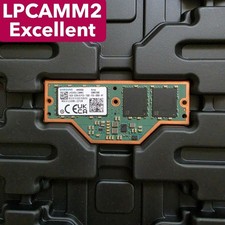
Samsung 16GB LPCAMM2 PC5 7500 DDR5 LPDDR5X CAMM2 M561K1LC4DM0-CCTGM RAM Memory
$189.00
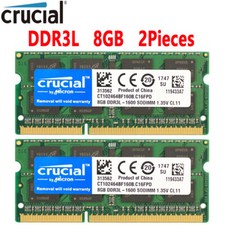
Crucial DDR3L 16GB 2 x 8GB 1600 MHz PC3L-12800 Laptop RAM Sodimm Memory 1.35V
$41.00
RAMAXEL Lenovo 32GB LPDDR5X CAMM2 7500MHz Laptop RAM | UNTESTED
$445.00
Micron 32GB 1x32GB DDR5 5600 CL46 ECC Unbuffered SO-DIMM MTC20C2085S1TC56BD1
$399.00
ADATA XPG Spectrix White RGB AX4U320038G16-BW41 32GB DDR4 matching set of 8GB
$149.99



 Reply With Quote