-
Senior Member
registered user
Installing Debian Sid: A tale of glee
(As opposed to my previous failed attempt in May.  )
)
Installing Debian Sid's gotten quite easy with the Debian-Installer. Here's a step-by-step review.
- With a broadband Internet connection, it's easy to install over the 'net. I downloaded and burned the Debian-Installer "netinst" CD image, booted from it, and followed the prompts (it goes fast if you've prepared your hard disk partitions in advance and know where you want / and /home and swap mounted).
- At the installation CD's boot prompt, I chose the 2.6 kernel.
- After installing the base system and the boot manager, the installer rebooted the system and asked what kind of system I wanted. You can choose "Graphical Desktop" (I think that's what it was) and from amongst several server options. This time, I chose not to go into "dpkg" (going through it took forever); I only chose the desktop option. At this point, the installer began downloading and installing packages from the 'net. It downloaded GNOME, KDE, and several other smaller window managers, along with a slew of software. (This took about 30 minutes.)
- It started up using gdm as its login manager and GNOME, with the wrong screen resolution (my fault; 85Hz was probably too high a vsync setting). Personally I'm a KDE and kdm partisan. Setting KDE as the default was as simple as telling gdm to start KDE; it asked if I wanted to make KDE the default. (Nice.) I had to download kdm, at which point the package manager asked me which login manager I wanted to use, gdm or kdm. (Nice again.) To fix the screen resolution, I logged out of KDE, stopped kdm, and ran "dpkg-reconfigure xserver-xfree86".
- Now I had Debian Sarge. To upgrade to Debian Sid was a matter of stopping X, changing "testing" to "unstable" in /etc/apt/sources.list, commenting out the "security" line, and running apt-get update && apt-get dist-upgrade. (Downloading the software took about 15 minutes.)
- The system required a reboot to reconfigure itself for the kernel modules.
And that was it!
Unlike last time, I had no problem whatsoever with the "nv" server and my nVidia graphics card. It installed kernel 2.6.8-1-386. There's more to do -- for example, CUPS and ALSA aren't installed yet -- but that was pretty easy.
Similar Threads
-
By Qizz in forum Hdd Install / Debian / Apt
Replies: 1
Last Post: 12-16-2004, 02:58 AM
-
By quark in forum Hdd Install / Debian / Apt
Replies: 4
Last Post: 10-14-2004, 07:21 PM
-
By Ylz in forum Hdd Install / Debian / Apt
Replies: 6
Last Post: 09-19-2004, 09:24 AM
-
By eco2geek in forum The Lounge
Replies: 8
Last Post: 05-19-2004, 01:43 PM
-
By gtgoku in forum General Support
Replies: 3
Last Post: 08-07-2003, 07:02 AM
 Posting Permissions
- You may not post new threads
- You may not post replies
- You may not post attachments
- You may not edit your posts
-
Forum Rules

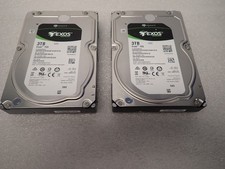
(2) Seagate SAS Hard Drive Exos 7E8 3TB 7200RPM 128MB 12Gb/s 3.5 ST3000NM0035
$49.99
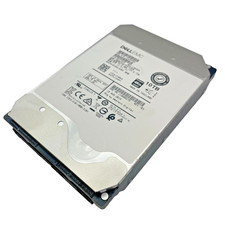
Dell EMC WD-HITACHI H5H72101CLAR10T0 10TB 7.2K SAS 12Gb/s SED 3.5in A POH 0-50k
$189.99
Seagate BarraCuda ST3000DM008 3TB Internal SATA 6Gb 3.5" Hard Drive 7200RPM 64MB
$91.99
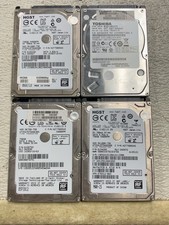
Lot of 4 750GB 2.5" SATA Laptop Hard Drives HDD Tested Working Wiped 3TB
$59.00
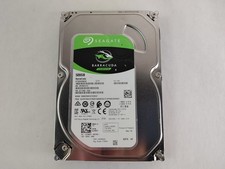
Seagate ST500DM009 BarraCuda 500 GB 3.5" SATA III Desktop Hard Drive
$14.99
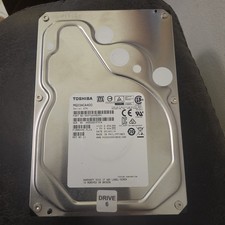
Toshiba MG04ACA400 4TB 3.5-inch SATA 6 Gb/s 7,200 RPM Internal Hard Drive
$49.99
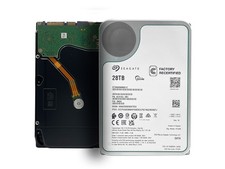
Seagate ST28000NM001C 28TB 256MB 7200RPM 3.5" SATA 6.0Gb/s Enterprise Hard Drive
$669.99
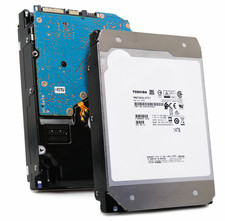
Toshiba 14TB MG07 MG07ACA14TEY 7.2K RPM SATA 6Gb/s 512e 3.5" Enterprise HDD
$299.00
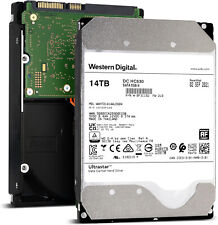
WD Ultrastar DC HC530 14TB SATA 6G 3.5" 7200RPM Enterprise HDD - WUH721414ALE604
$329.99
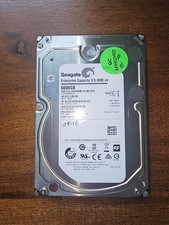
Seagate 6TB HDD ST6000NM0034 7.2K 3.5" SAS 12Gb/s (NOT FOR PC - FOR SERVER ONLY)
$87.00



 Reply With Quote