-
I tried pppconfig. It did not fix the problem. When it ask for auto find of modem I said yes and it did not find a modem. It said that it was probing ttyS0 and than can back with Manuel preselect, which the text said that it preselect it because it could not find a modem.
In Windows, my modem is on COM2, which should be ttyS1. I enter that manuelly into the pppconfig and it still did not work.
I try the command dmesg. I am new to linux so I am not sure what all of these means but it looks as if Linux found only on port ttyS0 and did not find the ttyS1, where my modem is. Is my understanding correct about this? The output is down below.
I try command setserial /dev/ttyS1. I got an output that it does not know what the UART is. What is the UART anyway?
Here is the output of setserial:
/dev/ttyS1 UART: unknown, Port: 0x02f8, IRQ:3
Here is the output of dmesg:
Linux version 2.4.27 (root@Koffer) (gcc version 2.95.4 20011002 (Debian prerelease)) #2 SMP Mo Aug 9 00:39:37 CEST 2004
BIOS-provided physical RAM map:
BIOS-e820: 0000000000000000 - 000000000009fc00 (usable)
BIOS-e820: 000000000009fc00 - 00000000000a0000 (reserved)
BIOS-e820: 00000000000f0000 - 0000000000100000 (reserved)
BIOS-e820: 0000000000100000 - 0000000008000000 (usable)
BIOS-e820: 00000000fffe0000 - 0000000100000000 (reserved)
0MB HIGHMEM available.
128MB LOWMEM available.
On node 0 totalpages: 32768
zone(0): 4096 pages.
zone(1): 28672 pages.
zone(2): 0 pages.
DMI not present.
ACPI: RSDP (v000 COMPAQ ) @ 0x000e8010
ACPI: RSDT (v001 COMPAQ THUNDER 0x00000001 0x00000000) @ 0x000e8080
ACPI: FADT (v001 COMPAQ THUNDER 0x00000001 0x00000000) @ 0x000e80cc
ACPI: SSDT (v001 COMPAQ THUNDTBL 0x00000001 MSFT 0x01000007) @ 0x000e8177
ACPI: DSDT (v001 COMPAQ DSDTTBL 0x00000001 MSFT 0x01000007) @ 0x00000000
Kernel command line: ramdisk_size=100000 init=/etc/init lang=us apm=power-off vga=791 initrd=minirt24.gz nomce quiet BOOT_IMAGE=knoppix BOOT_IMAGE=linux24
Local APIC disabled by BIOS -- reenabling.
Found and enabled local APIC!
Initializing CPU#0
Detected 448.055 MHz processor.
Console: colour dummy device 80x25
Calibrating delay loop... 894.56 BogoMIPS
Memory: 125764k/131072k available (1406k kernel code, 4920k reserved, 574k data, 144k init, 0k highmem)
Dentry cache hash table entries: 16384 (order: 5, 131072 bytes)
Inode cache hash table entries: 8192 (order: 4, 65536 bytes)
Mount cache hash table entries: 512 (order: 0, 4096 bytes)
Buffer cache hash table entries: 8192 (order: 3, 32768 bytes)
Page-cache hash table entries: 32768 (order: 5, 131072 bytes)
CPU: L1 I cache: 16K, L1 D cache: 16K
CPU: L2 cache: 512K
CPU: After generic, caps: 0183fbff 00000000 00000000 00000000
CPU: Common caps: 0183fbff 00000000 00000000 00000000
Enabling fast FPU save and restore... done.
Checking 'hlt' instruction... OK.
Checking for popad bug... OK.
POSIX conformance testing by UNIFIX
mtrr: v1.40 (20010327) Richard Gooch ([email protected])
mtrr: detected mtrr type: Intel
CPU: L1 I cache: 16K, L1 D cache: 16K
CPU: L2 cache: 512K
CPU: After generic, caps: 0183fbff 00000000 00000000 00000000
CPU: Common caps: 0183fbff 00000000 00000000 00000000
CPU0: Intel Pentium II (Deschutes) stepping 02
per-CPU timeslice cutoff: 1461.18 usecs.
SMP motherboard not detected.
enabled ExtINT on CPU#0
ESR value before enabling vector: 00000000
ESR value after enabling vector: 00000000
Using local APIC timer interrupts.
calibrating APIC timer ...
..... CPU clock speed is 448.0670 MHz.
..... host bus clock speed is 99.5702 MHz.
cpu: 0, clocks: 995702, slice: 497851
CPU0<T0:995696,T1:497840,D:5,S:497851,C:995702>
Waiting on wait_init_idle (map = 0x0)
All processors have done init_idle
ACPI: Subsystem revision 20040326
PCI: PCI BIOS revision 2.10 entry at 0xfa124, last bus=1
PCI: Using configuration type 1
ACPI: IRQ9 SCI: Edge set to Level Trigger.
schedule_task(): keventd has not started
ACPI: Interpreter enabled
ACPI: Using PIC for interrupt routing
ACPI: System [ACPI] (supports S0 S1 S4 S5)
ACPI: PCI Interrupt Link [LNKA] (IRQs 3 4 *5 6 7 10 11)
ACPI: PCI Interrupt Link [LNKB] (IRQs 3 4 5 6 7 10 *11)
ACPI: PCI Interrupt Link [LNKC] (IRQs *3 4 5 6 7 10 11)
ACPI: PCI Interrupt Link [LNKD] (IRQs 3 4 5 6 7 10 *11)
ACPI: PCI Root Bridge [PCI0] (00:00)
PCI: Probing PCI hardware (bus 00)
ACPI: PCI Interrupt Routing Table [\_SB_.PCI0._PRT]
PCI: Probing PCI hardware
ACPI: PCI Interrupt Link [LNKC] enabled at IRQ 3
ACPI: PCI Interrupt Link [LNKD] enabled at IRQ 11
ACPI: PCI Interrupt Link [LNKA] enabled at IRQ 5
ACPI: PCI Interrupt Link [LNKB] enabled at IRQ 11
PCI: Using ACPI for IRQ routing
Limiting direct PCI/PCI transfers.
isapnp: Scanning for PnP cards...
isapnp: No Plug & Play device found
Linux NET4.0 for Linux 2.4
Based upon Swansea University Computer Society NET3.039
Initializing RT netlink socket
Starting kswapd
VFS: Disk quotas vdquot_6.5.1
vesafb: framebuffer at 0x40000000, mapped to 0xc880d000, size 3072k
vesafb: mode is 1024x768x16, linelength=2048, pages=1
vesafb: protected mode interface info at c000:4bd4
vesafb: scrolling: redraw
vesafb: directcolor: size=0:5:6:5, shift=0:11:5:0
Console: switching to colour frame buffer device 128x48
fb0: VESA VGA frame buffer device
pty: 256 Unix98 ptys configured
Floppy drive(s): fd0 is 1.44M
FDC 0 is a post-1991 82077
RAMDISK driver initialized: 16 RAM disks of 100000K size 1024 blocksize
Uniform Multi-Platform E-IDE driver Revision: 7.00beta4-2.4
ide: Assuming 33MHz system bus speed for PIO modes; override with idebus=xx
PIIX4: IDE controller at PCI slot 00:14.1
PIIX4: chipset revision 1
PIIX4: not 100% native mode: will probe irqs later
ide0: BM-DMA at 0x24a0-0x24a7, BIOS settings: hda MA, hdb
 io
io
ide1: BM-DMA at 0x24a8-0x24af, BIOS settings: hdcMA, hddio
hda: QUANTUM Bigfoot TX12.0AT, ATA DISK drive
hdc: COMPAQ DVD-ROM GD-2500, ATAPI CD/DVD-ROM drive
ide0 at 0x1f0-0x1f7,0x3f6 on irq 14
ide1 at 0x170-0x177,0x376 on irq 15
hda: attached ide-disk driver.
hda: 23547888 sectors (12057 MB) w/69KiB Cache, CHS=1557/240/63
Partition check:
hda: hda1
ide: late registration of driver.
SCSI subsystem driver Revision: 1.00
libata version 1.02 loaded.
kmod: failed to exec /sbin/modprobe -s -k scsi_hostadapter, errno = 2
kmod: failed to exec /sbin/modprobe -s -k scsi_hostadapter, errno = 2
Initializing Cryptographic API
NET4: Linux TCP/IP 1.0 for NET4.0
IP Protocols: ICMP, UDP, TCP, IGMP
IP: routing cache hash table of 1024 buckets, 8Kbytes
TCP: Hash tables configured (established 8192 bind 8192)
NET4: Unix domain sockets 1.0/SMP for Linux NET4.0.
RAMDISK: Compressed image found at block 0
Freeing initrd memory: 781k freed
VFS: Mounted root (ext2 filesystem).
hdc: attached ide-scsi driver.
scsi0 : SCSI host adapter emulation for IDE ATAPI devices
Vendor: COMPAQ Model: DVD-ROM GD-2500 Rev: 0011
Type: CD-ROM ANSI SCSI revision: 02
Attached scsi CD-ROM sr0 at scsi0, channel 0, id 0, lun 0
sr0: scsi3-mmc drive: 10x/24x cd/rw xa/form2 cdda tray
Uniform CD-ROM driver Revision: 3.12
NCR53c406a: no available ports found
aec671x_detect:
scsi: <fdomain> Detection failed (no card)
GDT: Storage RAID Controller Driver. Version: 2.05
GDT: Found 0 PCI Storage RAID Controllers
megaraid: v1.18k (Release Date: Thu Aug 28 10:05:11 EDT 2003)
megaraid: no BIOS enabled.
DC390: 0 adapters found
Failed initialization of WD-7000 SCSI card!
Guestimating sector 23546549 for superblock
driver for Silicon Image(tm) Medley(tm) hardware version 0.0.1: No raid array found
Medley RAID: No usable RAID sets found
Promise Fasttrak(tm) Softwareraid driver 0.03beta: No raid array found
usb.c: registered new driver usbdevfs
usb.c: registered new driver hub
usb-uhci.c: $Revision: 1.275 $ time 00:50:50 Aug 9 2004
usb-uhci.c: High bandwidth mode enabled
usb-uhci.c: USB UHCI at I/O 0x2480, IRQ 5
usb-uhci.c: Detected 2 ports
usb.c: new USB bus registered, assigned bus number 1
hub.c: USB hub found
hub.c: 2 ports detected
usb-uhci.c: v1.275:USB Universal Host Controller Interface driver
Initializing USB Mass Storage driver...
usb.c: registered new driver usb-storage
USB Mass Storage support registered.
blk: queue c03661a0, I/O limit 4095Mb (mask 0xffffffff)
ISO 9660 Extensions: Microsoft Joliet Level 3
ISO 9660 Extensions: RRIP_1991A
cloop: Initializing cloop v2.01
cloop: loaded (max 8 devices)
cloop: /cdrom/KNOPPIX/KNOPPIX: 30369 blocks, 65536 bytes/block, largest block is 65552 bytes.
ISO 9660 Extensions: RRIP_1991A
Freeing unused kernel memory: 144k freed
Real Time Clock Driver v1.10f
ACPI: Power Button (FF) [PWRF]
ACPI: Lid Switch [LID]
ACPI: Processor [CPU0] (supports C1 C2)
Linux Kernel Card Services 3.1.22
options: [pci] [cardbus] [pm]
Intel ISA PCIC probe: not found.
Databook TCIC-2 PCMCIA probe: not found.
usbdevfs: remount parameter error
Serial driver version 5.05c (2001-07-08 ) with MANY_PORTS SHARE_IRQ SERIAL_PCI ISAPNP enabled
ttyS00 at 0x03f8 (irq = 4) is a 16550A
PCI: Enabling device 00:06.0 (0004 -> 0005)
maestro: Configuring ESS Maestro 2 found at IO 0x2000 IRQ 5
maestro: subvendor id: 0xb0b80e11
maestro: not attempting power management.
maestro: AC97 Codec detected: v: 0x414b4d00 caps: 0x0 pwr: 0xf
maestro: 1 channels configured.
maestro: version 0.15 time 00:49:39 Aug 9 2004
Linux agpgart interface v0.99 (c) Jeff Hartmann
agpgart: Maximum main memory to use for agp memory: 96M
agpgart: Detected Intel 440BX chipset
agpgart: AGP aperture is 64M @ 0x44000000
CSLIP: code copyright 1989 Regents of the University of California
PPP generic driver version 2.4.2
Similar Threads
-
By woestyn in forum Hardware & Booting
Replies: 1
Last Post: 04-01-2006, 10:21 AM
-
By Kowood in forum Hardware & Booting
Replies: 0
Last Post: 05-08-2005, 03:42 AM
-
By eeoam in forum Hardware & Booting
Replies: 0
Last Post: 08-03-2004, 11:48 PM
-
By maneeshkumar in forum Hardware & Booting
Replies: 2
Last Post: 04-09-2003, 04:18 PM
-
By Nesser in forum Hardware & Booting
Replies: 3
Last Post: 03-29-2003, 12:43 AM
 Posting Permissions
- You may not post new threads
- You may not post replies
- You may not post attachments
- You may not edit your posts
-
Forum Rules

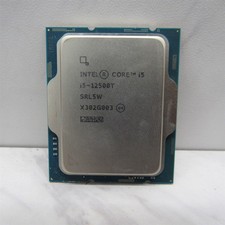
Intel Core i5-12500T SRL5W 2GHz 18MB 6 Core Socket LGA1700 Desktop CPU Processor
$114.99

INTEL CORE I9-10940X X-SERIES PROCESSOR | 3.30GHZ | SRGSH
$179.99
Intel Core i7-4770 3.40GHz Quad Core SR149 LGA 1150 CPU Processor tested
$35.00
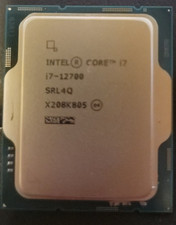
Intel Core i7-12700 12 Core X208K805 LGA 1700 AS IS
$99.99
Intel Core i7-9700 Octa-Core 3 GHz Desktop Processor LGA 1151
$79.99
Intel Core i7-3770K 3.5 GHz Processor
$39.00
Intel Core i7-7700K SR33A 4.20GHz 4-Core LGA1151 CPU Processor
$62.95
Matched Pair _ Intel Xeon E5-2698 V4 2.2GHz 20-Core Processor CPU LGA2011 SR2JW
$94.99
Lenovo Thinkstation P330 Intel Core i7-8700 16GB 256+256=512GB WiFi With Screen
$650.00
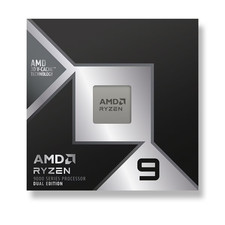
LAST BATCH *Brand New-Sealed* AMD Ryzen 9 9950X3D2 Dual Ed. 4.3GHz 16Core AM5
$768.00



 Reply With Quote