-
There are quite a few resources available on the Knoppix CD that will help you out. Knoppix is pretty good at this, though I'll bet there's even better resources out there for this sort of thing in the Linux world.
My first question is whether the File System on the drive was Fat32 or NTFS. My guess is that it was NTFS which is going to make things much more complicated.
The first step is to determine which hard drive/partition the disk is in Linux. If you have a fairly regular system (one "C:" drive), then that's almost always /dev/hda1. However, you've said that Knoppix wouldn't mount the drive and that it couldn't determine the file system type, which means it could be the partition table has gotten corrupted and needs to be fixed.
For that, you can try this utility, which comes on Knoppix.
gpart - Guess Partition
A real useful utility for when mount can't seem to determine the file system type. Gpart does its best to guess the partitions on a drive and fix the partition table. Read the man page thoroughly before using, and note this precaution:
Code:
PRECAUTIONS
       gpart may be of some help when the primary partition table was lost  or
       destroyed  but it can under no circumstances replace proper disk/parti‐
       tion table backups.  To save the master boot record (MBR) including the
       primary partition table to a file type

              dd if=/dev/hda of=mbr bs=512 count=1

       exchanging /dev/hda with the block device name of the disk in question.
       This should be done for all disks in the system. To restore the primary
       partition table without overwriting the MBR type

              dd if=mbr of=/dev/hda bs=1 count=64 skip=446 seek=446

       Warning:  make sure that all parameters are typed as shown and that the
       disk device is correct. Failing to do so may result in severe  filesys‐
       tem  corruption. The saved file should be stored in a safe place like a
       floppy disk.
I have to confess I haven't used the utility myself, so you may need to hit the chat rooms or the mailing lists for some assitance.
dd_rescue
This can be used to completely image your hard drive. You'll probably need to go buy that other hard drive you've been talking about for this. Using dd_rescue, you should be able to completely image the filesystem on the disk and then mount it via a loopback and see if you can recover everything. Again I haven't used this, but I know it can be used to image that drive.
badblocks
You can also try the "badblocks" command if you can get the partition rescued to determine if there are any bad blocks on that hard drive. If there are it's definitely time to scrap that drive.
You might try surfin' the net and hitting the freenode.net chat rooms to see if there's anyone out there in Linux land with some data recovery expertise. Good luck man. You'll need it.
Similar Threads
-
By aldz in forum General Support
Replies: 4
Last Post: 11-11-2005, 08:07 AM
-
By Capt. Cautious in forum Knoppix DVD
Replies: 1
Last Post: 10-03-2005, 04:37 AM
-
By Kosko in forum MS Windows & New to Linux
Replies: 2
Last Post: 11-24-2004, 11:29 PM
-
By Nils in forum General Support
Replies: 2
Last Post: 09-23-2004, 03:24 AM
-
By drg55 in forum Hardware & Booting
Replies: 3
Last Post: 08-09-2003, 01:57 PM
 Posting Permissions
- You may not post new threads
- You may not post replies
- You may not post attachments
- You may not edit your posts
-
Forum Rules

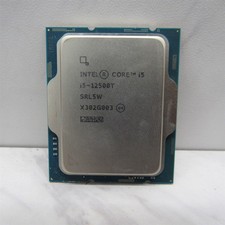
Intel Core i5-12500T SRL5W 2GHz 18MB 6 Core Socket LGA1700 Desktop CPU Processor
$114.99
Intel Core i7-4770 3.40GHz Quad Core SR149 LGA 1150 CPU Processor tested
$35.00

INTEL CORE I9-10940X X-SERIES PROCESSOR | 3.30GHZ | SRGSH
$179.99
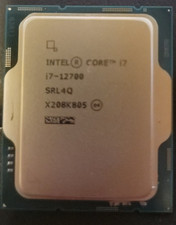
Intel Core i7-12700 12 Core X208K805 LGA 1700 AS IS
$99.99
Intel Core i7-9700 Octa-Core 3 GHz Desktop Processor LGA 1151
$79.99
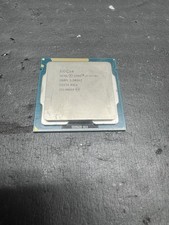
Intel Core i7-3770K 3.5 GHz Processor
$39.00
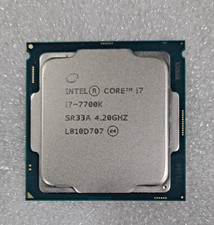
Intel Core i7-7700K SR33A 4.20GHz 4-Core LGA1151 CPU Processor
$62.95
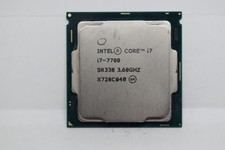
Intel Core I7-7700 SR338 3.60 Ghz Processor
$39.99
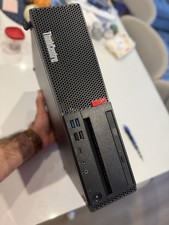
Lenovo ThinkCentre M920s SFF Barebones PC Motherboard PSU DVD No CPU RAM SSD
$27.99
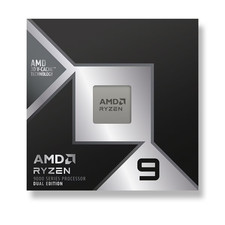
LAST BATCH *Brand New-Sealed* AMD Ryzen 9 9950X3D2 Dual Ed. 4.3GHz 16Core AM5
$768.00



 Reply With Quote