

 Reply With Quote
There's a new script - it is called 'knoppix-installer' (or something like that - just type knoppix and hit the tab-button). You probably have to start the script with 'kdesu knoppix-installer'.


After trying out several demo disks, Knoppix 3.7 was the only one that worked, so naturally I wanted like to install it. Every guide to installing Knoppix, including the FAQ here, says to run knx-hdinstall, but all I got was . . .
bash: knx-hdinstall: command not found
and when I tried to find it . . .
find: knx-hdinstall: no such file or directory
I was hoping this would be my first step along the Linux road, but I didn't expect to get stuck this soon.
There's a new script - it is called 'knoppix-installer' (or something like that - just type knoppix and hit the tab-button). You probably have to start the script with 'kdesu knoppix-installer'.
knoppix@ttyp1[knoppix] knoppix-installer
root permission needed
then I tried . . .
knoppix@ttyp1[knoppix] kdesu knoppix-installer
root permission needed
This isn't working very well is it; now what am I supposed to do?
KDE is running, right?
The script has a graphical interface - i don't know if there is a text modus, too.
edit: You can also try 'sudo knoppix-installer'
I solved the root permission problem, you just type su and press enter. ( I assume su is super user)
However I then get presented with a totally stupid situation. The old knx-hdinstall did a QandA with the user to take care of the partitioning.
In contrast knoppix-installer drops you in the brown stuff with a partitioning app I never seen before. Now here's the stupid part, how am I supposed to use (without damaging my hd) a partitioning app I know nothing about, if the only OS it runs under is the one I can't install until I've partitioned the disk!!!!!!!!!!!!!!!!!!!
You can use any partitioning app you like. Just partition the disk and run knoppix-installer.
On the other hand qtparted is not that difficult. Anyway, I prefer the simple fdisk. I don't know QuandA, but it is possibly still on the knoppix CD. Have you tried to run it?
If you don't need to resize a partition I can give you a short explanation how to partition your disk with fdisk (for resizing partitions you'll need qtparted - but backup your data before resizing partitions).
Type 'fdisk /dev/hda' (assuming your harddisk is primary master).
Now 'p' prints the partition table.
'n' creates a new partition, fdisk will ask you two questions - start cylinder (which is probably the first unallocated) and size (just type '+1234M' for 1234 MB or '+1G' for 1GB - note that Mega means 1000^2 and Giga 1000^3 Byte here, not the usual 1024^2 and 1024^3).
If you want to create another partition, do it now.
Type 'p' to check if everything is alright
If this is not the case type 'q' this will close fdisk and discard any changes you made. If everything is fine, type 'w' - this will write your changes to the partition table and quit fdisk.
Fdisk only creates DOS partitions?
No, i meant the linux fdisk command which creates a linux partition by default. But you can change this with 't' to almost any known partition type.
Having a Linux version with the same name, isn't very helpful for us newbies.
Also I see in the FAQ here that there are several types of file system ext2, ext3, rieser. And one example uses two of them for different things,
hda1 Boot Primary Linux ext2 65.81
hda5 Logical Linux ReiserFS 1003.49
hda6 Logical Linux swap 1497.01
hda7 Logical Linux ReiserFS 1998.75
hda8 Logical Linux ReiserFS 1998.75
hda9 Logical Linux ReiserFS 3002.23
hda10 Logical Linux ReiserFS 3002.23
hda11 Logical Linux ReiserFS 5872.85
but omits to explain how or why, I could understand having the boot, swap and one other, so what are the other five for? It only makes sense to an experienced Linux user.
Is there a partitioning guide that explains all this stuff in language that non linux users would understand?
You need a root partition and a swap partition for linux. For security reasons some people like to have a /boot partition as well (you don't have to mount /boot, so nothing can happen to your kernel). An own /home partition is not a bad idea, too (easier to backup your data). Some people also have own /var and /proc partitions - you won't need this as a newbie.
For a start root and swap will suffice. Your swap partition should be around 500 MB. Create it with 'n' and change the partition type with 't' and then '82' to Linux swap.
Now to the second part of your question: There are several different filesystems for linux. Knoppix uses ext3 as default, which is a pretty good journalling filesystem. Knoppix-installer should create an ext3-filesystem in your linux partion.
 Posting Permissions

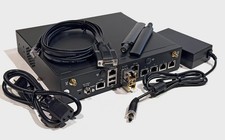
OPNsense pfSense 8-Core Atom C3758 2.2GHz 8GB DDR4 64GB SSD 8x NIC QAT AES VPN
$155.00
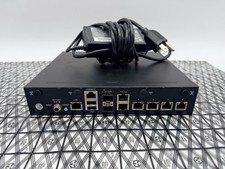
pfSense Firewall 16-Core Atom C3958 8GB DDR4 RAM 64GB SSD 8x 1Gbe QAT AES-NI VPN
$184.99

OPNsense pfSense 16-Core Atom C3958 16GB ECC RAM 512GB SSD 8-Port QAT AES-NI VPN
$288.00
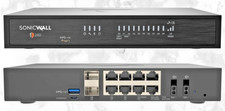
SonicWall TZ280 Firewall 03-SSC-6933 Advanced Edition 3YR NEW SEALED
$999.99

Fortinet FortiGate 60F FG-60F P24286-03-13 Network Firewall Security Appliance
$155.75
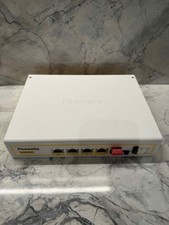
Firewalla Gold Pro - 10 Gbps Cyber Security Firewall
$680.00
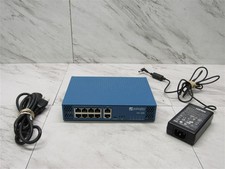
Palo Alto PA-220 Next-Gen Firewall 520-000309-00J
$40.00

Fortinet FortiGate 60F FG-60F UTM UTP License Until 2027 Network Security FW VPN
$199.99

Zero Trace Pen: All-in-one Tor Network Anonymous Drive + Cryptocurrency Wallet
$147.00
Cisco Meraki MX67-HW Security Appliance Firewall NEW Unused Unclaimed
$202.50