-
Senior Member
registered user
It's not that Debian is better than Knoppix or Fedora or GoboLinux or the more than 300 other Linux distributions you can find on distrowatch.com - it's what suits you better. 
(By the way, Knoppix is a Debian system. This is espeically evident after it's installed to hard drive because it checks for updates at Debian websites.)
Most (one hopes) of these distros were designed to fill a certain niche, so it helps to start by looking at what you want versus what's being offered. Sometimes you'll easily find more than one that fits the bill, and you can think and analyze and test to your heart's content.
If you want a big, well-supported Linux for your company, for example, Red Hat Enterprise, Mandrake, and SuSE would be the ones to start with. Fortunately, at the other end of the scale, there are also distros tuned for computers with limited resources like yours. Finding them isn't quite as easy as it could be, but poke around on this forum and others, see what people are talking about, and ask some questions.
As mentioned, Knoppix is really designed to be run from CD, so it has weaknesses once you get out of that realm. It can be useful in a situation like yours with somewhat limited space on hard drives because nearly everything's on the CD. But then you're booting from CD every time, which can get annoying.
Klaus Knopper came up with Knoppix because he didn't want to carry around a laptop. He thought it would be much easier to just carry a CD that he could pop into any random computer that was nearby and do his work there.
(With all the work involved in maintaining a world-wide phenomenon, I'll bet he wishes he'd gone with a laptop! )
One side effect of this is that Knoppix has superior hardware detection (and automatic configuration). That part's good when dealing with the three challenges of your situation - limited resources, older equipment, and laptops (which manage to cram stuff into a smaller box by taking liberties with the hardware).
Another side effect is that there's a whale of a lot of software loaded onto that disk. That's not so good when it comes to installing to small hard drives.
You can do it - Knoppix would just fit on one of your drives. Then you'd probably want to free up space by tossing out duplicate applications (how many text editors do you really need - and is emacs one of them?) and maybe moving some of your setup over to the other drive.
But, as mentioned, managing the programs on an installed Knoppix is harder than on, say, an installed pure Debian because of that mix of sources. Once Knoppix is installed, it defaults to only getting upgrades from the testing stream ("release") of Debian.
This can be changed, of course. But over time, the installed mix of programs would tend to become more and more pure "testing." That would be a long-term benefit, though, that probably wouldn't make up for the short-term pain.
If you're not familiar with Debian releases, here's a short-short overview:- stable is what the Debian developers stand behind. It can take a long (long, long!) time for stuff to enter the stable release, so this will always be behind what other distros offer;
testing is where the final bugs get worked out before entering stable - it's actually good stuff, just not quite ready for the developers to stand behind;
unstable is the stage before testing
and there are a variety of other sources of Debian-oriented packages that don't make it into the three official streams. Some are experimental (a stage less reliable than unstable), some are from developers who take issue with Debian/GNU licensing requirements, some are flat-out proprietary, some might violate export restrictions if downloaded from a U.S. repository by a user outside North America.
 Note that Debian only issues security patches for software in the stable release!
If you decide to try Debian (and why not - it's a decent place to start) you might want to install from Debian disks instead of Knoppix, to avoid the mix of releases.
My computers usually have a few pieces of hardware that don't get detected correctly by average distros, including Debian. As a minimum, I can't run X windows until I pound on the video or mouse configurations for a while.
But I was pleasantly surprised by Debian's net-install setup. You download one iso that's just over 100 MB, use that to configure the base system, then Debian uses apt to go off and get the rest of what you want to install.
Yes, this depends heavily on using the net. But if your connection is slow or unreliable, you don't have to start from the beginning again when the download fails in the middle of a 600-MB CD image.
The official release of net-install give you a pure testing system, but they point you to places to get a stable version. So far I'm liking it a lot. I only had to tweak one setting to get better resolution on my monitor, and I cheated - I copied the configuration over from my Knoppix installation.
Give it some thought, but know that Linux is a good choice for laptop!
-- Ed
Similar Threads
-
By esabacz in forum General Support
Replies: 7
Last Post: 12-16-2004, 10:47 AM
-
By pete1968 in forum General Support
Replies: 1
Last Post: 09-13-2004, 04:40 PM
-
By pete1968 in forum Hdd Install / Debian / Apt
Replies: 1
Last Post: 09-10-2004, 07:08 PM
-
By sb73542 in forum Hardware & Booting
Replies: 0
Last Post: 05-06-2004, 01:24 AM
-
By DonVergonio in forum General Support
Replies: 22
Last Post: 04-13-2004, 04:16 PM
 Posting Permissions
- You may not post new threads
- You may not post replies
- You may not post attachments
- You may not edit your posts
-
Forum Rules

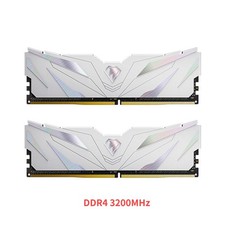
Netac DDR4 32GB 16GB DDR4 3200MHz UDIMM C16 Desktop Internal Memory RAM Kit
$99.99
Lot of 24 SK Hynix 64GB 2Rx4 DDR4 2933Y HMAA8GR7MJR4N-WM Server Ram (AVA)
$11999.95
16GB KIT (2x8GB) DDR4 Gamer Desktop RAM PC4 MIXED BRANDS
$65.00
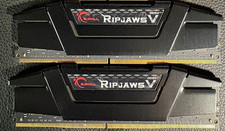
RAM G. SKILL Ripjaws V Series 32GB 2x16GB DDR4 3200 CL16 F43200C16Q64GVK Matched
$149.99
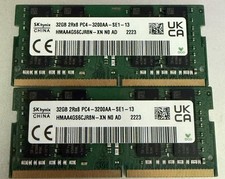
32GB 2Rx8 PC4 - 3200AA - SE1-13 (x2) 64GB
$260.00
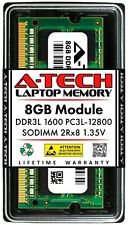
A-Tech 8GB DDR3 1600 PC3-12800 Laptop SODIMM 204-Pin Memory RAM PC3L DDR3L 1x 8G
$21.68
![[ BULK LOT OF 10 ] UNITS of 8GB DDR4 Laptop RAM SAMSUNG, HYNIX etc. picture](/store/img/g/IKQAAeSwEK9qv9TG/s-l225/-BULK-LOT-OF-10-UNITS-of-8GB-DDR4-Laptop-RAM-SAMSU.jpg)
[ BULK LOT OF 10 ] UNITS of 8GB DDR4 Laptop RAM SAMSUNG, HYNIX etc.
$299.99
RAMAXEL Lenovo 32GB LPDDR5X CAMM2 7500MHz Laptop RAM | UNTESTED
$445.00
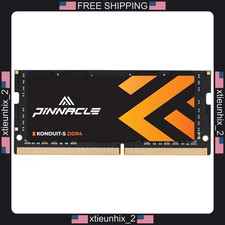
Laptop DDR4 8GB RAM 3200MHz Unbuffered Non-ECC 1.2V Single Rank
$147.99
256GB KIT (8x32GB) DDR4 PC4-3200 RDIMM Registered Server/Workstation BINNED
$1599.00



 Reply With Quote