-
Senior Member
registered user
Hi again! 
I'm sorry for the delay - I was away from the forum for a few days.
I think we should find out what layout the computer sees. As root (or using sudo), type:
Code:
# fdisk -l /dev/hda
# fdisk -l /dev/hdc
The -l options just lists out the partition table and makes no changes. Here's what mine looks like:
Code:
Disk /dev/hda: 120.0 GB, 120034123776 bytes
255 heads, 63 sectors/track, 14593 cylinders
Units = cylinders of 16065 * 512 = 8225280 bytes

   Device Boot      Start         End      Blocks   Id  System
/dev/hda1   *           1        9029    72525411    7  HPFS/NTFS
/dev/hda2            9030       10303    10233405    c  W95 FAT32 (LBA)
/dev/hda3           10304       11120     6562552+  83  Linux
/dev/hda4           11121       14593    27896872+   f  W95 Ext'd (LBA)
/dev/hda5           11121       11248     1028128+  82  Linux swap
/dev/hda6           11249       12523    10241406   83  Linux
/dev/hda7           12524       12961     3518203+  83  Linux
/dev/hda8           12962       13369     3277228+  83  Linux
/dev/hda9           13370       13777     3277228+  83  Linux
/dev/hda10          13778       14185     3277228+  83  Linux
/dev/hda11          14186       14593     3277228+  83  Linux
I have three primary partitions: hda1 has WinXP, hda2 doesn't have an operating system, it's just formatted as FAT32 (what Windows calls it) or vfat (what Linux calls it). And hda3 is formatted as Linux ext3.
Then extended partition hda4 is the fourth and final main partition - there can be only four when you add up primary and extended. It contains logical partitions hda5 through hda11.
If you look at the Start and End numbers (of cylinders) you can see that hda1 through hda4 all line up end-to-end. And then so do hda5 through hda11. The start of hda5 is the same as the start of hda4, and the end of hda11 is the same as the end of had4.
The ID number is different for different types of formatting (except that HPFS and NTFS use the same number, stupidly). If hda2 were still vfat with LBA, but hidden, it would have an ID of 1c. You see that 82 means a Linux swap partition, and 83 means most other kinds of Linux partitions.
Let us know what you find!
-- Ed
Similar Threads
-
By wolfedg in forum Hardware & Booting
Replies: 2
Last Post: 01-14-2006, 01:30 PM
-
By doublem in forum Hdd Install / Debian / Apt
Replies: 5
Last Post: 05-26-2004, 05:13 AM
-
By colin stewart in forum Hdd Install / Debian / Apt
Replies: 7
Last Post: 03-24-2004, 03:07 AM
-
By pistatio56 in forum General Support
Replies: 1
Last Post: 03-01-2004, 09:56 AM
-
By waynejkruse10 in forum The Lounge
Replies: 0
Last Post: 11-15-2003, 11:12 AM
 Posting Permissions
- You may not post new threads
- You may not post replies
- You may not post attachments
- You may not edit your posts
-
Forum Rules


OWC Mercury Elite Pro 2 Bay RAID Enclosure with USB 3.2 for Dual 3.5 inch HDDs
$87.99
EMC KTN-SL3 15-Bay Disk Array Enclosure w/2x 303-108-000E Cards, Dual PSU,No HDD
$239.99
Broadcom MegaRAID 9480-8e Fujitsu PRAID EP540e SAS RAID Card (Replac 9380-8e) 8i
$228.00

G-Technology G-SPEED Studio XL 48TB Thunderbolt 2 Storage - Housing Only
$200.00
MegaRAID 9580-8i8e 16-port 12G SAS/SATA/NVMe 8GB PCIe RAID - 05-50076-00
$1619.19
Broadcom LSI 9305-16i 12Gbps SAS-3 PCIe x8 HBA 16-Ports Raid Controller
$64.99
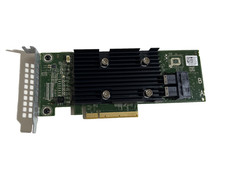
Dell PowerEdge HBA330 LP PCI-E 12GBs RAID SAS Controller Adapter J7TNV
$18.95
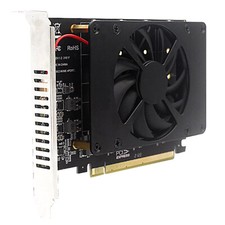
NVME M.2 Adapter Card PCIE X16 Splitter Expansion Controller 4-Disk Soft RAID
$24.43
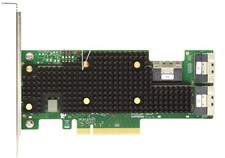
Broadcom 9600-24i RAID Controller PCIe Gen 4.1 Tri-Mode NEW 05-50111-01004
$649.99
Areca ARC-1882IX-24 (16i4e)24-Port RAID Controller Card w/BBU /HDD Monitor Board
$300.00



 Reply With Quote