-

Originally Posted by
jmort
With regards to my FAT32 partition, it was initially partitioned as a logical drive, and most OS's require that the partition be a primary partition instead of a logical drive on an extended partition.
This is partially true. Depends on which OS. Dos and Linux do not care, but Windows does...
Originally Posted by
jmort
I have read several articles and documentation on installing DOS/FreeDOS on a system that already contains XP. According to most of this information, DOS can only be installed on the C drive. Other articles claim it can be installed on other drive letters. In my case, my primary FAT32 partition is drive e, and my primary NTFS partition containing XP is drive c.
According to documentation, DOS (well, specifically FreeDOS) can only be installed to a driive that is marked as drive c. however, there are articles where people claim they have had success by "hiding" the partition containing XP. When I booted freedos from floppy, this happened automatically, as DOS can not recognize an NTFS partition. Thus, when booting freedos from floppy, the NTFS drive c was hidden from DOS and instead, the FAT32 partition took its place as the c drive.
booting dos inndependent of XP (such as from the floppy) does not require any access to the nTFS drive; therefore, there is no danger of DOS doing anything to corrupt the NTFS partition.
You are absolutely right. Actually grub (as other bootloaders) allows you to (un)-hide partitions before booting. This may be required in some complicated setups but not in your case. As you wrote, dos boot will only see a single c partition.
Originally Posted by
jmort
However, what I see happening if I go through with the install is this:
1. turn on computer - BIOS accesses the primary NTFS partition and loads ntldr (xp bootloader).
2. ntldr looks in boot.ini and finds 2 entries, one for XP and one for DOS.
3. If DOS is selected, ntldr will attempt to boot DOS, this differs from the floppy boot because
the floppy boot never bothered accessing the nTFS partition, therefore there was no drive letter conflict.
My fear is that DOS will attempt to boot using the drive letter c: for the FAT32 partition when the NTFS partition has already been accessed as drive c. I am concerned that there may be some conflict that could result in my drive being corrupted because DOS won't see the fact that the NTFS partition was already assigned drive c and it will assign the FAT32 partition to the drive letter c as well.
Basically it depends on when the drive letters are assigned?? If they are assigned before ntldr is accessed, then I wonder what will happen when DOS finally loads and fails to recognize c as the NTFS, but if somehow the drive letters are assigned by the corresponding OS, then I don't think it will be a problem. I think since boot.ini uses multi(0)disk(0)vdisk(0)partition(1) instead of the actual drive letter, I think the letters are probably assiigned after the start of the boot process. Since you have more experience on this subject than I do, i wanted to hear if these fears are ridiculous or not, and what you suggest I put in the boot.ini file in order to boot DOS. In addition, I have heard that installing DOS after XP will cause the MBR to be overwritten.
When the DOS system will be loaded, it will re-enumerate the devices and will only know about FAT16/32 partitions, so you should not worry about your ntfs partition at that time. And if you boot from a USB dongle of floppy disk, the system loaded at that time will not understand ntfs either, so it should not write to your ntfs partition. But be carefull, the sys.com do not touch the mbr of your disk, but if you install 98se or me it will for sure erase your mbr and break your xp bootloader. I am not sure about freedos, but you probably want to make a backup if you plan to give it a try. I know that the USB dongle approach works since there is no program writing in the mbr and dos only knows about the fat32 partition, there is no risk to damage anything relative to xp. But If you use large disks, you may be extremely careful, since some bios and obviously dos cannot handle properly disk(s) larger than 132GB (48 bit addressing limitation). Some old bios may even screw up your data on disks larger than 32GB. And some very old bios will even have problem with overlapping data when adressing over a 8, and 2GB lmit ...
So to summarize, to be safe I would avoid any kind of a generic install without a serious backup. In an other hand I feel very comfortable to install a dos system using the sys.com program assuming you have booted on a media already running the dos system you are willing to install. I used the USB dongle several times but your bios needs to support such a boot type. A floppy disk boot is an other good alternaltive. Well, in most cases, if your computer do not have a floppy drive, the bios will support a usb boot. So If you have a recent bios and a USB dongle, you have already everything in your hands to get it to work. Good Luck.
Cheers, Gilles
Similar Threads
-
By Robert A. in forum MS Windows & New to Linux
Replies: 14
Last Post: 10-07-2005, 08:50 PM
-
By michael7 in forum Hardware & Booting
Replies: 0
Last Post: 06-04-2005, 12:43 PM
-
By francio in forum Hdd Install / Debian / Apt
Replies: 0
Last Post: 05-30-2005, 09:05 AM
-
By brian in forum General Support
Replies: 0
Last Post: 01-17-2005, 05:59 PM
-
By Jken in forum Customising & Remastering
Replies: 0
Last Post: 06-03-2004, 01:12 PM
 Posting Permissions
- You may not post new threads
- You may not post replies
- You may not post attachments
- You may not edit your posts
-
Forum Rules

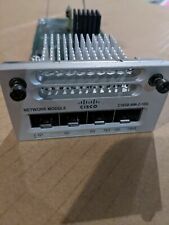
Cisco C3850-NM-2-10G 2 Port Network Exp.Module for 3850
$18.90

Cisco Catalyst WS-C2960+24TC-S 24-Port Gigabit Managed SFP Switch
$39.99
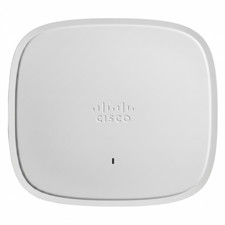
Cisco Catalyst C9130AXI-B WiFi 6 802.11ax Wireless Access Point Brand New
$101.99
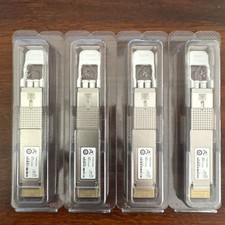
Cisco Acacia DP04QSDD-E25-840 400G QSFP-DD Coherent DCO Transceiver Module
$699.99

Cisco ASR 9001 Router 4x 10G SFP+ 20x 1G SFP 2x PSU | ASR-9001, A9K-MPA-20X1GE
$1200.00
Cisco C9300-NM-2Y - Cisco Catalyst 9300 2 x 25G Network Module New
$550.00
Cisco C9500-32QC-A C9500 Series 32x Port 40G or 16x 100G - Dual AC
$1099.00

*NEW* Fortinet USB-to-RJ45 Console Cable *CISCO COMPATIBLE*
$6.99
Cisco Catalyst 2960-48TT-L 48-Port Fast Ethernet Managed Rackmount Switch
$46.99
nxa-pac-750w-pe v02 NEW OPEN BOX for Cisco Nexus 9300 Series power supply
$200.00



 Reply With Quote