-
Senior Member
registered user
Hello, and welcome!
I am new to linux and after looking for a suitable distribution to start learning....
I'm a big fan of Knoppix, but I recommend against it as the first Linux to install and learn from unless you have hardware that won't easily work with any other distro.
Klaus Knopper writes (in Knoppix Hacks) that he wanted a portable work environment without carrying around a laptop. So he stuffed a ton of software - and excellent hardware detection - into one CD that he could pop into any computer that he found nearby.
This has lots of beneficial side effects - for example, it's easy to show a friend how great Linux works by popping that same CD into their computer. Knoppix is very likely to run on their machine; it has nearly 2GB of software, so there's plenty to show off; it's cheap and easy to give them their own copy to play with; and it doesn't have to be installed for them to have fun with it.
All of this makes Knoppix famous, and this is very good!  So let's dig a little deeper.
Think of a "Linux" as five layers of software:- 1 - Linux, by Linus Torvalds, is the kernel, the center - the layer that works directly with hardware;
2 - next higher is the rest of the operating system, essentially software from the GNU project http://www.gnu.org - it gives you a prompt, executes your request to list the files in a directory, connects various programs with libraries of shared code, etc.;
3 - in the next layer up are applications such as word processors, web browsers, games, calculators - some are from GNU, but many aren't;
4 - then this is all wrapped up by the people who create distributions - they choose which Linux kernel to include, they may tweak the GNU tools, they'll include the Mozilla suite instead of just Firefox, and maybe they'll throw in some of their own stuff (which is how apt and RPM started) - Debian fits here
5 - some people just aren't satisfied with that  - they take one of these big, wrapped-up balls and make it work harder while still keeping the basic nature of the package - Karl Knopper made Knoppix out of Debian
And thanks to the great success of Knopper's work, many others have made level-5 distros by repackaging Knoppix for their own purposes. For example, replace KDE with Gnome and you get ... Gnoppix!
At level 4 there are four (or five, depending on how you count) major, major distros. It's impossible to say that any GNU/Linux combination is official. But it's here that you mainly look for what's most-developed and most-supported.
Three of these distros are commercial: Mandrake, Red Hat, and SuSE. These people are actually paid to play with Linux! And you can buy support from them, too. The fourth, if you count it as separate (and I guess we have to, now) is Fedora, a public spin-off from Red Hat. On distrowatch.com it ranks second of the 393 Linuxes (and BSDs) that people want to read about the most.
The fifth major, major distro is Debian. You could easily say that it's the most developed and most supported of them all, based on three measurements:- - it's been around the longest, except for Slackware;
- it has many, many more people working on it than any other distro; and
- it has thousands and thousands more tools and applications than any other.
Debian also does little or no messing around with the three layers of software beneath it. So even though you can't call it "official" in any way, you could say that it's the most "pure." (And in fact may people do, though they usually mean it in a philosophical or even moral way.)
So if Debian is great, then Knoppix must be even greater, right?
For its intended purpose, yes! And that's how you should look at any distro. If you want a GNU/Linux to carry around, work with, and show off, Knoppix is really the first and probably the best.
But some of its strengths as everything-on-CD become weaknesses when Knoppix is installed to HD. Knoppix has everything picked out for you - but maybe you'd rather have Gnome, leave out OpenOffice.org, include a few forensic tools. No problem, this is a Debian so you just use the dpkg/apt tools to install what you want, right? And while you're doing that, why not upgrade the rest of the software and make everything current?
Knoppix makes this difficult for a newcomer because, as a level-5 Linux, it's made many changes on the other levels as well as mixing in its own brew of customized applications and start-up scripts.
It's like building a sturdy wall with rocks found in the field instead of with bricks. Each rock has to be trimmed by hand and carefully fitted to make a solid wall, while (for the most part) a brick is a brick is a brick, and they don't need nearly so much individual tweaking. (My father was a bricklayer and probably died thinking I learned nothing about his craft - hello up there, Dad! )
You can upgrade piece A, but now it's very possible that A no longer works with B and C. And because of how Knoppix was built, upgrading B might take it even farther away from working with A.
This is because, first, Knoppix just plain changes some pieces. But also, it uses three different kinds of brick - that is, pieces from the three different tracks of Debian development. (Oh, okay, three different "releases.")
See, Debian will typically have three versions of every piece of software. One they'll stand behind, in the "stable" distribution. Another version they're still working on, but it's nearly ready for public release - "testing." A third needs still more work, and it's in "unstable."
If A, B, and C are all from stable, and you change one or all of them, they'll all still work together. Even if they're all from testing, it's very likely they'll be okay. But if one piece is from stable, another from testing, and a third from unstable - it may take some effort to put your Linux back on its feet.
Finally, there's the installation process. Fabian Franz has written a great script (knoppix-installer), but it's very slightly broken in Knoppix 3.7 and has resulted in questions on this forum. I think this is due to some changes in the 2.6 kernel and one of the GNU tools.
Maybe these are fixed in 3.8, which is not officially available yet. But still, Knoppix is designed to be a "live CD," so work on the CD components will always have higher priority than on installation tools.
Do you want to guess which distro Mr. Ed, the talking horse, recommends? And remember, this is straight from the horse's front end!
I used to be pretty anti-Debian. I just couldn't get the software to work with my hardware, and as famous as dpkg was, I felt sure that it was a product of the Spanish Inquisition. So I installed Red Hat 7.3 and puttered around happily.
But I think the people at Debian have made great progress in both of these areas. I recently did what they call a net install and had to make only one minor hardware tweak. To give credit where credit is due, I stole a video setting from my installed Knoppix.
The official net install is from Debian's testing release, named sarge. But sarge is very nearly ready to be promoted to stable. For learning, maintaining, and expanding, I think this is the best way to start out.
But there are three pretty good reasons for not going with Debian, especially with a net install. One is that the hardware detection just may not be good enough for your equipment.
Another is that choosing among more than 8,710 software packages (per http://www.debian.org) can be overwhelming, especially with as little description as they provide. Fortunately, during installation you're offered some pre-selected groups as well.
Third is that this is a net installation. You download a CD image that is just over 100 kb and which creates a base Debian system, and the rest you retrieve over the internet after doing your post-installation selection.
If you do this all at once over a slow telephone line, it'll take a long time. I picked the workstation configuration, and the download was a half-hour - and my broadband connection runs at 3 Mb per second (not quite the equivalent of 2 T-1 circuits). Still, that's only 3/4ths of the time it would take to download another full CD image.
So here's an alternative: Progeny http://componentizedlinux.org. The company that makes it is still commercial, but the distribution no longer is.
Progeny is intended to be absolutely Debian, but modular. That way people (that is, their clients) can get just the Linux they want without 8,710 choices. There's only one CD to download, and then upgrading is done with the apt tools. (APT is set to download from their website, but it's nothing to point it to Debian instead, or in addition.)
Besides being stock Debian, Progeny is an effort toward an openly developed, standardized Linux. See their website for details on the Linux Core Consortium and the Linux Standard Base.
They do make one significant change to Debian, and that is to add their own hardware-detection scheme (Discover). So if Debian-from-Debian doesn't quite work with your hardware, maybe Debian-from-Progeny will.
And by the way, Ian Murdock founded both Progeny and ... the Deb-Ian project.
I hope this helps.
-- Ed
Similar Threads
-
By yozef in forum Other Live CDs
Replies: 20
Last Post: 12-30-2006, 04:27 AM
-
By pap2003 in forum General Support
Replies: 3
Last Post: 09-26-2004, 06:05 PM
-
By dewd in forum The Lounge
Replies: 0
Last Post: 02-16-2004, 02:19 AM
-
By estranged in forum The Lounge
Replies: 2
Last Post: 09-15-2003, 08:40 PM
-
By eadz in forum The Lounge
Replies: 0
Last Post: 05-13-2003, 01:58 AM
 Posting Permissions
- You may not post new threads
- You may not post replies
- You may not post attachments
- You may not edit your posts
-
Forum Rules

Lenovo ThinkPad E14 Gen 2 Laptop 14� HD Ryzen 5 16GB RAM 512GB SSD Win 11 Pro
$334.99
Lenovo ThinkPad L15 Gen 3 15.6" 16GB, Thunder Black
$241.50
Lenovo ThinkPad L15 Gen 3 15.6" 16GB, Thunder Black
$241.50
Lenovo ThinkPad E14 Gen 3 Laptop 14� FHD AMD Ryzen 5 16GB RAM 512GB SSD Win 11
$374.99

Lenovo Legion 5 Gaming 15.1" WQXGA OLED 165Hz Core i9-14900HX 16GB 1TB RTX 5070
$1469.00
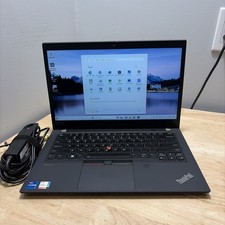
LENOVO THINKPAD T14 GEN 2i CORE I7-11165G7 2.8GHZ 16GB 256 SSD WCAM WI1 CORD
$250.00
Lenovo Thinkpad T14 Gen 2i 14" 16GB 512GB, Black
$313.00
Lenovo ThinkPad T14 Gen 1 14" AMD Ryzen 5 16GB 256GB SSD
$219.99
Lenovo Thinkpad T14 Gen 1 14.0" 16GB 512GB, BLACK
$285.99
Lenovo Thinkpad T14 Gen 3 14" 32GB 512GB, BLACK
$432.00



 Reply With Quote