-
Senior Member
registered user
"When installing and using Linux, your drives appear as devices with the following names: hda--first IDE drive (stands for "hard drive a", i.e. the master drive on the first IDE interface), hdb--second IDE drive (i.e., the slave drive on the first IDE interface), hdc--third IDE drive (i.e. the master drive on the second IDE interface), hdd--fourth IDE drive (i.e. the slave drive on the second IDE interface). The numbers mean the partitions on the physical drives: "hda1" means the first IDE hard drive (hd a), first partition (1); "hda2" is the first IDE hard drive, second partition; "hda3"--the first IDE hard drive, third partition; (and so on if you have more than 3 partitions on the first IDE hard drive); "hdb1"--second IDE hard drive, first partition (or just "hdb" if it is the CDROM installed as a slave on your first IDE interface). "hdc1"--third IDE hard drive, first partition, etc. SCSI drives have analogous names but start with the letters "sd" (="SCSI drive"), followed by the letter indicating the SCSI interface and by the number indicating the SCSI device id. For example, "sda4" means "first SCSI interface, id number 4". If you have an external zip drive attached to your parallel port, it will appear as SCSI device "sda4" (zip drives work in a SCSI-emulation mode)."
Copy/Paste from http://linux-newbie.sunsite.dk/ 
Similar Threads
-
By bagmonkey in forum General Support
Replies: 1
Last Post: 04-12-2008, 04:50 AM
-
By kennmurrah in forum MS Windows & New to Linux
Replies: 3
Last Post: 03-01-2006, 10:09 AM
-
By Lintu in forum Hdd Install / Debian / Apt
Replies: 1
Last Post: 10-20-2005, 06:13 PM
-
By mjman in forum Hardware & Booting
Replies: 9
Last Post: 10-25-2004, 09:46 PM
-
By kidsatacrux in forum MS Windows & New to Linux
Replies: 19
Last Post: 08-03-2004, 07:41 AM
 Posting Permissions
- You may not post new threads
- You may not post replies
- You may not post attachments
- You may not edit your posts
-
Forum Rules

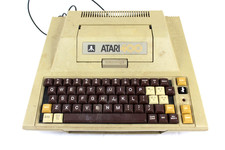
VTG Atari 400 Home Computer System ** Sold "AS-IS" for Parts or Repair
$88.75
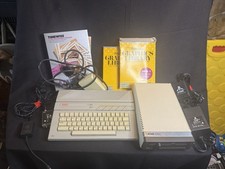
Atari 130 XE/Atari 1050 Bundle W/ Cords And Extras (Powered On)
$300.00
DEFECTIVE Atari 810 Vintage Computer Disk Drive powers on Unit Only Boo G3D
$49.29

UNOCART-2600 SD card Multi Rom Cartridge for ATARI 2600 with CASE
$34.25
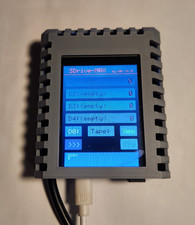
SDrive Max Floppy Drive Emulator Atari 8-Bit 400/800/XL/XE Firmware 1.5 USB C R2
$70.00
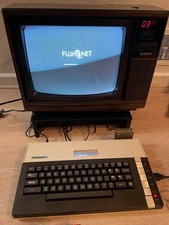
Fujinet 1.7.1 Atari 400 800 800XL 130XE 65XE XEGS Assembled, Tested, Working
$99.99
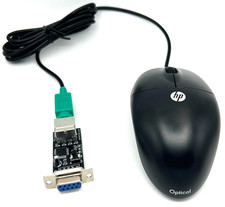
ATARI Mouse with Adapter for ST, STE, Mega STE, TT Optical - USA Seller
$29.99
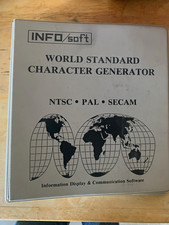
INFO/soft Character Generator Manual for Atari 3000/5000/7000 NTSC
$40.00
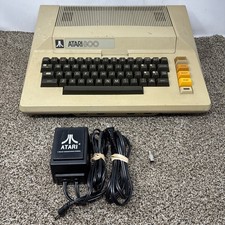
Atari 800 8-bit Computer System Fully Tested Great Condition 48k READ
$350.00
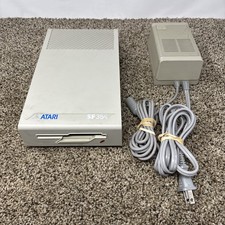
Vintage Atari SF354 Floppy Disk Drive & Power Supply FOR PARTS OR REPAIR AS IS
$120.00



 Reply With Quote