-
Before you can use a disk you must partition it, then format the partitions (create filesystems on the partitions), and then mount the filesystems. Knoppix doesn’t do any of these steps for you, because it is intended to be run as a Live CD, and it doesn’t touch the hard drives in the process (except for SWAP partitions).
Partitioning the disk means just what it says; you break the disk into smaller pieces, which are usually independent of each other. When you partition the disk, you usually provide a rough idea of what the filesystem type will be. Partitioning can be performed with cfdisk, but it sounds like you already understand this part.
Next you need to format the partitions. Formatting the partitions creates a filesystem on the partitions that the OS can read and write. My guess is that you skipped from here stright to the last step. To create a filesystem in Linux, use the mkfs command. Ext2 is the most common filesystem in Linux, and although Ext3 is newer and better, Ext2 will cause you fewer problems if you don’t know what you’re doing (I don’t think all versions of Knoppix have a kernel with built in Ext3 support, so you can’t use bootfrom=/dev/hda1 if hda1 has an Ext3 filesystem). To format hda1 with an Ext3 filesystem the command would be “mkfs.ext3 /dev/hda1”.
Finally you need to mount the filesystem before you can use it. Mounting a filesystem is basically the process by which you tell the OS that you want to use a particular filesystem, and you give it a name that you can refer to it by. In Windows this is where you assign a drive letter like D: to a filesystem. In Linux it will be something like /mnt/hda1. To mount /dev/hda1 the command would be “mount /dev/hda1 /mnt/hda1” assuming that the directory /mnt/hda1 exists. Filesystems can also be mounted in Knoppix by clicking on the icon of the partition that the filesystem exists on, on the KDE Desktop.
Once the filesystem is mounted, you can access it at the mount point, in this example /mnt/hda1.
Similar Threads
-
By Niramaya in forum Hardware & Booting
Replies: 1
Last Post: 10-29-2009, 08:31 AM
-
By im_a_noob in forum Tips and Tricks
Replies: 1
Last Post: 02-26-2008, 12:33 AM
-
By Nocturno in forum Networking
Replies: 5
Last Post: 02-25-2006, 04:14 PM
-
By TimWhite in forum Hardware & Booting
Replies: 1
Last Post: 02-22-2005, 07:38 PM
-
By kenblood in forum MS Windows & New to Linux
Replies: 7
Last Post: 09-07-2004, 09:24 AM
 Posting Permissions
- You may not post new threads
- You may not post replies
- You may not post attachments
- You may not edit your posts
-
Forum Rules

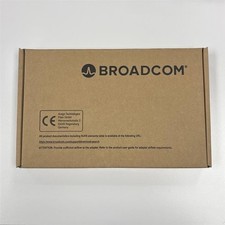
MegaRAID 9580-8i8e 16-port 12G SAS/SATA/NVMe 8GB PCIe RAID - 05-50076-00
$1619.30
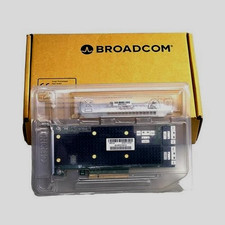
Broadcom 9600-24i Tri-Mode RAID Controller 4.0 NVMe SAS SATA NEW 05-50111-01003
$639.69
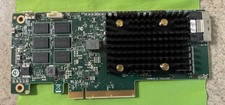
BROADCOM 05-50077-01 PCI-E 4.0 x8 PCI-Express MegaRAID 9560-8i RAID Controller
$739.99
Intel VROC Premium RAID Controller Card PCIe Add-On Module VROCPREMMOD
$265.00
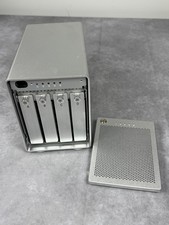
OWC Mercury Elite Pro Quad 4 Bay RAID Storage Enclosure USB 3.1 Gen 2 No Drives
$149.95
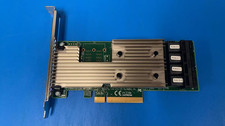
Broadcom LSI 9305-16i 12Gbps SAS-3 PCIe x8 HBA 16-Ports Raid Controller
$64.99
LSI 9260-8i 512MB SAS SATA 8-port PCI-E 6Gb RAID Controller Card US
$29.88
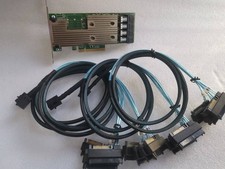
LSI 9305-16i SATA SAS 12Gbs Controller card PCIe 3.0 IT-Mode w/SAS SATA cable US
$76.98
NEW Lantronix UDS1100-POE - One Port RS232/RS422/RS485 to IP Ethernet 950-00169
$89.00
9300-8i LSI SAS3008 8-Port 12Gb PCIe IT mode ZFS FreeNAS unRAID 2*SFF-8643 US
$49.50



 Reply With Quote