-
Senior Member
registered user
I don't get the differences in the distros, James. Can you (or anyone) kindly rephrase that?
"Pre-configured user-oriented desktop PC, not server"?
I mention that phrase because there are people who will recommend a particular distro that they like (and I'm sure they have a good reason for liking it) but that distro is not best for either new users or as desktop OS. Distros like Gentoo, Slackware, and is some ways Debian do not attempt to produce a very well rounded, easy to use, user friendly desktop OS. Linux has the flexibility of being just about any type of computing platform and some examples are: Linux runs the Google search engine, Linux is the OS on a Tivo video recorder, you can get Linux on a wristwatch, Linux on cell phones, Linux on PDAs, Linux on the an Airbus jetplane (on the in-the-back-of-the-seat TV screens). Theose distros I listed in my original post tend to focus more on a desktop GUI OS (think Windows XP or Mac OS X) as opposed to a server OS (think Windows 2003 Server or Novell Netware or big time UNIX ). Ubuntu, Fedora Core and Linspire can operate as a server (and probably do it very well) but the developers again are mostly focusing on desktop & end user issues as opposed to server and big enterprise issues. Something also to note is that they also have a large community of users, forums, tutorials and guides to support it as a desktop OS.
So I've also mentioned that Debian is also a great choice. Knoppix, Ubuntu, and Linspire are all based on Debian. Debian is one of those general purpose distros that can be everything (client, server, desktop, router etc). Installing Debian as a desktop OS is not that hard. But compared to Ubuntu, Fedora Core and Linspire it does require more user involvement in order to make it a very well rounded, easy to use, user friendly desktop OS. It is not ugly, broken, or unecessarily difficult. It tends towards users with more experience. On the other hand, Linspire costs about $50 while Debian/Fedora Core/Ubuntu is $0. Ubuntu & Fedora Core have a new release every 6 months which in my opinion is too frequent & requires the developers and users to worry about upgrading from release to release. Debian's release cycle is rather long & the next release is estimated at a minium of 1.5 years. I feel this is good because of my background in being a sysadmin. if you have known working computer, why would you want to upgrade it & possiblly make it less stable?
Finding a personal desktop OS distro is for me like finding a comfortable pair of dress shoes. I've bought $25 shoes that I discovered I hated. I've bought $80 shoes that again I hated. I think it has taken me a cycle of 5 pairs of shoes before I found a brand that is good looking, sturdy and more importantly comfortable. You must discover the comfortable desktop OS for yourself by reading, experiementing & learning. A great place to visit regularly is distrowatch.com and linuxquestions.com. They have plenty of links, guides & forums for you to visit.
I wish you success in finding shoes, I mean a Linux desktop OS thats right for you.
James
Similar Threads
-
By ihcnut in forum Hdd Install / Debian / Apt
Replies: 0
Last Post: 12-26-2004, 09:26 PM
-
By gooz in forum General Support
Replies: 1
Last Post: 10-23-2004, 09:11 PM
-
By dgr72371 in forum Laptops
Replies: 2
Last Post: 01-23-2004, 03:27 PM
-
By dgr72371 in forum General Support
Replies: 1
Last Post: 01-22-2004, 11:52 PM
-
By tux in forum The Lounge
Replies: 0
Last Post: 08-26-2003, 09:06 AM
 Posting Permissions
- You may not post new threads
- You may not post replies
- You may not post attachments
- You may not edit your posts
-
Forum Rules

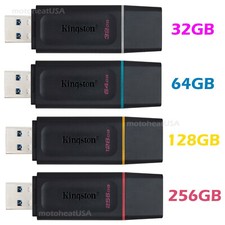
Kingston 32GB 64GB 128GB 256GB USB 3.0 Flash Drive Thumb Memory Stick Pen lot
$285.90
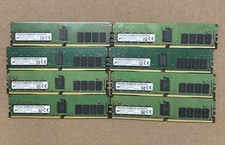
Lot Of 8 Micron 8GB 2Rx8 PC4-2666V-RE2-11 ECC REG Server Ram MTA18ASF1G72PDZ-2G6
$210.00
qty 50 Memory Module DDR3 SODIMM 4GB Module 1.6Ghz Silicon Power SDRAM
$80.00
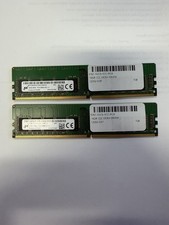
LOT OF 2 Micron 16GB 2Rx8 PC4-2666V-EE1-11 P/N: MTA18ASF2G72AZ-2G6D1ZG
$199.95
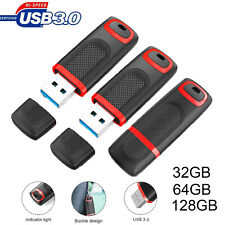
USB 3.0 Flash Drive 32GB 64GB 128GB Memory Stick Thumb Stick Lot Pack
$826.09
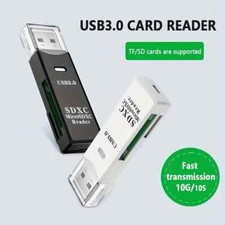
USB 3.0 Micro SD SDHC TF Card Reader Memory Adapter for PC Laptop Camera lot
$3.75
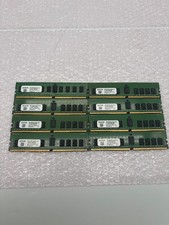
Lot of 8 A2ZEON 8GB DDR4-2133 RDIMM ECC 1Rx4 Server Memory RD4R8G44S2133
$529.99
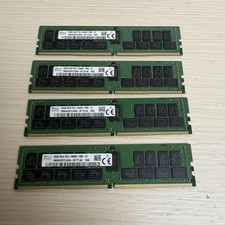
128GB (4x32GB) SK hynix DDR4 PC4-2666V RDIMM ECC Server Ram HMA84GR7CJR4N-VK
$799.00
TF/SD Card Adapter Camera Reader Android Type-c For iPhone17 Pro Max Plusm lot
$573.98
Micron MTA18ASF2G72XF1Z-2G9WP1ABVGD 16GB 1Rx4 NN4-2933Y DDR4 ECC NVDIMM
$74.50



 Reply With Quote