-
pterandon:
It is a Linux Tag version, according to the case.
Harry:
Thanks for the discussion on cable select, I had never seen what the reason for it was beyond, as you described, convenience for the manufacturer.
As I noted above, the two drives on my machine still worked together when in cable select mode, I don't think the original ribbon is IDE2 but is is split, [I thought to facilitate routing...] (how can I tell- if it's a smooth ribbon it's not, if its split with a twist it is ?.. )
I plan to put them back together with the DVD as master & CD as slave. Does it matter which is on the end of the ribbon ? (SCSI can be fussy about that....)
-
Administrator
Site Admin-

Originally Posted by
snaproll
As I noted above, the two drives on my machine still worked together when in cable select mode, I don't think the original ribbon is IDE2 but is is split, [I thought to facilitate routing...] (how can I tell- if it's a smooth ribbon it's not, if its split with a twist it is ?.. )
I would suggest some Google searching, but to be honest I just did that and I come away with more doubts than answers. I found some discussion of a CS IDE cable not with a twist but with one wire cut. Also I found information that directly conflicted with what ockham23 gave below.
Originally Posted by
snaproll
I plan to put them back together with the DVD as master & CD as slave. Does it matter which is on the end of the ribbon ? (SCSI can be fussy about that....)
If you jumper for master and slave, it will not matter. Pick which drive you wish to be which and run the cable for best reach to the drive and best air flow. The only concern I can mention here is that you should use as short a cable as reasonable (over 18 inches is considered risky although I have done it on one full size tower case with poorly positioned MB connectors) an if you only have one master device instead of a master and slave the master should be on the end of the cable, not on the connector closest to the computer (it's a transmission line thing to avoid the unterminated end of the wire from picking up signals like an antenna or echoing back signals that hit the end of the wire and bounce back).
Unfortunately, if you use CS at this point I'm not sure how it works. My Google search turned up references that say the master is the middle connector (closer to the MB) but ockham23 says that the master is on the end.
Originally Posted by
ockham23
Open the case, set the jumpers of both drives to "cable select (csel)" and put the DVD burner at the end of the IDE cable. As a result, the DVD burner should become the "master" drive for IDE channel #2.
I have no idea who is right, as I just don't use CS, and none of this causes me problems. If the above reference that I found is correct then it's just another reason to not use CS, at least when you only have a master or if the slave might ever be removed, even for testing. That extra unterminated connector hanging off the end of the cable (rather than being in the center, which is ok), can be a source of randon and hard to identify problems.
-
Senior Member
registered user
For the modern 80-conductor cable it's master at the end (black connector) and slave at the gray connector. The blue connector plugs into the motherboard.
-
Originally Posted by
ockham23
For the modern 80-conductor cable it's master at the end (black connector) and slave at the gray connector. The blue connector plugs into the motherboard.
Agreed. I examined the ide ribbon that came with a new Seagate drive & it was color coded, and the instruction manual was as you stated.
-
Administrator
Site Admin-
Originally Posted by
ockham23
For the modern 80-conductor cable it's master at the end (black connector) and slave at the gray connector. The blue connector plugs into the motherboard.
This may well be true for many IDE cables that are now shipping, but it does bring out another point where there could be a problem. I have several IDE2 cables (80 wires) that do not meet this standard. I certainly expect there are other users out there also who have cables like mine. Yet using an 80 wire IDE cable was all you suggested (actually, worse than that, you advised using an 80 pin IDE cable) and that is not enough to make things work.
Originally Posted by
ockham23
Make also sure that you use an 80 pin IDE cable to connect your disk drives.
Unless something has happened that I've missed, all IDE connectors still have 40 pins, but the new type use an 80 wire cable. Stll, if users interpret your advice as I did to mean "use an IDE cable with 80 wires", they could still have problems unless they happen to have what you now call a "modern" IDE cable, as opposed to just having an IDE 2 cable. Yet "modern" is a vague and therefor confusing term, I thought modern and IDE 2 refered to the same thing until we started this discussion and I would have used the IDE 2 cable that came with my motherboard 5 years ago. But while it has 80 wires, it doesn't have the color coded black and grey connectors and I expect that it would not work for this purpose. Just another thing that can go wrong when you tell others to use cable select.
If you are happy with cable select and you know you are using all the correct modern cables, then fine, go ahead and use it. But master and slave simply works and is not dependent on someone's IDE 2 cable being "modern" (or being IDE 2 at all, as many users optical drive cables still are not). I still don't see any reason to advise someone already using master and slave and having problems to try to switch to CS when it can only complicate things. Nothing at all is gained over using CS rather than M/S setting. I would have just advised the user to check their drive jumpering and be sure that the drive they want to be first is jumpered master and the other is jumpered slave. You had them check both drives also, but make a change on each one, and then they had to have the right "modern" IDE 2 cable or they would really be messed up. And unless they knew how to position the drives on the cable so that the one they wanted was the master then they might end up wondering why the wrong drive tried booting first (or in the case of some BIOSs, only the wrong drive booted).
Similar Threads
-
By zandoval in forum Networking
Replies: 0
Last Post: 03-05-2005, 03:39 AM
-
By Praxis in forum Networking
Replies: 0
Last Post: 07-19-2004, 07:24 PM
-
By gradnite in forum Hdd Install / Debian / Apt
Replies: 4
Last Post: 07-11-2004, 08:54 AM
-
By poweribo in forum General Support
Replies: 2
Last Post: 06-30-2004, 08:26 PM
-
By A. Jorge Garcia in forum General Support
Replies: 4
Last Post: 05-08-2004, 01:35 PM
 Posting Permissions
- You may not post new threads
- You may not post replies
- You may not post attachments
- You may not edit your posts
-
Forum Rules

INTEL XEON E5-2680V4 SR2N7 2.40GHZ CPU
$11.00
Dell EMC PowerEdge R440 Xeon silver 4215 2.5GHz 16 GB ram 2x 550W PSU No HDD
$275.00

Dell Precision Tower 7810 Xeon E5-2630 v3 @ 2.40GHz , 32GB Ram, NO HDD, NO OS
$239.99
Dell Precision T7820 2x Xeon Silver 4114 2.20GHz 950W No RAM GPU HDD 4x SATA
$350.48
Dell Precision T5820 Workstation 3.70GHz W-2135 No RAM/ GPU/ HDD/ OS
$179.98
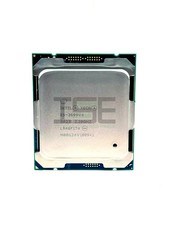
Intel Xeon E5-2699 V4 2.20GHz 55M 22-CORES LGA2011-3 Server Processor 145W SR2JS
$84.49
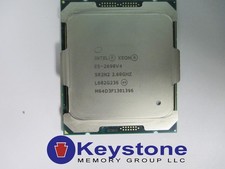
Intel Xeon E5-2690 v4 SR2N2 14 Core 2.6GHz 35MB LGA2011-3 CPU *km
$15.99
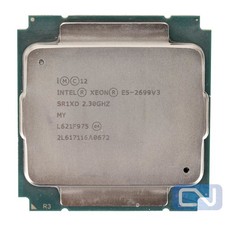
Intel Xeon E5-2699 v3 18 Core 2.3 GHz 45MB SR1XD LGA 2011-3 B Grade
$15.95
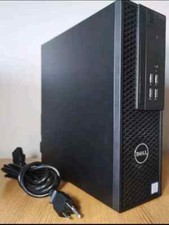
DELL Precision T3420 | Xeon 1240v6 | 525GB SSD |16GB RAM |Nvidia GPU |Win11
$149.00
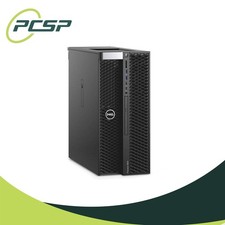
Dell Precision T5820 950W Workstation 4.00GHz W-2125 No RAM/ GPU/ HDD/ OS
$144.98



 Reply With Quote