-
Senior Member
registered user
I myself have experienced difficulties running modern distros like Ubuntu, Suse, Fedora on old machines. It only took a couple of tries before I realized that running 2005 OSs on 1997 HW and expecting the same end-user desktop experience as if it was running on 2 year old HW is just not realistic. We demand more complete desktop enviornments, GUI slickness, auto-this or auto-that, themes, icons, etc all which can not be reasonably delivered on the old HW. If I wanted to use old HW, I had to do two things. Either make a conscious effort to research & run lightweight everything from the system daemons/services to the workprocessor to the webbrowser to the GUI/windowmamanger itself. Or to seek a distro that is designed to be lightweight.
To run lightweight/lean:
Learn the system's services. Then disable all non-essential services. For me it was to disable things like: apm (Advanced Power Managment), anacron (a cron daemon), cups (printing service), sendmail or exim (email daemons), hotplug, sshd, alsasound, isdn, ppp, portmap, nfs*, *inetd,
Run a window manager instead of a desktop enviornment: Today's GNOME & KDE are great powerful desktop enviornments that provide much needed interoperable, functional, consistent applications & GUI experiences. It has a cost & the cost is performance on old HW. The challenge, is then to run something else that might be "good enough" but not a full desktop enviornment. One such alternative is XFCE (see screenshot), a CDE (Common Desktop Enviornment) clone. It is designed to be functional but not resource heavy GUI desktop experince. If XFCE is not acceptable or still too heavy, then there is IceWM (see screenshot), Window Maker see screenshot) or BlackBox (see screenshot). They are literally a window manager and a application launcher. They are not a complete suite of applications or a cohesive consistent desktop experience.
The next step is to learn and use smaller lightweight applications: OpenOffice.org 1.1.x is great but too heavy for old HW. There are alternative word processors, spreadsheet, presentation & diagraming programs. The same for file managers, web browsers, email clients, PDF viewers, music & media applications. Freshmeat .net is a good place to begin browsing the categories of applications.
Alter your computing habits: If you tend to open up application _in case_ you need them, then consider only opening them when you need them to leave RAM for the other apps. If you only have 128MB of RAM and need to have FireFix plus 3 or 4 other applications open, then don't have FireFox loaded up with 30 tabs of pages. Change your surfing habits to reflect the machine and only open 3 or 4 tabs to leave RAM for the other applications. Choosing to not use big media apps or to listen to internet radio mp3 streams is a good way to conserve CPU & RAM. Don't use a desktop wallpaper.
Are there any versions of Knoppix or similar distros that would work on what could best be described as "solid Windows 98" machines?
Yes. Vector Linux and Damn Small Linux. Vector uses IceWM instead of GNOME or KDE. DSL uses BlackBox. Vector includes most normal use (non-lightweight) apps. DSL is packed full of lightweight alternatives.
Any ideas? I am looking for a "light" version, not in terms of space, but in terms of overhead. Need the following: Ability to run Firefox. OpenOffice 1+, and have basic networking built in.
You should be able to run Firefox & maybe OO.org on the 91MB system. I think that OO.org is too big to run OK on the 64MB system. It will end up swapping virtual memory to the HD & make the whole experience slower. It can probably be done but you might not like the results.
Similar Threads
-
By ruymbeke in forum Customising & Remastering
Replies: 0
Last Post: 05-11-2007, 06:46 AM
-
By unckybob in forum Networking
Replies: 4
Last Post: 09-23-2006, 04:50 PM
-
By Philip Ogletree in forum Customising & Remastering
Replies: 1
Last Post: 11-22-2005, 04:49 PM
-
By world in forum General Support
Replies: 8
Last Post: 07-08-2005, 12:37 AM
-
By andrei in forum General Support
Replies: 1
Last Post: 11-10-2003, 12:39 PM
 Posting Permissions
- You may not post new threads
- You may not post replies
- You may not post attachments
- You may not edit your posts
-
Forum Rules

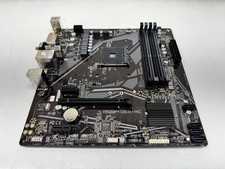
GIGABYTE A520M DS3H AC AMD AM4 Motherboard mATX
$59.99
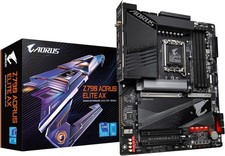
GIGABYTE Z790 AORUS ELITE AX LGA 1700 Intel Z790 ATX Motherboard with DDR5
$189.99
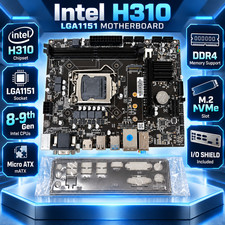
Intel H310 LGA1151 8-9th Gen DDR4 M.2 NVMe mATX Motherboard IO Shield Battery
$54.99

ASUS PRIME Z890-P WIFI Z890 LGA 1851 ATX motherboard, Intel® Core™ Ultra Series
$235.99
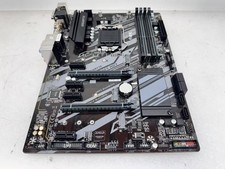
GIGABYTE B365 HD3 LGA1151 Intel 9th Gen motherboard
$59.99

MSI B550M PRO-VDH Micro-ATX Motherboard - AMD AM4, Ryzen 5000/4000/3000 Ready, P
$71.49
Asus Prime B660M-A AC D4 Motherboard Intel LGA 1700 14th 13th 12th Gen DDR4
$79.99
ASUS PRIME B360M-C MicroATX Intel LGA1151 DDR4 HDMI VGA USB RJ-45 Audio
$34.99
ASUS PRIME Z490-V Motherboard Intel Z490 10th gen DDR4 LGA 1200 ATX w/ IO Shield
$84.99
Gigabyte GA-B85M-D3H Motherboard
$54.99



 Reply With Quote