-
Senior Member
registered user

Originally Posted by
MaldiGola
Code:
++ mknod -m 0660 /dev/hdi b 56 0
++ fdisk -l /dev/hdi

Disk /dev/hdi: 30.7 GB, 30735581184 bytes
255 heads, 63 sectors/track, 3736 cylinders
Units = cylinders of 16065 * 512 = 8225280 bytes

   Device Boot      Start         End      Blocks   Id  System
/dev/hdi1   *           1         128     1028128+   6  FAT16
/dev/hdi2             129        3735    28973227+   f  W95 Ext'd (LBA)
/dev/hdi5             129        1173     8393931    7  HPFS/NTFS
/dev/hdi6            1174        3735    20579233+   7  HPFS/NTFS
Woo-hoo! Success! Well, at least you can now see the drive and partitions with fdisk.
Originally Posted by
MaldiGola
After issuing a mount command:
mount: special device /dev/hdi6 does not exist
Right. That's because only one device was made. /dev/hdi is the device file for the entire drive. You now need to make the rest of the devices, at a minimum devices hdi1 through hdi6 which correspond to partitions 1-6 on drive hdi. You can do that with the 'for' loops like so (similar to my previous post but with the Major number adjusted to 56):
Code:
# disk "i"
# mknod -m 0660 /dev/hdi b 56 0   # already created but included here for completeness
for m in $(seq 1 24) ; do
  mknod -m 0600 /dev/hdi$m b 56 $m
done
chown root.disk /dev/hdi*

# disk "j"
mknod -m 0660 /dev/hdj b 56 64
for m in $(seq 1 24) ; do
  mknod -m 0600 /dev/hdj$m b 56 $[$m + 64]
done
chown root.disk /dev/hdj*
or you can do the first six manually by typing this:
Code:
# disk i
# mknod -m 0660 /dev/hdi b 56 0 # if already done, you can skip this line
mknod -m 0660 /dev/hdi1 b 56 1
mknod -m 0660 /dev/hdi2 b 56 2
mknod -m 0660 /dev/hdi3 b 56 3
mknod -m 0660 /dev/hdi4 b 56 4
mknod -m 0660 /dev/hdi5 b 56 5
mknod -m 0660 /dev/hdi6 b 56 6
chown root.disk /dev/hdi*
# disk j
mknod -m 0660 /dev/hdj b 56 64
mknod -m 0660 /dev/hdj1 b 56 65
mknod -m 0660 /dev/hdj2 b 56 66
mknod -m 0660 /dev/hdj3 b 56 67
mknod -m 0660 /dev/hdj4 b 56 68
mknod -m 0660 /dev/hdj5 b 56 69
mknod -m 0660 /dev/hdj6 b 56 70
chown root.disk /dev/hdj*
After you've run the above, then run this code:
Code:
( set -x
fdisk -l /dev/hdi
fdisk -l /dev/hdj
rebuildfstab -r
cat /etc/fstab
) >& post.txt
Please post the output from post.txt.
Regards,
- Robert
http://www.cwelug.org
Similar Threads
-
By roadrash in forum Networking
Replies: 9
Last Post: 02-16-2007, 08:04 AM
-
By johngama1000 in forum Hardware & Booting
Replies: 0
Last Post: 08-08-2005, 06:14 AM
-
By hotrodedmonds in forum Hardware & Booting
Replies: 1
Last Post: 02-12-2005, 09:42 PM
-
By hotrodedmonds in forum Hardware & Booting
Replies: 0
Last Post: 02-10-2005, 02:42 PM
-
By e.newed in forum Hdd Install / Debian / Apt
Replies: 2
Last Post: 04-11-2004, 05:20 AM
 Posting Permissions
- You may not post new threads
- You may not post replies
- You may not post attachments
- You may not edit your posts
-
Forum Rules

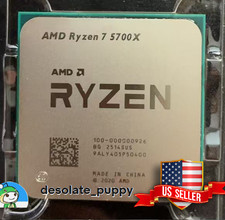
(New) AMD Ryzen 7 5700X 8 Core 16 Thread AM4 Unlocked 3.4 GHz CPU OEM Tray
$169.99

Intel Core i9-9900K SRG19 3.60GHz 16MB 8-Core LGA1151 B Grade CPU Processor
$175.00

HP Pavilion Laptop Computer 15.6 8-Core Intel i3 8GB RAM 628GB Storage, Open Box
$299.00

AMD Ryzen 7 7700X 8-Core, 16-Thread Unlocked Desktop Processor
$250.00
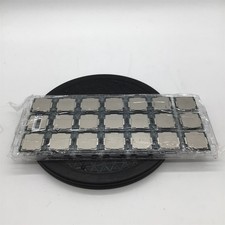
Lot of 21 Intel Core i7 8thGen CPU Processors
$1599.99
AMD RYZEN 7 9800X3D 8-Core, 16-Thread Desktop Processor
$399.00
Apple Macbook Pro 13" M1 8-Core 16GB 512GB - Good
$464.99
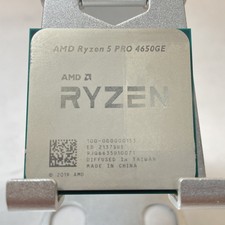
AMD Ryzen 5 PRO 4650GE 100-000000153 6-Core 3.30GHz 8MB AM4 CPU Processor
$59.99

Dell T7810 Workstation 8-Core 2.40GHz E5-2630 v3 No RAM GPU HDD OS
$259.98
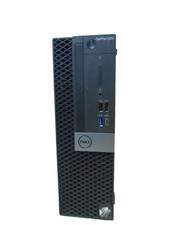
Dell OptiPlex 5070 SFF i7-9700 (8-Core) 3.0GHz 16GB 256 SSD Windows 11
$250.00



 Reply With Quote