-
Senior Member
registered user
a lot of people couldn't boot at all until they discovered the nodma cheat.
Greetings Harry,
There probably were many reasons/arguments for configuring the defaults either way. Not knowing the exact reasons for it's current configuration, I will assume there WAS some good reason for doing it that way. I have seen a few issues while using DMA with certain hard drives and chipset combinations. I had a board using the VIA KT133A chipset that would corrupt data with DMA enabled. It was paired with a Western Digital HDD if I can recall. THAT was a serious issue. I would rather keep the data integrity issue in check and allow someone to take a performance hit on non-affected systems, than to enable DMA and find out that your data is toast. I'm sure there are other reasons, but this is the one that I have personally encountered. I did a little research into the issue for Linux/Knoppix and did not find a definite answer yet. I can only speculate on the exact reasoning. I have not yet personally encountered a situation where an OPTICAL drive experienced errors with DMA enabled, but that certainly does not mean it cannot or does not happen. From your explanation and other evidence, it evidently was a concern with DMA enabled causing many to seek help until they discovered the "nodma" cheatcode. That helps to confirm my suspicions.
There are just some optical drives that need DMA enabled to work properly. The two current production drives that were discussed in this forum before, the Benq 16XX series and the Plextor 740 series, are classic examples of this issue. I can recall a host of other drives that were troublesome in Windows over the years. Many, if not most optical drives are just fine without DMA enabled, for the most part. It appears that CD/DVD writers are most effected, but I would not make that assumption unless I had more concrete data. It was possibly with Windows 95, or prior, that the problem was first really evident. When using a CD writer with Win 95 on IDE, you needed DMA enabled on many drives in order for them to write/read properly, at reasonable speeds. If you encountered buffer underruns, slow read/write performance, and other such problems, the first thing was to try enabling DMA. Some drives appeared to do the opposite, but it was most likely that DMA helped performance. It also helps performance with most hard drive/controller combinations. It appears to cause read/write errors with some combinations and I believe it may have been that reason that put the issue over the top to prompt disabling DMA by default. In a live disc application such as Knoppix, optical drive read errors are very noticeable since they affect the booting process and almost everything else that is dependant upon disc read access. When running from a distro that is installed to the hard drive, optical read errors may not show up quite as prominently.
If someone is having trouble with their optical drive's functionality and needs to enable DMA, it might cause other errors with the hard drives as a result. I have been told that there is/was a program that would allow someone to selectively enable/disable DMA on the hard drives. That program was called "hdparm" and some information is located at the following links: http://packages.debian.org/stable/admin/hdparm and http://sourceforge.net/projects/hdparm/ . I have not personally installed or used it, so I cannot say much more about how it works and what effects it may have. It can help increase drive performance if one has a need to selectively turn on DMA for a particular drive. They tend to take a performance hit with DMA disabled otherwise. Windows allows you some selective choice if you know where or how to look and it would be nice to be able to do the same with Linux. I hope to try a little experimentation sometime to get a better grasp on all the details. There just are not enough hours in the day to allow me to do so right away. I did find an old KT133A board in my junkpile, so I am halfway there. Now for some research, planning, and eventual learning.
Maybe in a more perfect world there would be a table that Knoppix could consult
I think that something such as that could solve many issues but would be a fast moving target and outdated rather quickly if it were an effort only on the software end. The hope for some sort of intelligent self updating hardware detection system is just not quite within reach yet. Maybe some sort of a "Plug an Pray" hardware auto-configuration that was intended for Linux use and supported by the majority of component manufacturers could be put on my "Christmas Wish List". It would be absolutely fantastic if it were available, but I certainly wouldn't hold my breath on it in this Windows centered universe. Maybe sometime when Linux users outnumber Windows users? There has to be an advantage or necessity before the Hardware manufacturers would do something like that. I know that I tend to buy and recommend hardware that has Linux compatibility rather than settle for something that is "Windows Only" if I have a choice. If enough people did the same, maybe there would be some sales generated pressure or other advantage to develop something like that.
It must have been enough of problem for Klaus K to disable DMA in the later versions of Knoppix. He obviously knows much more about Linux than I ever will, so therefore I will need to trust his judgement in the matter. It could very well be that it was a 50/50 type of issue and then one needs to toss a coin to decide. I just feel the need to add a disclaimer about looking for other issues as a result of enabling DMA, since it was enough of an issue for it to be defaulted to "off". Either way, knoppix is a great live distro and as long as there is a place to look for solutions and advice from dedicated individuals, it will work well for many users. It's popularity appears to be increasing as more and more Windows users get curious about breaking the mold and trying something else. It is an effective way to find out about Linux without actually installing it. When I demo and give a disc to someone, they are usually instantly intrigued with it. I introduced three people to Knoppix just today. That's all the discs I had with me this time, but I certainly can and will make more, most likely WITH DMA enabled. One day, if we all keep this up, Linux users WILL outnumber Windows users! We can only hope, but I know the competition should keep Micro$oft on their toes and that should only be a benefit. That is, ONLY until Uncle Bill finds a way to destroy that competition.
Harry,
Thank you again for your thoughts and help.
Similar Threads
-
Replies: 2
Last Post: 10-22-2005, 10:18 AM
-
By pulsar in forum Hdd Install / Debian / Apt
Replies: 2
Last Post: 09-08-2004, 05:48 PM
-
By ClubMed in forum Hdd Install / Debian / Apt
Replies: 4
Last Post: 03-12-2004, 09:11 PM
-
By derek wilkinson in forum General Support
Replies: 6
Last Post: 02-21-2004, 11:02 PM
-
By Chris in forum Hdd Install / Debian / Apt
Replies: 0
Last Post: 02-11-2003, 07:36 AM
 Posting Permissions
- You may not post new threads
- You may not post replies
- You may not post attachments
- You may not edit your posts
-
Forum Rules

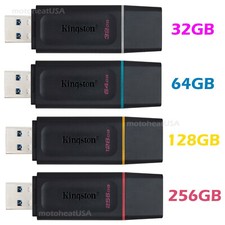
Kingston 32GB 64GB 128GB 256GB USB 3.0 Flash Drive Thumb Memory Stick Pen lot
$285.90
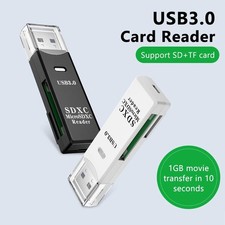
2 in 1 USB 3.0 Card Reader Micro TF card Reader usb adapter High Speed Cardreder
$3.99
Lot 2x 16GB (32GB) Samsung M393B2G70QH0-CMA PC3-14900R DDR3 ECC RDIMM Server RAM
$39.99
Samsung 32GB (1x32GB) PC4-17000 (DDR4-2133) LRDIMM Memory (M386A4G40DM0-CPB0Q)
$120.00

USB 3.0 Flash Drive 32GB 64GB 128GB Memory Stick Thumb Stick Lot Pack
$826.09
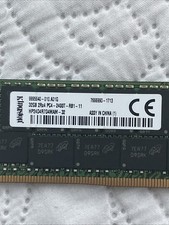
Kingston 32GB 2Rx4 PC4-2400T-RB1-11 ECC REG Server Memory HP24D4R7D4MAM-32
$150.00
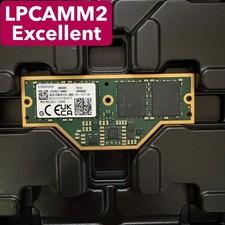
Samsung 96GB LPCAMM2 PC5 9600 FE1 E1 LPDDR5X CAMM2 M561K6LC3CL1-CCV DDR5 Memory
$2150.00
NMA1XXD128GPS Intel Optane 1X128GB DDR4 PC4-21300 DCPMM Persistent Server Memory
$75.00
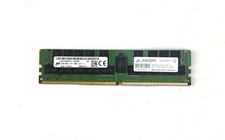
Micron 64GB DDR4 PC4-2666V 4DRx4 ECC LRDIMM MTA72ASS8G72LZ-2G6D2 SERVER MEM
$320.00

6 in 1 USB 3.0 Type C Card Reader SD Micro SD TF OTG Memory Adapter Laptop PC US
$3.95



 Reply With Quote