-
Senior Member
registered user
RoyalMail,
True that ssh does "secure" communication, I had read the man pages for ssh, a way back, and didnt want to "give out" false information, so... Here are some, excerpts of the man pages:
Code:
ssh (SSH client) is a program for logging into a remote machine and for
     executing commands on a remote machine.  It is intended to replace rlogin
     and rsh, and provide secure encrypted communications between two
     untrusted hosts over an insecure network.  X11 connections and arbitrary
     TCP/IP ports can also be forwarded over the secure channel.

     ssh connects and logs into the specified hostname (with optional user
     name).  The user must prove his/her identity to the remote machine using
     one of several methods depending on the protocol version used.
Here is where it gets tricky... It all depends on what method, that will depend on what "secure" is...
SSH protocol version 1 (First example)
... This form of authentication alone is normally not allowed by
the server because it is not secure.
Most of the time, when you want to connect two systems, remotely, chances are, as I did, you will go with the RSA method. This is explained, and examples given, within the man pages for ssh, and what, I think, RoyalMail, was describing. It provides a form of "trust", over a "secure" connection, under "untrusted" lines, and such. The two systems "communicate", to each other, different forms of a "key". One part of the "key" is provided by the "server", and only known by the "server", the other part, from the "client", both parts of the "key" are then "put together" to form the "correct key", that "completed key", is then tested for "access" to the "server". All of this, is done encrypted, and again, each systems doesnt contain the whole key, thus, no one can "fake" any part of the key. This kind of secure connection, can be seen as a "safety box" at a bank. Where one person has one key, and the bank, has the other key. The box can not be openned, unless both keys are inserted, and the correct keys.
As with any connection, remotely, secure, or not, keeping your keys safe, is paramount. When I went through the setting up of ssh on my own two systems, I had to "copy" a key, from one system to the other. My guess here, is, that, if an "attacker" can obtain that "copy" as well, they could also gain "trusted" access, as well. My thinking is, if the system isnt "secure" in the first place, using a "secure" remote connection, will only allow an "untrusted" connection, with a "trusted" access, which, may, only add insult to injury, when trying to make a "secure" system. To re-use my previous analogy; if the bank allowed everyone access to the "banks key", the security of the safety box is in jeopardy, if the user allowed everyone access to the "personal key", the same holds true.
Just my thoughts,
Ms. Cuddles
Similar Threads
-
By nitsuj in forum Networking
Replies: 0
Last Post: 11-10-2008, 04:43 AM
-
By byrdman in forum Networking
Replies: 13
Last Post: 09-24-2005, 09:51 PM
-
By cschilbe in forum Networking
Replies: 1
Last Post: 12-17-2004, 07:06 AM
-
By redss in forum General Support
Replies: 4
Last Post: 06-04-2004, 05:52 PM
-
By sebke in forum Customising & Remastering
Replies: 2
Last Post: 02-03-2004, 04:11 PM
 Posting Permissions
- You may not post new threads
- You may not post replies
- You may not post attachments
- You may not edit your posts
-
Forum Rules

Intel Core i5-12500T SRL5W 2GHz 18MB 6 Core Socket LGA1700 Desktop CPU Processor
$114.99

INTEL CORE I9-10940X X-SERIES PROCESSOR | 3.30GHZ | SRGSH
$179.99
Intel Core i7-4770 3.40GHz Quad Core SR149 LGA 1150 CPU Processor tested
$35.00
LAST BATCH *Brand New-Sealed* AMD Ryzen 9 9950X3D2 Dual Ed. 4.3GHz 16Core AM5
$768.00
Intel Core i7-9700 Octa-Core 3 GHz Desktop Processor LGA 1151
$79.99
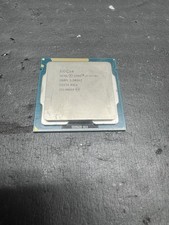
Intel Core i7-3770K 3.5 GHz Processor
$39.00
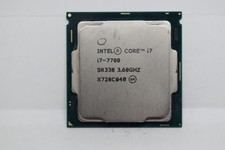
Intel Core I7-7700 SR338 3.60 Ghz Processor
$39.99
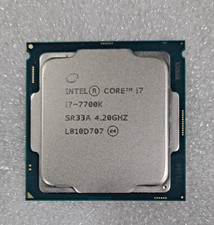
Intel Core i7-7700K SR33A 4.20GHz 4-Core LGA1151 CPU Processor
$62.95
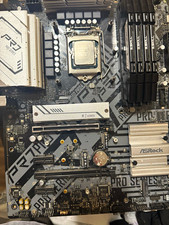
ASRock b560 ATX Motherboard + Intel Core i5-11600K CPU Combo Gaming + 32 GB DDR4
$300.00
Intel 6th Gen Core i7-6700K 4.0GHz (Turbo 4.2GHz) 4-Core LGA1151 CPU SR2L0
$38.00



 Reply With Quote