-
Senior Member
registered user
Your link http://www.bytebot.net/geekdocs/debian-knoppix.html was last updated over 2.5 years ago.
You should read up to date documentation at http://www.knoppix.net/wiki/Hd_Install_HowTo
About the upgrade lists problem http://www.knoppix.net/wiki/HD_Insta...g_not_to_do_it
That problem is that there are several different versions of Debian. These are sometimes called the stable, testing and unstable versions. At other times they are known by their internal code names for the different versions. Hopefully someday the testing version will become the new stable version, but the versions known as Sarge or Woody will always be Sarge and Woody, no matter if they are called stable or not. So why is this a problem? Because when you add programs or install security updates or other updates, the design of the Debian system expects that you will stay within the same version. Packages (programs) that work under Sarge are expected to stay under Sarge. They are not tested to work under other releases and indeed may not work or may even break something else when installed or updated. The same is true for the other versions of Debian as well.
Hopefully by now you are thinking "So what and, by the way, which version of Debian is Knoppix based on?" Well, Klaus made a very important choice when he built Knoppix. Knowing that it was going to be run from a CD he decided that he could mix and match between the different Debian versions, as long as he did this carefully and tested everything and manually fixed version problems. For him that was a good choice. The "stable" version of Debian is usually somewhat dated. The testing version is usually actually pretty stable, although there may be some minor issues to be worked out or just things that haven't been tested enough for Debian to classify as stable when a distro of Linux is going to be used in a large expensive mission critical application. There may be some software that is so new that it is only in the "unstable" version, even though that software itself is pretty well known to be stable and bug free (as much as any software ever is). So choosing to mix between the versions and test extensively for version issues allows Klaus to release a great live CD. It can contain some of the newest packages when needed. It can contain stable packages from a trusted version when newer versions have known problems, or have become too bloated to fit on the CD, or when there is any other good reason to stay with an older version. This works out great for a Live CD where everything has been tested to work together well. It does not work out so well when you take that combination of carefully tested and balanced (and maybe hacked to fit) software and install it to hard disk, particularly if you ever install anything else or try to update any of the current packages. That makes the package manager do things that it is not intended to do with parts taken from the different versions. And people who do that frequently come back to these forums and bad mouth Linux as being unfit for the desktop even though they were warned not to do it and that there would be problems.
Similar Threads
-
By blokk.m in forum Hdd Install / Debian / Apt
Replies: 9
Last Post: 10-01-2009, 03:17 AM
-
By skitzojase in forum Customising & Remastering
Replies: 1
Last Post: 03-06-2006, 07:56 AM
-
By Jakykong in forum The Lounge
Replies: 2
Last Post: 12-14-2005, 08:36 AM
-
By istoleapig in forum Hardware & Booting
Replies: 2
Last Post: 02-19-2005, 09:28 AM
-
By vesselinpeev in forum General Support
Replies: 0
Last Post: 05-26-2003, 09:03 PM
 Posting Permissions
- You may not post new threads
- You may not post replies
- You may not post attachments
- You may not edit your posts
-
Forum Rules

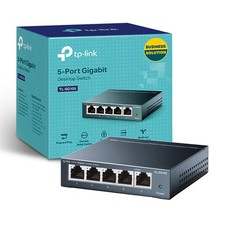
TP-Link TL-SG105 5-Port Gigabit Ethernet Unmanaged Metal Desktop Network Switch
$19.99
Cisco Catalyst 2960-48TT-L 48-Port Fast Ethernet Managed Rackmount Switch
$46.99
TP-Link TL-SG1048 48-Port Gigabit Rackmount Switch New Factory Sealed
$199.99
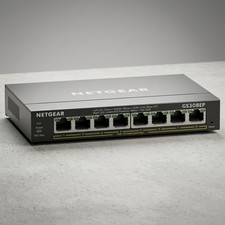
NETGEAR GS308EP Essential Series 8-Port Gigabit PoE+ Unmanaged Switch
$49.99
10-Port Gigabit PoE Network Switch with 8 PoE+ Ports with 2 Combo SFP Slots 125W
$39.99
5 Port Gigabit Unmanaged Ethernet Switch, Home Network Hub, Office Ethernet S...
$9.64
TP-Link TL-SG2210P 10-Port Gigabit Smart Switch w/ 8-Port PoE+ NO AC SKU 25597
$36.98
Arista DCS-7010T-48-R 48P 1GbE 4P 10GbE SFP+ RA Switch with rack mounts
$69.00
Linksys LGS328MPC 24-Port Managed Gigabit PoE+ Switch with 4 10G SFP+ Uplinks
$224.95

Cisco WS-C3650-12X48UR-L 48-Port Stackable Layer 3 8x10G SFP+ Port Switch
$129.99



 Reply With Quote