-
Administrator
Site Admin-

Originally Posted by
chip.ling
I think the netmask value here is for the gateway you try to reach to the outside world and if you set the value to 255.255.255.0, it will limit your address to your local network only. In my case, I want my machine being able to access all possible address on the internet so 0.0.0.0 make sense to me.
As I said, I don't use the route command, so I'll want to do some reading and testing with it when I next get a chance. But all of my experience is that 0.0.0.0 is always a bad netmask. As to reaching the outside world, you local system should use the IP address that you are trying to reach and the netmask to determine if the gateway should be used or not. A netmask of 0.0.0.0 indicates that the address is always on the local LAN and so a gateway would never be used. I'm guessing that your somewhat unusual router is likely seeing the IP address as it comes into the switch and knows that it needs to be routed to the WAN port anyway, but things might break for you if your network grows to include additional switches unless this netmask issue is resolved. You may also have some problems the broadcast address and with Address Resolution Protocol with that netmask. And, in fact, this very well could give a clue as to why the same IP address is being handed out more than once! If ARP is broken due to a bad netmask then the routers tables may never be updated to reflect that the IP address is in use and not available for further use (although that still leaves a lot to be explained, like how it manages to route your traffic back to you).
Originally Posted by
chip.ling
Please do a testing on your end by boot up a knoppix cd with DHCP mode on and after it boots up. Type the route command on the console and see if your result is same as mine.
I will look at both the route command and it's man page when I have time, although to be honest I haven't even booted Knoppix lately. Again I would ask that you also take a little time and look up netmask on Google and see if you can find me any references that explain validly using 0.0.0.0 as a netmask.
You might also want to use ethereal to sniff the network connection and see the ARP traffic that goes on every couple of minutes to see if your system is actually receiving and responding properly to ARP packets. I don't see how it could be with that netmask, since it would not recognize a broadcast as a broadcast, but would think it was a packet intended for someone else.
Similar Threads
-
By skrall in forum Networking
Replies: 4
Last Post: 05-13-2006, 05:15 AM
-
By Mattr35 in forum Networking
Replies: 16
Last Post: 06-02-2005, 07:46 PM
-
By J0hnP1pe in forum Hdd Install / Debian / Apt
Replies: 3
Last Post: 04-22-2005, 08:08 AM
-
By bertocci in forum Networking
Replies: 4
Last Post: 03-10-2004, 09:12 PM
-
By wooac in forum Networking
Replies: 0
Last Post: 02-24-2004, 12:39 AM
 Posting Permissions
- You may not post new threads
- You may not post replies
- You may not post attachments
- You may not edit your posts
-
Forum Rules

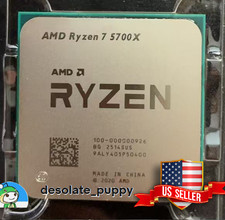
(New) AMD Ryzen 7 5700X 8 Core 16 Thread AM4 Unlocked 3.4 GHz CPU OEM Tray
$174.99

Apple Macbook Pro 13" M1 8-Core 16GB 512GB BATTERY ISSUE
$474.99
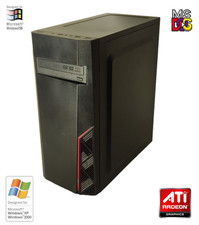
NEW* AMD Athlon 4850e 4GB ATI X300 Win98 XP DOS Multiboot Retro PC w/ 50 Games
$349.00

AMD Ryzen 7 PRO 8700GE 8-Core/16-Thread Up to 5.1GHz AM5 (FL1)
$189.00
AMD Ryzen 7 7800X3D 4.20GHz Quad Core 100-000000510 8 Thread AM4
$279.99
Apple Macbook Pro 13" M1 8-Core 16GB 512GB - Good
$464.99

Apple Macbook Pro 14" M1 Pro 8-Core 16GB 512GB - Good
$614.99

AMD Ryzen 7 9800X3D 8-Core 16-Thread AM5 Zen 5 Desktop Processor NEW
$399.00
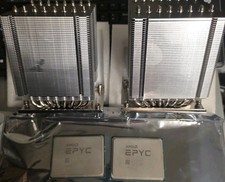
Pair ID-COOLING A8-SP3 CPU Heatsink Coolers and AMD EPYC 7601 32 Core Processors
$290.00
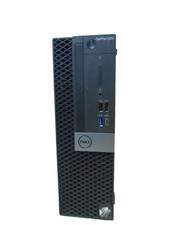
Dell OptiPlex 5070 SFF i7-9700 (8-Core) 3.0GHz 16GB 256 SSD Windows 11
$250.00



 Reply With Quote