-
Administrator
Site Admin-
Re: I cannot see Windows hard drive on Knoppix desktop

Originally Posted by
Crimpshrine
....mount /dev/hdc
but I didn't think I mounted Windows hard drive. It was mounted on /media/hdc, but I did not see my hard drive.
First, understand that Knoppix can't fix all windows problems. If windows screws up one of it's own partitions so bad that it or Linux can't read it, then it is not Knoppix's fault that the information can not be read. That said, Knoppix can often read data that windows cannot on windows own file systems. But that you are not seeing desktop icons for the partitions makes me suspect that there is something very wrong with the drive.
Next, you need to underderstand the difference between a drive and a partition. In general, you don't mount a drive, you mount a partition on a drive. Even if the drive only has one partition, you mount the partition, not the drive. Normally the first IDE hard drive is hda. hdc would be the thrid IDE device, often an optical drive but sometimes a hard drive. Since a hard drive can have 4 physical partitions, the partitions on hdc, if it is a partitioned hard drive, would be named hdc1, hdc2 hdc3 and hdc4. If there is an "extended partition" on the hard drive you would not mount the extended partition, you would mount the "logical drives" contained in the extended partition. For drive hdc these are named hdc5, hdc6, hdc7 and so on, and there is no hdc4. In most windows systems you either just have hdc1 or you have hdc1 and an extended partition that contains hdc5, hdc6 and so on, and there usually is no hdc2 or hdc3 (unless you have multiple OS's on the disk).
If you can't mount hdc1 and you really think there is a physical partition on the hard disk that you want to mount, the partition table might be mucked up (happens in windows a lot more than it ever should). There is a utility in Linux called gpart that will try to guess the partition table for you based on what it finds on the hard drive, see man gpart for details.
Similar Threads
-
By johnmd in forum Tips and Tricks
Replies: 3
Last Post: 12-05-2010, 04:38 PM
-
By tecnoL in forum MS Windows & New to Linux
Replies: 3
Last Post: 04-10-2007, 11:56 AM
-
By 03myersd in forum Hardware & Booting
Replies: 6
Last Post: 09-09-2006, 01:48 PM
-
By maxmartin in forum Customising & Remastering
Replies: 4
Last Post: 02-19-2006, 06:09 PM
-
By nmitchell in forum MS Windows & New to Linux
Replies: 5
Last Post: 07-10-2005, 11:28 PM
 Posting Permissions
- You may not post new threads
- You may not post replies
- You may not post attachments
- You may not edit your posts
-
Forum Rules

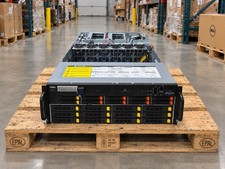
Gigabyte 4U AI Server 10x Nvidia GPU 2x Xeon Gold 6150 36 Core 2.7GHz DDR4 RAM
$1499.00
Dell EMC PowerEdge R440 Xeon silver 4215 2.5GHz 16 GB ram 2x 550W PSU No HDD
$275.00
867959-B21 HPE ProLiant DL360 G10 CTO Server W/ 2x 865414-B21 1x 840140-001
$245.00
Dell Poweredge R630 2x Xeon E5-2680 v3 2.5ghz 24-Cores / 64gb / Raid / 2x 1Tb
$374.99
Dell PowerEdge C4130 1U AI GPU Server | 2x E5-2690 v3 | 64gb Ram | 2x 1600W
$524.99
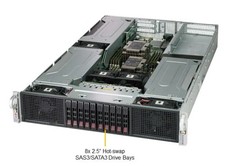
Supermicro 2U GPU Server SYS-2029GP-TR 2x Xeon 6130 32C 6x PCIe 3.0 x16 Slots
$745.00

Dell PowerEdge C4130 1U AI GPU Server | 2x E5-2680 v3 | 32gb Ram | 2x 1600W
$409.99
Dell PowerEdge C4130 1U AI GPU Server | 2x E6-2699 v3 | 128gb RAM | 2x 1600W
$899.99
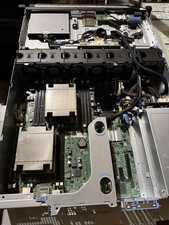
Dell PowerEdge R530 2x E5-2630v4 H330 iDRAC8 Port Card Riser No PSU/RAM/HDD
$99.99
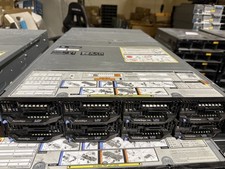
Dell PowerEdge FX2s + 8x FC430 Blades 16x E5-2630v4 160 Cores Rails No PSU/RAM
$699.00



 Reply With Quote