-
Administrator
Site Admin-
Re: Inability to connect to the Internet

Originally Posted by
johnbb
I do happen to have another laptop, namely my old computer, to try out your suggestions, but...... what is a "HUB" ? I'm new at this don't forget.
There are three common devices (although hubs are becoming less common) used in local networking, routers, switches and hubs. I'll try to explain each here.
Back in the old days of ethernet, all connections were on one coax cable that snaked from computer to computer. Ethernet used a great system called colosion detection to determine if two computers tried to transmit at the same time. This coax system had some problems but worked pretty well. As networks became more popular people looked for ways to deploy networks on twisted pair wires, such as the many telephone wires already run in buildings. After a rough start, the industry quickly adopted Cat-3 and then Cat-5 twisted pair wiring. This is used a simgle connection between 2 devices, not the daisy chaining that was done with early ethernet coax systems.
Well, connecting only 2 devices isn't all that handy, so a hub was designed to be one of those devices. A hub is basically a box with many ethernet connectors on it, any ethernet traffic that comes in on any one connector, or "port", is echoed out on all of the other ports. Early hubs also had a coax connector on them for connection to older coax ethernet, although these types of hubs are very hard to find now (as are hubs in general, see the section on switches below). So hubs would allow you to connect your computers together with the systems all wired into a hub, often called a "star pattern". Breaking the connection at one computer did not break the chain and did not affect the rest of the network, as could happen with coax systems.
Hubs are ok, but the next evolution was the "switch". This is not some device with toggles or dials on it; in network terms a switch is a box very much like a hub. the difference is that while the hub just echos everything it sees out all of the other ports, the switch is inteligent and it learns what devices are on each ethernet cable. As it receves an inbound packet, it sends it out only on the ethernet port or posts that the traffic is intended for. This has a few important advantages. One is that it allows for better use of the network, if computer A is transfering large amount of data to computer B, it in no way affects transfers between computers C and D, as it would if a hub were used. Another is security. Traffic between computer A and B should not be able to be seen on computer C's ethernet port with a switch, as it would with a hub. With a hub one could put a protocol analyzer on computer C's ethernet connection and see all of the network's traffic. With a switch the only traffice on this connection should be traffic intended for computer C. I stress the word should because hackers have figured ways to beat this, such as ARP poisoning, but switches are still a better choice for most users rather than hubs. There are other advantages to switches that I will not get into here.
I'll mention routers here also. A router is basicall inteligent like a switch, but it does more things than a simple switch. While a switch builds it's own simple routing table a router can be programmed with a complex routing table. Advanced routers like those that make up the backbone on the Internet can choose to route traffic based on many factors in addition to the destination and can do error recovery and other features. For our purposes in this thread we have been talking about simple home or "soho" routers when we use the term. These will have firewall rules in them, they can do protocol encapsulation (PPPoE/PPPoA), they do NAT translation. Basically insead of just forwarding a packet on the proper port, when the packet goes to the port connected to the outside workd the router completely rebuilds the packet. It puts it's own return address on the packet. It may change the reply-to port number, and it may make any number of other changes to the packet before sending it to the Internet. When a packet comes it it determines from tables it keeps where that packet needs to be routed to, again rebiulds the packet putting a new destination address on it and perhaps changing the port number as well as other changes, and then sends it on the the local network. You'll usually see mention in router spec sheets that a home router includes a 4 port switch (although a very few don't), which means that it functions as a 5 port ethernet switch with one of those 5 ports internally connected to the router for traffic to and from the Internet connection.
At first switches were very expensive when compared to hubs (which were not inexpensive themselves). But economies of scale have kicked in and switches are now very inexpensive, so much so that they have almost completely replaced hubs. About the only really nice thing about hubs any more is that they will let you monitor another connection if you interconnect a hub in the ethernet connection and run a protocol analyzer or protocol anlyzer software such as ethereal (now call Wireshark, although the copy included in Knoppix is still ethereal). Without a hub you can't easily listen in on other ethernet connections that are made on twisted pair wires. But you can still run such software on one of the two endpoints and capture the data (obviously you can only do this after the computer has booted and it has to be a computer that you can run protocol sniffing software on).
That, in very limited terms, is a quick overview of hubs, switches and routers. Any questions?
Similar Threads
-
By Joey6 in forum Networking
Replies: 4
Last Post: 01-17-2007, 01:20 AM
-
By jacksonon in forum Networking
Replies: 6
Last Post: 09-13-2006, 09:27 PM
-
By solbergg in forum Networking
Replies: 4
Last Post: 03-10-2006, 03:11 AM
-
By simplyskate in forum Networking
Replies: 10
Last Post: 04-28-2005, 06:45 PM
-
By THiM in forum Hardware & Booting
Replies: 5
Last Post: 05-19-2003, 07:27 PM
 Posting Permissions
- You may not post new threads
- You may not post replies
- You may not post attachments
- You may not edit your posts
-
Forum Rules


Crucial MX500 1TB 2.5" SATA III Internal SSD CT1000MX500SSD1
$99.99
Samsung 2.5" 870 EVO SSD SATA III 250GB 500GB 1TB Internet Solid State Drive Lot
$90.00
Samsung 860 EVO 250GB SSD MZ-76E250 2.5" SATA III Solid State Drive -
$39.99
Samsung 860 EVO 250GB, SATA III, 2.5" Internal Solid State Drive - Black...
$30.00
Netac 2TB 1TB 512GB 256GB Internal SSD 2.5inch SATAIII Solid State Drive lot
$549.00
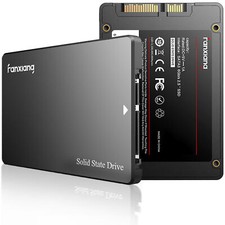
Fanxiang 256GB 512GB 1TB 2TB 4TB SSD Lot 2.5'' SATA Internal Solid State Drive
$42.99
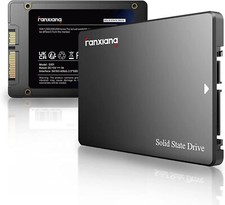
Fanxiang 1/2/5/10Pcs 2.5'' SATA SSD Lot 1TB 2TB 4TB 512GB 256GB TLC Internal SSD
$129.99
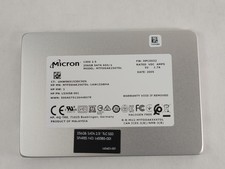
Micron 1300 MTFDDAK256TDL 256 GB SATA III 2.5 in Solid State Drive
$24.99

Netac 1TB 512GB 256GB Internal SSD 2.5inch SATA Solid State Drive lot PC Laptop
$42.99

SSD 2.5" SATA Hard Drive for Laptop Desktop Windows 10 pro 64 Pro Pre-installed
$42.00



 Reply With Quote