

 Reply With Quote
Levi32 -
show us the output of the follow command:
ifconfig
and we'll work from there
-Justin
One Mynds Eye


I just installed Knoppix 5.1.1, and I need to set up my wireless internet connection. My computer receives a wireless internet signal from my Belkin54g wireless router. The device receiving the signal is a Belkin wireless USB network adapter. I have gotten this to work before on version 5.0.1 by playing with commands like ifconfig, ifup, and netcardconfig. However this time I can't get it to work. The DHCP broadcast always fails. On the other version once I got it going all I had to do was type "ifconfig eth1 up", and then run netcardconfig. This time the device is eth0, and I can't get it to work. Can anyone help me on this?
Levi32 -
show us the output of the follow command:
ifconfig
and we'll work from there
-Justin
One Mynds Eye
Ok, here it is. I find it interesting that on knoppix 5.0.1 my main interface that worked was eth1, but here we only have eth0.
root@linux:/home/levi# ifconfig
eth0 Link encap:Ethernet HWaddr 00:13:72:70:5F:77
inet addr:192.168.0.49 Bcast:192.168.2.1 Mask:255.255.255.0
UP BROADCAST MULTICAST MTU:1500 Metric:1
RX packets:0 errors:0 dropped:0 overruns:0 frame:0
TX packets:0 errors:0 dropped:0 overruns:0 carrier:0
collisions:0 txqueuelen:1000
RX bytes:0 (0.0 b) TX bytes:0 (0.0 b)
Interrupt:16
lo Link encap:Local Loopback
inet addr:127.0.0.1 Mask:255.0.0.0
inet6 addr: ::1/128 Scope:Host
UP LOOPBACK RUNNING MTU:16436 Metric:1
RX packets:12 errors:0 dropped:0 overruns:0 frame:0
TX packets:12 errors:0 dropped:0 overruns:0 carrier:0
collisions:0 txqueuelen:0
RX bytes:600 (600.0 b) TX bytes:600 (600.0 b)
Also, the ifup command fails and says that the network is unreachable.I would think that running netcardconfig, pressing no to DCHP broadcast, and then entering all the information should work, however I don' t know what numbers to put in there. My router has a home page which I can access from my other computer and get all this information, but it's not labeled the same as the DCHP setup. For example I don't know what the broadcast address or the nameserver are supposed to be. It's always been confusing to me to have each device each computer and each router all have their own IP numbers and such lol.
Hey I think I've got something. I've been playing with pressing "no" to automatic DCHP when running netcardconfig. When I enter for example 192.168.2.0 for the broadcast and nameserver, the error message after trying to send the DCHP says(it dissapears quickly so I couldn't copy and paste the whole thing: "SIOCADDRT: network is unreachable"
However when I put either 192.168.2.1 or 192.168.2.2 in for the broadcast and nameserver, the error message reads: "SIOCADDRT: file exists". The same error message change occurs when I type the command "ifup eth0". Also, this might seem like I'm just seeing things, but I've tested it several times. When I do netcardconfig with values that I know don't work and bring the error message "network is unreachable", I try to load the router webpage by typing it's IP in the address bar in Firefox. When I do this and click go, in a fraction of a second the page that says unable to connect comes up. However, when I put the values I mentioned above in the netcard config, with a netmask of 255.255.255.0, when I try to go to the router, it says "connecting to 192.168.2.1" in the status bar for about 2 seconds before displaying the "unable to connect" page. Kind of weird I know, but I think it means that something I put in there made a slight connection to the router that didn't exist before when I was putting the other numbers in. I'm just dinking around here trying to find answers
Does this mean anything? I'm pretty sure the problem might have something to do with wrong addresses or something with the netcardconfig.
Perhaps you should learn a bit more about how to set up these parameters and not just enter anything into these fields. Your broadcast address is completely wrong. It can never end in zero, in fact it can never end in an even number. It usually ends in 255, but this is dependent on the net-mask, so it's not always a number that ends in 255. There are plenty of tutorials on the Internet about setting broadcast address, net mask, nameservers and the rest, many of them are even accurate, so I'm not going to write another one here. But if you are going to bypass DHCP and enter these values manually, you have to enter the proper values or you can really impact your entire network.Originally Posted by Levi32
---
Verifying of md5 checksum and burning a CD at slow speed are important.
Yeah, I figured I probably got it wrong. I'm not very educated in these numbers. I'm just dinking around, no harm can be done with what I'm doing. I'll try to look one of those tutorials up and see if it helps. I think I'm on to something if I could just get the numbers right I think it would work.
Well, good luck to you, but I can't get my wireless equipment working in any 5.x Knoppix even though it worked in 3.9 and 4.02. And that's without the extra network problems that "installing" Knoppix usually causes. Start with the net-mask, understand what it does before you fool around with broadcast address. Then get your IP addresses and be sure they make sense and work together. The net mask will then dictate what the broadcast address is, usually something like 192.168.xxx.255 where xxx matches your other IP addresses, but it could be different if your net mask defines a network other than 254 devices in size. It is very critical that you get it right or your network may seem to work but have some very strange problems.
---
Verifying of md5 checksum and burning a CD at slow speed are important.
Ok, I'll try, but my router isn't very clear on what my IP address is, all it says is 192.168.2.1, but I know there's another IP address that isn't in the 192.168.x.x form. I did get this to work in Knoppix 5.0.1 by playing around with ifconfig and doing the automatic DCHP broadcast, but it just won't here. Would the Debian OS have the same problems if I installed it instead of Knoppix?
You might be talking about the public IP address as opposed to the private IP address (or you might be talking about something else, there isn't enough information to be sure). While looking up net-mask and the rest, look up NAT, it wil explain why there is a private address and a different non-192.168.xxx.xxx public address.
I always advocate installing Debian Etch over Knoppix. But wireless support in all of Linux is very hardware dependent (although it seems worse in Knoppix). Debian may be a good choice for your hardware but I can't say, you should look into the Linux wifi support for your particular hardware. I also generally recommend a net-install of Debian Ethc as long as one has high speed access, but I would never do a net-install over wireless (I don't think you can, but I wouldn't try it if you could). The best approach would be a clean net-install of Etch over a wired connection, then install the wireless stuff and disconnect the ethernet cable if that is desired. I don't use wireless on my Debian installs, so I don't have a good feel for the devices supported, but my expectation is that some other distros that adapt to new hardware faster might give better wireless support in some cases. I can't gert any Knoppix 5.x version to recognize any of my wireless cards, even though 4.02 would recognize one. But other live CDs including Mandriva and even Puppy Linux recognize and properly operate several other wifi cards that Knoppix has never worked with.
By the way, I also have very strong biases against USB based network connections, particularly USB wifi ones. See my stock answer #9 if you want details.
Actually my modem isn't USB. I used to have it directly connected to the computer with an ethernet cable, but since have moved it out to network all three of our computers. Why the adapter is called a "wireless USB adapter", I have no idea. Thank you for your help and advice. I'm trying out a Debian boot disk right now to see how I like it. I might just wipe knoppix and try it to see if my internet will go.
 Posting Permissions

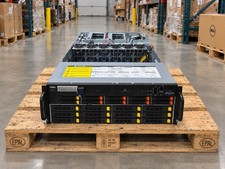
Gigabyte 4U AI Server 10x Nvidia GPU 2x Xeon Gold 6150 36 Core 2.7GHz DDR4 RAM
$1499.00
Dell EMC PowerEdge R440 Xeon silver 4215 2.5GHz 16 GB ram 2x 550W PSU No HDD
$275.00
867959-B21 HPE ProLiant DL360 G10 CTO Server W/ 2x 865414-B21 1x 840140-001
$245.00
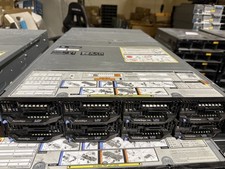
Dell PowerEdge FX2s + 8x FC430 Blades 16x E5-2630v4 160 Cores Rails No PSU/RAM
$699.00
Dell PowerEdge C4130 1U AI GPU Server | 2x E5-2690 v3 | 64gb Ram | 2x 1600W
$524.99

Dell PowerEdge C4130 1U AI GPU Server | 2x E5-2680 v3 | 32gb Ram | 2x 1600W
$409.99
Dell PowerEdge C4130 1U AI GPU Server | 2x E6-2699 v3 | 128gb RAM | 2x 1600W
$899.99
Dell Poweredge R730xd 12LFF 2*2660v4 4*1Gbe h730 2x 750W Server CTO
$308.00
RDS CAL - Remote Desktop Services Windows Server 2019 50 User/Device Connections
$63.00
1U Server Intel Xeon E3-1240 V5 3.5Ghz 4C 32GB RAM 2x M.2 2280 OCP RJ45 Rails
$310.00
