-
Administrator
Site Admin-
Unfortunately, many manufacturers now waste lots of space storing the original Windows software on a seperate partition rather than simply providing a CD or two. You actually got off pretty easy, HP wasted 10 gig of my valuable notebook space with a "recovery partition" that included all of the garbageware that they also crammed on my tiny notebook hard drive. Many manufacturers include software that will let you make a set of recovery discs. I think that it's important to do this, not just to get the space back, but in case the hard drive fails or some evil software wipes it out and you can't get the recovery partition to install again. This would be the first approach that I would advocate.
You likely can't just create an additional partition for a Linux install (actually, you'll want at least two, since you should have a swap partition as well as one or more for OS and program storage). The thing is, the disk is likely already completely in use by the existing partitions (even if the partitions are not full). Windows can't by itself shrink a partition that is in use and recover free disk space for a new partition. There is commercial third party software such as Partition Magic that can, but even then it advises you to have all data backed up before you try it. If you have all data backed up then you don't really need Patition Magic, you can just delete the partitions, create new partitions of the size you need, and load the data back on, although this does take more work.
I would suggest a few things: First, get that recovery data backed up to discs. This is critical if you want to keep running XP. Next, decide how much space you want for Linux. If you just want a small Linux system, then you might be able to install it in the space that was used by the recovery partition. If you want a larger Linux system (I expect that you do since you said that you only use XP for CAD), you might consider just adding a second hard drive (these are quite inexpensive and I would much rather spend the money on an extra hard drive than on a copy of Partition Magic). This would allow you to install Linux to that drive and leave the original drive for XP. If you do that I would also suggest, in addition to the Linux partition and swap partition, creating a small FAT partition on the disk. Linux can read files from your XP's NTFS partitions, but it shouldn't write to them, By creating a FAT partition, you give yourself an easy way to transfer files back to XP if you find that you need to do this (a USB flash drive would be an alternative way to do this, as would writing files to CR/CD-RW or other techniques). Finally I would suggest that you avoid the well kown problems of a Knoppix install and install one of the reliable Linux distros that are intended for hard disk install. There is no benefit in installing Knoppix instead of just installing Debian, as long as you have an internet connection to allow you to apt-get the software packages that you want after the install.
Similar Threads
-
By desperado618 in forum General Support
Replies: 2
Last Post: 04-15-2008, 05:13 PM
-
By turbine in forum General Support
Replies: 1
Last Post: 06-14-2005, 08:25 AM
-
By sdalek in forum Hdd Install / Debian / Apt
Replies: 7
Last Post: 01-05-2005, 03:48 AM
-
By imjustabill in forum Hdd Install / Debian / Apt
Replies: 2
Last Post: 08-09-2004, 11:04 PM
-
By PraxZeus in forum General Support
Replies: 4
Last Post: 09-25-2003, 12:12 PM
 Posting Permissions
- You may not post new threads
- You may not post replies
- You may not post attachments
- You may not edit your posts
-
Forum Rules

Set of 2 HMAA4GR7CJR8N-XN HYNIX 32GB (1X32GB) 2Rx8 PC4-3200AA MEMORY
$600.00
Microsoft Office 2021 Pro Plus USB for 1PC Windows 10 & 11
$62.55
TF/SD Card Adapter Camera Reader Android Type-c For iPhone17 Pro Max Plusm lot
$573.98
SAMSUNG M393A2K43CB2-CTD8Y 16GB 2Rx8 PC4-2666V ECC REG Server Memory RAM
$160.00
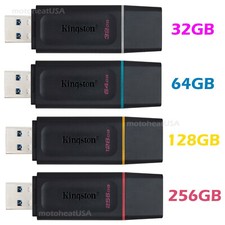
Kingston 32GB 64GB 128GB 256GB USB 3.0 Flash Drive Thumb Memory Stick Pen lot
$285.90
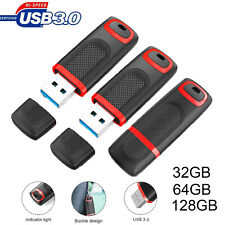
USB 3.0 Flash Drive 32GB 64GB 128GB Memory Stick Thumb Stick Lot Pack
$826.09
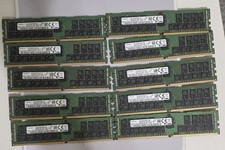
Samsung 32GB DDR4-2666V-2Rx4-RB2-12 RAM M393A4K40CB2-CTD6Q
$169.00
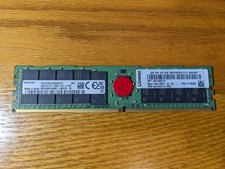
Samsung 64gb PC4-3200AA 2Rx4 DDR4 ECC LRDIMM Memory M393A8G40AB2-CWE - PARTS
$1450.00
MICRON MTA36ASF4G72PZ-2G6D1 32GB PC4-21300R DDR4-2666V RDIMM 2RX4 MEMORY DIMM
$139.99
1/ 10/ 100pcs USB 2.0 2GB, 4GB ,8GB ,16GB ,32GB ,64GB 128GB USB Flash Drives Lot
$202.50



 Reply With Quote