-
Administrator
Site Admin-
Let me give the opposite point of view here.
If the md5 test fails, the file is bad. If the md5 test passes, you can have absolute faith that the file is good.
Yes, it is a mathematical hash function, and so a large number of bits gets reduced to a smaller number of bits. And there have been ways found to deliberately force a collision of hash functions. But a deliberate false substitution of files would not be caught anyway, since in this case we are checking the md5 sum against a md5 value that we obtained from the same mirror (they could just give us the new md5 sum if they wanted to pass along a bad file, no need to create a bad file with the same md5 hash), and turbine didn't suggest this is happening, so he's really talking about could you download a corrupted file but still compute the same md5 checksum
So what about it? Could it happen? My position is that it's completely irresponsible to claim that this could happen, particularly in a public forum like this where someone is likely to read it and later repeat the bad information. The people who designed md5 certainly understood that 128 bits is less than billions of bits. But the test is completely valid. Before one starts spreading false rumors that it is not, one should at least have a minimal understanding of really big numbers. You will never get a corrupted download that matches the md5 checksum. here's why:
The md5 checksum is 128 bits in size. "Gee, only 128" I can imagine turbine thinking, "that doesn't seem like a very big number". But it's important to understand big numbers, and what that means in this case is that there are 2^128 values that a md5 hash can have. In decimal numbers that is more than 3.4^38. If anyone reading doesn't quite know how big that number is, it's larger than all of the grains of sand on the earth. It's larger than all of the stars in all of the galaxies in the universe (estimated by scientists to be roughly around 10^21 (N.A.S.A.) to 5x10^22)! And it's approaching (not quite there) the number of all of the atoms in the Earth. And it's way way more than the number of seconds since the birth of the universe, or the number of md5 tests that will ever be done. Do you think there is any chance that you could download a corrupt file and the md5 checksum would just happen to compute the same value? Not gonna happen.
This number is so large that there is a much much better chance that if the md5 checksum did match, that one or more bits in the file would suddenly change spontaneously and the file would now be bad. But if you live your life thinking that that is going to happen, you likely don't use computers at all. For all practical purposes (and for practical dolphins also) the md5 test is completely valid and can be trusted. If you get a bad md5 check then the file is bad (or you have a CPU that made a math mistake), if you get a matching md5 checksum then the file is good. Don't let anyone talk about 1000 items and then generalize into a claim that it's not a valid test if they don't understand the math behind it, or are not interested in explaining the implications of the math to you.
Similar Threads
-
By sakiZ in forum The Lounge
Replies: 2
Last Post: 02-08-2006, 02:38 AM
-
By Leyden in forum Hardware & Booting
Replies: 4
Last Post: 12-29-2005, 08:08 PM
-
By Jack_ in forum General Support
Replies: 2
Last Post: 03-18-2004, 08:27 PM
-
By fingers99 in forum Hardware & Booting
Replies: 5
Last Post: 02-01-2004, 03:21 AM
-
By Gandalf_Grey_ in forum Customising & Remastering
Replies: 2
Last Post: 01-23-2003, 02:44 PM
 Posting Permissions
- You may not post new threads
- You may not post replies
- You may not post attachments
- You may not edit your posts
-
Forum Rules


Atari 800 Home Computer System 800 Untested
$100.00
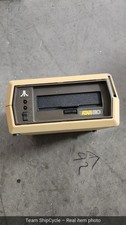
DEFECTIVE Atari 810 Vintage Computer Disk Drive powers on Unit Only Boo G3D
$55.24
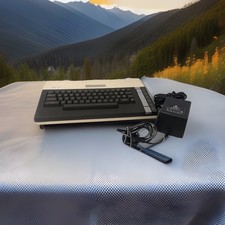
ATARI 800 XL 8-Bit Computer w/ Power Supply
$169.00
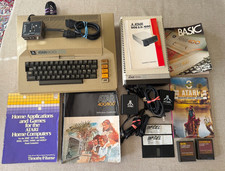
Vintage Atari 800 Computer + 1050 Disk Drive Manuals Games Software Cables Power
$349.00
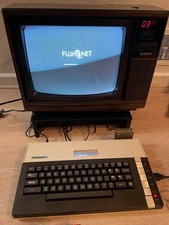
Fujinet 1.7.1 Atari 400 800 800XL 130XE 65XE XEGS Assembled, Tested, Working
$99.99
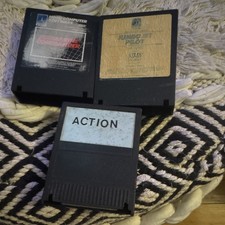
Atari Jumbo Jet Pilot Vintage Floppy Disk Software Lot w/ 2 Disks
$29.99
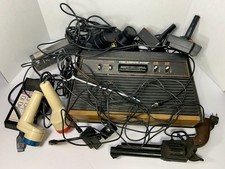
Atari Lot Video Computer System (VCS) Console Lot w/ Controllers, Gun, Touch Pad
$199.99
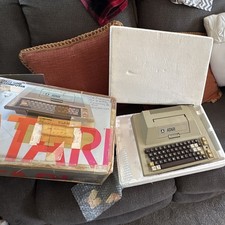
Atari 400 Vintage Home Computer System w/ Original Box MPN Atari 400
$175.00

Atari 1040ST Computer System SM124 Monitor Megafile 60 SLMC804 Bundle W/ Boxes
$849.00

UNOCART-2600 SD card Multi Rom Cartridge for ATARI 2600 with CASE
$34.25



 Reply With Quote