-
Installing to Raid array (nvidia)
Hi All
I've been trying Live CD's out recently and have decided on Knoppix as the one I'd like to install to hdd and try out more. after a quick read on here, I found out that Debian is Knoppix installed to a hdd.
I've been multibooting for years and currently have XP, Vistax64, OSX and Ubuntu on my machine.
When I run the Knoppix Live CD, it recognises my Nvidia Raid Array (Asus P5NT WS) straight away and allows me access to the partitions on there - a big plus point for me.
So I expected the Debian CD installer to also be able to recognise my Raid array and be able to install to it. This was not the case.
I'm still new to Linux so can someone provide a bit of advice on how to find out what on the Knoppix live CD allows it to see my Raid array so I might be able to successfully get Debian installed?
Thanks
Spotta
-
Administrator
Site Admin-
What type of RAID are you using, 0, 1 or something else?

Originally Posted by
spotta
after a quick read on here, I found out that Debian is Knoppix installed to a hdd.
Perhaps you should read a little less quickly. Knoppix is made from Debian, several incompatable versions of Debian actually. but Debian is most definitely not Knoppix installed to hard disk.
Originally Posted by
spotta
... and have decided on Knoppix as the one I'd like to install to hdd and try out more.
I strongly suggest that you take a look at answer #2 and rethink this.
Originally Posted by
spotta
When I run the Knoppix Live CD, it recognises my Nvidia Raid Array (Asus P5NT WS) straight away and allows me access to the partitions on there -
This is in complete conflict with everything that I know and I don't believe it is what actually happened. That is, of course, unless you are running EAID 1, mirrored drives, in which case the first drive is all that is needed but the mirroring is broken and the drives will become out-of-sync as soon as you write to the disk. With Raid 0 or 5, I suspect that Knoppix saw the first drive that made up the RAID array and presented it to you as if it were the RAID array itself. But if you were to check all of the files you would find that large files are missing parts (the parts that are on the other disk or disks) and that any small files on the other diive(s) are completely missing.
Linux has it's own RAID support if it is really needed. I submit that many people who use it don't understand that RAID 0 actually greatly increases their risk of data loss, and gives a rather small performance benefit. If you really understand all of the issues involved, and you still want a RAID system (and know what kind of RAID that you want), the proper way to get it would be a proper Debian install (not Knoppix) with the Linux RAID support (which, AFAIK the Knoppix kernel lacks).
What is your goal in setting up a RAID system and what type of RAID do you want?
-
Re: What type of RAID are you using, 0, 1 or something else?
Originally Posted by
Harry Kuhman
Perhaps you should read a little less quickly. Knoppix is made from Debian, several incompatable versions of Debian actually. but Debian is most definitely not Knoppix installed to hard disk.
The info for this very forum states 'Issues relating to HDD Installs. Once you have installed Knoppix, it basicly becomes debian, so you should check out www.debian.org for information. '
Originally Posted by
Harry Kuhman
I strongly suggest that you take a look at
answer #2 and rethink this.
I was intending to install Debian.
I have checked and count you correct on the Raid being seen as one disk with info missing - I'll install Debian to a normal SATA hdd
Thanks
Spotta
-
Administrator
Site Admin-
Re: What type of RAID are you using, 0, 1 or something else?
Originally Posted by
spotta
The info for this very forum states 'Issues relating to HDD Installs. Once you have installed Knoppix, it basicly becomes debian, so you should check out
www.debian.org for information. '
This is a forum, and as such it contains information from many different people. Some people do think that Knoppix can be installed. Some even Know Linux well enough to fix many of the problems that do come up when this is done. Many of the people who advocated this are no longer active in these forums. But I pointed you to a wiki article that explains the problems. You are free to make your own choice. If you do check out the support forums at www.debian.org, notice how quickly any offer of support vanishes if you mention that you are running Knoppix. They will tell you to stop trying to install Knoppix and install Debian, rightly so. As to something that was written back when people were first trying to get installed Knoppix scripts working and hoping that it would go much more cleanly that it actually did, my version of this slogan is "Once you have installed Knoppix, it basically becomes debian, much like once you paint racing stripes on a VolksWagon, it basically becomes a Ferrari".
Originally Posted by
spotta
I was intending to install Debian.
Good choice, but what you seemed to say in your post was that you intended to install Knoppix and didn't know there was a significant difference.
Originally Posted by
spotta
I have checked and count you correct on the Raid being seen as one disk with info missing - I'll install Debian to a normal SATA hdd
Thanks for the confirmation on the RAID issue, I was certain that there was no way that Knoppix was seeing a RAID array unless it was just one of a mirrored set of two drives. I think your choice to go with normal drives is best, but there is a RAID support effort in Linux if really needed. It's actually much better than the software drivers available for Windows. The windows drivers tend to support only raid 0, 1 or a mix of 0 and 1 sometimes called 10. But 0 increases the risk of data loss with little performance gain in most real world situations. 1 does give redundant data, but at the cost of a completely mirrored drive (half the disk space is "wasted"). It's important to note that this does not negate the need for data backups, since RAID 1 only protects against a hard drive failure. Many other things can destroy important data, including power supply failure, viruses, windows itself, and even operator error. In these cases both sets of data can be destroyed. The Linux dirivers support modes 0 and 1, but also support mode 5, a true RAID solution that keeps enough redundant data to recover lost information, but at a lower percentage wasted (backups still important). For example, if you have 4 100 gig drives in a RAID 5 configuration, you get 300 gig of RAID storage and only use 100 gig for recovery information (75% usable data) as opposed to RAID 10 which has only 200 gigs (50%) available.
Similar Threads
-
By maestro118 in forum Hardware & Booting
Replies: 0
Last Post: 09-04-2006, 02:28 AM
-
By ^Mo^ in forum General Support
Replies: 0
Last Post: 12-04-2005, 06:07 PM
-
By JPWhite in forum Hardware & Booting
Replies: 2
Last Post: 05-28-2005, 09:47 PM
-
By wooac in forum Hdd Install / Debian / Apt
Replies: 0
Last Post: 01-08-2004, 06:47 AM
-
By egbill3eagle in forum Hardware & Booting
Replies: 2
Last Post: 01-08-2004, 03:15 AM
 Posting Permissions
- You may not post new threads
- You may not post replies
- You may not post attachments
- You may not edit your posts
-
Forum Rules

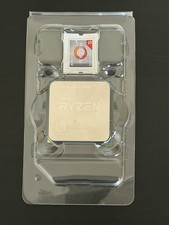
AMD Ryzen 5 5500 Processor ( read Description)
$59.00

INTEL CORE I9-10940X X-SERIES PROCESSOR | 3.30GHZ | SRGSH
$179.99
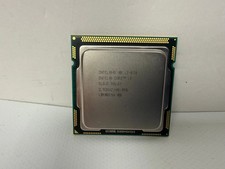
INTEL CORE I7-870 SLBJG 2.93GHZ LGA1156 4 CORE CPU PROCESSOR
$23.00
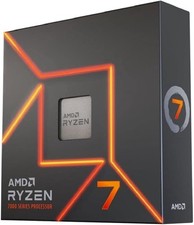
AMD Ryzen 7 7700X 8-Core, 16-Thread Unlocked Desktop Processor
$250.00
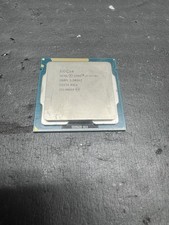
Intel Core i7-3770K 3.5 GHz Processor
$39.00
Intel Core i5-12500T SRL5W 2GHz 18MB 6 Core Socket LGA1700 Desktop CPU Processor
$114.99
Intel i7-8700 Coffee Lake 3.2GHz 6-Core Max Turbo 4.6GHz Processor
$67.99
AMD Ryzen 5 PRO 4650GE 100-000000153 6-Core 3.30GHz 8MB AM4 CPU Processor
$59.99
INTEL CORE I9-10980XE PROCESSOR | 3.00GHZ | SRGSG
$299.99
Intel Core i7-14700KF 20-Core 5.6GHz LGA 1700 14th Gen Desktop CPU - New Sealed
$299.00



 Reply With Quote