-
Senior Member
registered user
I tend to be very careful using pcman, and rather do the basic administrative steps from the command line. This has been mentioned a number of times before, but here it goes:
First, open a terminal window and check what the Knoppix system thinks is the storage setup:
Code:
knoppix@Microknoppix:~$ fdisk -l

Disk /dev/sda: 500.1 GB, 500107862016 bytes
255 heads, 63 sectors/track, 60801 cylinders
Units = cylinders of 16065 * 512 = 8225280 bytes
Disk identifier: 0x76692ca8

   Device Boot      Start         End      Blocks   Id  System
/dev/sda1               1        1912    15357116   1c  Hidden W95 FAT32 (LBA)
/dev/sda2   *        1913       17112   122094000    7  HPFS/NTFS
/dev/sda3           17113       60801   350931892+   f  W95 Ext'd (LBA)
/dev/sda5           17113       60801   350931861    7  HPFS/NTFS

Disk /dev/sdb: 16.0 GB, 16001036288 bytes
32 heads, 63 sectors/track, 15501 cylinders
Units = cylinders of 2016 * 512 = 1032192 bytes
Disk identifier: 0x0ce14c25

   Device Boot      Start         End      Blocks   Id  System
/dev/sdb1   *           1       15501    15624976+   c  W95 FAT32 (LBA)
knoppix@Microknoppix:~$
Hopefully, you will see some Windows HPFS/NTFS partitions, like I did here. If you don't, you should go back to Windows disk administration and register carefully Windows' view of the system. And close fully down afterwards (cfr krishna.m's remarks). Here, /dev/sdb1 is the 16GB FAT-formatted USB stick I am running Knoppix from.
IF you see what you are looking for, then you could try a manual mount of the system. At this point, you could become superuser (root in Unixspeak), but it is safer to take on those privileges on a per command basis, by prefixing all commands with sudo.
Code:
knoppix@Microknoppix:~$ sudo mount -o ro -t ntfs /dev/sda5 /media/sda5
knoppix@Microknoppix:~$ df
Filesystem           1K-blocks      Used Available Use% Mounted on
/dev/sdb1             15609712   8291128   7318584  54% /mnt-system
tmpfs                  1048576         0   1048576   0% /ramdisk
/dev/cloop             8827264   8827264         0 100% /KNOPPIX
/dev/loop0             3691008   1733424   1770084  50% /KNOPPIX-DATA
unionfs                3691008   1733424   1770084  50% /UNIONFS
unionfs                3691008   1733424   1770084  50% /home
tmpfs                    10240        68     10172   1% /UNIONFS/var/run
tmpfs                    10240         0     10240   0% /UNIONFS/var/lock
tmpfs                   102400       104    102296   1% /UNIONFS/var/log
tmpfs                  1048576        12   1048564   1% /tmp
udev                     20480       440     20040   3% /dev
tmpfs                  1048576         4   1048572   1% /dev/shm
/dev/loop/1            3444972   1008304   2261668  31% /store/share
/dev/sda5            350931860     41768 350890092   1% /media/sda5
Here, I use the Unix mount, with the switches -o ro -t ntfs to mount a NTFS partition readonly. The mount point has to exist, /media/sda5 is automatically created by the system for you. The df command tells you how much space is left on each device (implicitly, what devices are in fact mounted), you can see the NTFS volume /dev/sda5 turned up with 350GB free.
Now, you can take backups and collect all sorts of statistics from that NTFS volume safely, because you have mounted it readonly. You can unmount it manually too, sudo umount /media/sda5 in my case, but it will be unmounted on system shutdown in any case, so it is not mandatory.
Tags for this Thread
 Posting Permissions
- You may not post new threads
- You may not post replies
- You may not post attachments
- You may not edit your posts
-
Forum Rules

INTEL XEON E5-2680V4 SR2N7 2.40GHZ CPU
$11.00

Dell Precision Tower 7810 Xeon E5-2630 v3 @ 2.40GHz , 32GB Ram, NO HDD, NO OS
$239.99
Dell Precision T7820 2x Xeon Silver 4114 2.20GHz 950W No RAM GPU HDD 4x SATA
$350.48
Dell EMC PowerEdge R440 Xeon silver 4215 2.5GHz 16 GB ram 2x 550W PSU No HDD
$275.00
Dell Precision T5820 Workstation 3.70GHz W-2135 No RAM/ GPU/ HDD/ OS
$179.98
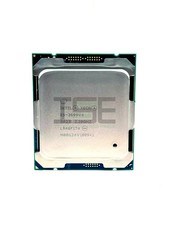
Intel Xeon E5-2699 V4 2.20GHz 55M 22-CORES LGA2011-3 Server Processor 145W SR2JS
$84.49
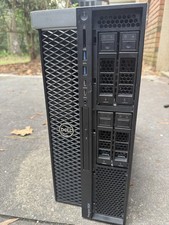
DELL Precision 5820 Workstation Xeon W-2123 3.6ghz/NO RAM/NO SSD/P400 Vid
$139.99
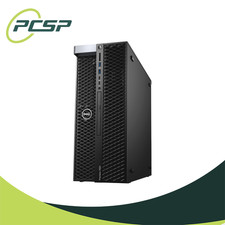
Dell Precision T7820 2x Xeon Gold 6130 2.10GHz 950W No RAM GPU HDD 4x SATA
$374.48
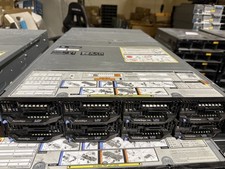
Dell PowerEdge FX2s + 8x FC430 Blades 16x E5-2630v4 160 Cores Rails No PSU/RAM
$699.00
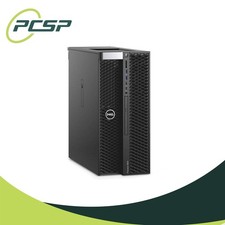
Dell Precision T5820 950W Workstation 4.00GHz W-2125 No RAM/ GPU/ HDD/ OS
$144.98



 Reply With Quote