-
utu san,

Originally Posted by
utu

A most impressive response to my wishlists. Thank you very much.
Several comments and questions come to mind. For extra credit, of course.
A most impressive list of questions. I'm sorry, but I don't need extra course credits: I'm far too old.
Originally Posted by
utu
It seems to me you have answered a much larger question as well:
how to add 'unofficial cheatcodes' to Knoppix.
Very carefully.
Originally Posted by
utu
Have you invoked these patches yourself?
Yes. I don't have a comprehensive test suite or an army of test engineers. So no guarantees.
Originally Posted by
utu
Couldn't these same functions appear as well on the LXDE menu,
perhaps with a few additional strokes?
In my opinion, no. You should not back up an active file system and you certainly can't restore to one. The cheat codes work directory on /KNOPPIX-DATA before the UNIONFS is created.
Originally Posted by
utu
And, your time zone is what ?
All this is done in MOT (My Own Time). I surmise you are on GST (German Student Time).
The clever Wiki software tells me all times are in GMT from which I infer vBulletin™ have deduced my time zone from my IP address. Scary.
Originally Posted by
utu
I also noted that the tar/gz and untar/gz operations took a lot
longer than I would have expected, considering how fast
the KNOPPIX compressed file comes up.
Yes I noted that too. Remember compression generally takes a lot longer than decompression. The cheat codes are using /bin/busybox tar, not the real thing. It might be the real thing can make full use of your multi-core CPU and Giga bytes of memory while the BusyBox version can't. I don't know.
You could try BusyBox with lzma compression (that would please kl522) or you could try running the real tar from the /init script. KK has some scary stuff in /init that runs real programs in their own chroot environment. Test your mettle and all that.
Originally Posted by
utu
This question will allow you to calibrate my expertise:
No, you don't need a special editor to create a patch. The command line will do just fine.
The simple theory is you generate the patch file by comparing the original file with the changed file thus:
Code:
diff -Naur script.org script > script.patch
You can later apply the patch to an unaltered copy of script with:
Code:
patch < script.patch
I find this works quite well for saving my changes to 'system' configuration files and then reapplying my changes to new configuration files after an OS upgrade or something.
The diff program generates differences with a few lines of context either side and the patch program uses the context, not just the lines numbers, to figure out where the patch should go. Great if someone has changed the file so all the lines numbers have changed. Not so great if they've change the same lines so the context is different. You get a conflict that basically you have to resolve by hand.
That's the basics. It can get a lot more involved than that but since patches are how Open Source software developers get stuff done I guess knowing a little about diff and patch is 
 Posting Permissions
- You may not post new threads
- You may not post replies
- You may not post attachments
- You may not edit your posts
-
Forum Rules

GIGABYTE A520M DS3H AC AMD AM4 Motherboard mATX
$59.99
GIGABYTE Z790 AORUS ELITE AX LGA 1700 Intel Z790 ATX Motherboard with DDR5
$189.99
Intel H310 LGA1151 8-9th Gen DDR4 M.2 NVMe mATX Motherboard IO Shield Battery
$54.99
ASUS PRIME Z490-V Motherboard Intel Z490 10th gen DDR4 LGA 1200 ATX w/ IO Shield
$84.99
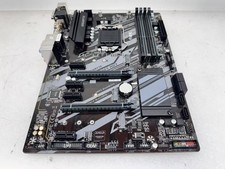
GIGABYTE B365 HD3 LGA1151 Intel 9th Gen motherboard
$59.99

MSI B550M PRO-VDH Micro-ATX Motherboard - AMD AM4, Ryzen 5000/4000/3000 Ready, P
$71.49
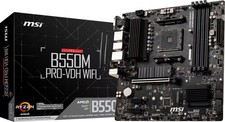
MSI - B550M PRO-VDH WIFI (Socket AM4) AMD B550 MATX DDR4 Wi-Fi 6 Motherboard ...
$89.99
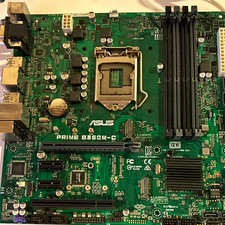
ASUS PRIME B360M-C MicroATX Intel LGA1151 DDR4 HDMI VGA USB RJ-45 Audio
$34.99
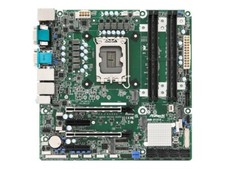
ASRock IMB-X1314 LGA 1700 Intel W680 DDR4 Quad display Micro-ATX Motherboard
$351.99
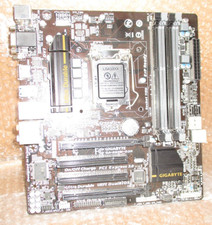
Gigabyte GA-B85M-D3H Motherboard
$54.99



 Reply With Quote