-
Hi Bo,
I'm glad you like Debian even though this is a Knoppix forum.
I'm afraid I have no idea what this br24 is you used to install/boot Debian. Do tell.
You are telling us Debian this and Debian that when it seems you're mixing up releases of Debian in a most unconventional manner. I've installed Debian many times and know that you are confused and what you write is a tad incorrect. Others may not realise this.
On Desktops
The current (stable) release of Debian is Debian 6, known as Squeeze. The previous (oldstable) release is Debian 5, known as Lenny.
With Squeeze you can install Gnome, KDE, XFCE or LXDE desktops. LXDE is new with Squeeze.
There are a great many Debian Squeeze iso files you can download and install from. With DVD 1 you can install any of the four desktops: Gnome is the default - to install one of the others select Advanced ... and follow your nose. There are actually three CD 1s - a Gnome version, a KDE version and a ligthweight desktop version. Other isos (such as the dual 32-bit/64-bit PC installer) tend to be Gnome only.
Even that is tosh. I installed on a machine without CD/DVD reader using a USB stick that booted the smallest net install image. It didn't take me long to figure out how to hack it to install KDE. It's just a cheat code after all.
On Installation
The Lenny installation asks for a root password and also creates a default user account with password. This has nothing to do with desktop choice or lack thereof. The display manager (here KDM), by default, only offers you a choice from among 'user' accounts with a uid of 1000 or greater. So are not given the choice of root but there is nothing to stop you logging in a root - you just have to learn how to type the word root instead of clicking on it.
New with Squeeze is the possibility to not have a root password but to have sudo instead. This is as in Ubuntu (sudo with password) not as is Knoppix (sudo without password).
On KDE
At the time of the release of Debian 5, the stable release of KDE was 3.5. KDE 4 was available but not stable enough. Therefore with Lenny you get a old fashioned KDE that looks and feels a bit like, if you are old enough to have used it, Windows 2000. With Squeeze you get KDE 4. It's KDE, Jim, but not as we know it.
On kernel versions
As you noted, Debian 5 uses Linux 2.6.26, Debian 6 uses Linx 2.6.32 (and Knoppux 6.4.4 uses 2.6.37). It is quite possible the Debian 5 kernel is too old to understand your sliding scale AMD processor. It sounds like your processor is new enough to run a 64-bit Debian so try installing that properly and see how your machine flies (or not).
On mount
Your description of mount is unclear. It is clear you assume that Linux automounts file systems for you. It does not.
Knoppix has always been exceptional in this regard. It adds entries to /etc/fstab so that the ordinary user can mount any file system. Debian does not: you need root or sudo privileges or you edit /etc/fstab yourself.
At one point your were having trouble accessing file systems using Lenny with an undisclosed KDE file manager (guess Dolphin or Konqueror) and at another point using (I guess) PCMan for LXDE under Squeeze. Chalk and cheese.
File managers evolve: Dolphin under KDE 4 is better than under KDE 3.5 (if you like that kind of thing). Automounting file systems is something a file manager can do if you set up /etc/fstab correctly (as Knoppix has always done) or it can take root privilege via sudo whenever necessary. Quite possibly the differences you observed between your first and second attempts comes from the way you installed Debian and did or did not specify a root password.
On apt
Debian installation is usually from CD, DVD or Blueray medium. A default set of packages is installed. The medium is, in effect, a snapshot of a subset of the Debian repositories (the Knoppix CD/DVD are not). You can go back to the medium and install additional packages, provided the packages are there. That is why the CD appears in the sources list used by apt and why you are asked to insert the disk each time you install software. The installation medium is all some installations have: Debian is not only used for sufing the Internet.
During the installation you were asked to choose a Debian mirror during the configuration of apt. If you chose one, then the full set of Debian repositories was added to the source list used by apt.
After installation most people simply comment out the installation medium from their sources list. I think you should be able to do this from synaptic, saving you the trouble of "learning the command line".
There is plenty of documentation on Debian on the Debain wiki. A little more reading and a little less doing and you will finding you are learning more and guessing less.
 Posting Permissions
- You may not post new threads
- You may not post replies
- You may not post attachments
- You may not edit your posts
-
Forum Rules

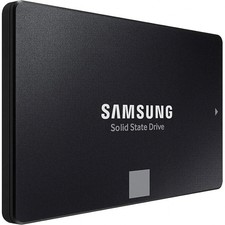
Samsung 2.5" 870 EVO SSD SATA III 250GB 500GB 1TB Internet Solid State Drive Lot
$100.00
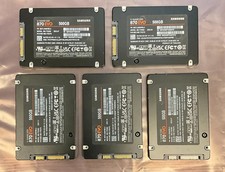
LOT OF 5 Samsung 870 EVO 500GB 2.5" SATA SSD TLC DRAM 95% or Better
$250.00
Western Digital Blue 3D NAND 500GB Internal 2.5" SSD - WDS500G2B0A
$49.99
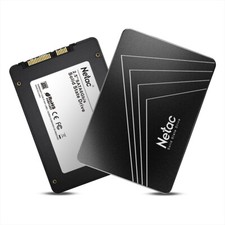
Netac 120GB 256GB 1TB 2TB Internal SSD 2.5'' SATAIII 6Gb/s Solid State Drive lot
$119.99
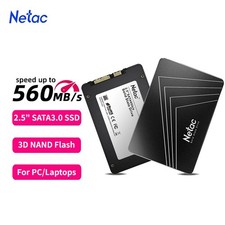
Netac 2TB 1TB 512GB 256GB Internal SSD 2.5inch SATAIII Solid State Drive lot
$549.00
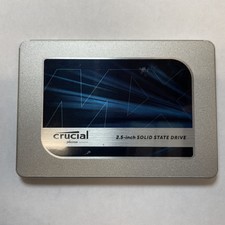
Crucial MX500 1TB 2.5" SATA III Internal SSD CT1000MX500SSD1
$99.99
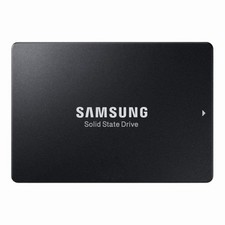
Samsung 860 EVO 250GB SSD MZ-76E250 2.5" SATA III Solid State Drive -
$36.99
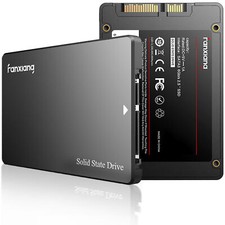
Fanxiang 256GB 512GB 1TB 2TB 4TB SSD Lot 2.5'' SATA Internal Solid State Drive
$42.99

Netac 1TB 512GB 256GB Internal SSD 2.5inch SATA Solid State Drive lot PC Laptop
$221.00
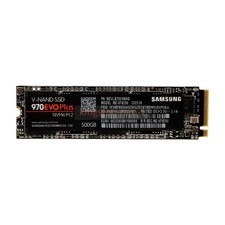
Samsung New SSD 970 EVO Plus 2TB 1TB 500GB 250GB NVMe M2 Internal Hard Drive Lot
$79.99



 Reply With Quote