-
Senior Member
registered user

Originally Posted by
Capricorny

Some comments:
1. I think the "nowear" cheatcode should not always be used. When doing heavy work involving the persistent store, like package upgrading, I think it may be better to skip the ramdisk layer. The ramdisk layer is for "everyday", not "administrative" use.
.....
But there is actually an easier way to accomplish the "nowear" thing, is to ask operating system to be lazy on writing to flash. Here is one write up of such thing :-
http://www.cyrius.com/debian/nslu2/linux-on-flash.html
I thought this is a more elegant solution than to mimic the operating system behaviour in userspace.
-
Senior Member
registered user
Originally Posted by
kl522
But there is actually an easier way to accomplish the "nowear" thing, is to ask operating system to be lazy on writing to flash. Here is one write up of such thing :-
http://www.cyrius.com/debian/nslu2/linux-on-flash.html
I thought this is a more elegant solution than to mimic the operating system behaviour in userspace.
As far as this mostly is about OS behavior, I fully agree. But I don't think that is the whole story. We have a lot of proper user space tasks resulting in many disk writes, furthermore, use of ramdisk can speed up running from flash sticks a lot. I also don't quite see that a nowear options has to be that much of an ugly hack, and in the actual use situations, we will mostly have more free memory to use in the time to come. (Because of games requirements and cheap RAM.)
At the very least, I think it is worthwile having a few users testing a clean implementation of it. And using a similar solution for things like databases could also be effective: We could, for example, aufs-mount a compressed ro part, a rw part from a disk partition and a ramdisk. Today, aufs won't let us use the compressed part, when that comes from something already aufs-mounted.
-
Senior Member
registered user
Originally Posted by
Capricorny
We have a lot of proper user space tasks resulting in many disk writes, furthermore, use of ramdisk can speed up running from flash sticks a lot.
The OS caches all disk writes using memory, so in a way, it is like a layer of ramdisk. It becomes slow only when the Ram is flushed to disk or flash. And here we have a choice to ask the OS not to flush it using the kernel parameters. This is the OS behaviour which I am talking about.
At the very least, I think it is worthwile having a few users testing a clean implementation of it. And using a similar solution for things like databases could also be effective: We could, for example, aufs-mount a compressed ro part, a rw part from a disk partition and a ramdisk. Today, aufs won't let us use the compressed part, when that comes from something already aufs-mounted.
Again, you are duplicating what database servers are doing. The database server caches as much thing as memory permits in the memory.
In any case, I shall not stop anyone from doing anything they so prefer. Feel free to implement these. It's useful learning exercise anyway.
-
Senior Member
registered user
Originally Posted by
kl522
The OS caches all disk writes using memory, so in a way, it is like a layer of ramdisk. It becomes slow only when the Ram is flushed to disk or flash. And here we have a choice to ask the OS not to flush it using the kernel parameters. This is the OS behaviour which I am talking about.
Again, you are duplicating what database servers are doing. The database server caches as much thing as memory permits in the memory.
In any case, I shall not stop anyone from doing anything they so prefer. Feel free to implement these. It's useful learning exercise anyway.
Of course, I know this.
There are two issues that don't get addressed by your approach:
1. Asking the OS to be as lazy as possible is not necessarily beneficial in all respects.
2. Even with max caching and I/O laziness everywhere, there are in many cases more than enough read/write operations left both to slow down operation and wear out flash.
So, while adding yet another layer of ramdisk may not be optimal in several respects, the issue for many, including me, is whether it severely degrades performance, and whether it goes with a defensive approach to system administration. The issue of performance degradation I think is probably a rather moot one, as all the caching going on will of course reduce the ramdisk involvment too. As for defensiveness, only experience can tell, but there are good reasons to expect at least some benefits.
 Posting Permissions
- You may not post new threads
- You may not post replies
- You may not post attachments
- You may not edit your posts
-
Forum Rules

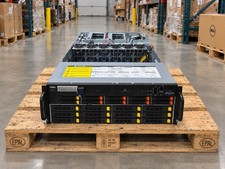
Gigabyte 4U AI Server 10x Nvidia GPU 2x Xeon Gold 6150 36 Core 2.7GHz DDR4 RAM
$1499.00
Dell EMC PowerEdge R440 Xeon silver 4215 2.5GHz 16 GB ram 2x 550W PSU No HDD
$275.00
867959-B21 HPE ProLiant DL360 G10 CTO Server W/ 2x 865414-B21 1x 840140-001
$245.00
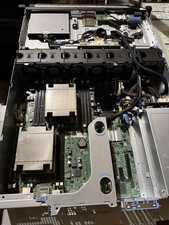
Dell PowerEdge R530 2x E5-2630v4 H330 iDRAC8 Port Card Riser No PSU/RAM/HDD
$99.99
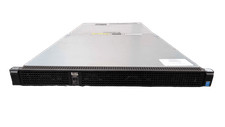
Dell PowerEdge C4130 1U AI GPU Server | 2x E5-2690 v3 | 64gb Ram | 2x 1600W
$524.99

Dell PowerEdge C4130 1U AI GPU Server | 2x E5-2680 v3 | 32gb Ram | 2x 1600W
$409.99
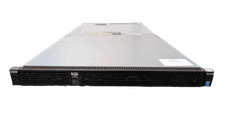
Dell PowerEdge C4130 1U AI GPU Server | 2x E6-2699 v3 | 128gb RAM | 2x 1600W
$899.99
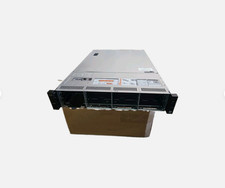
Dell Poweredge R730xd 12LFF 2*2660v4 4*1Gbe h730 2x 750W Server CTO
$308.00
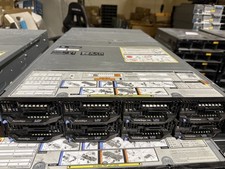
Dell PowerEdge FX2s + 8x FC430 Blades 16x E5-2630v4 160 Cores Rails No PSU/RAM
$699.00
Dell Poweredge R630 2x Xeon E5-2680 v3 2.5ghz 24-Cores / 64gb / Raid / 2x 1Tb
$374.99



 Reply With Quote