-
Senior Member
registered user

Originally Posted by
Capricorny

We have a lot of proper user space tasks resulting in many disk writes, furthermore, use of ramdisk can speed up running from flash sticks a lot.
The OS caches all disk writes using memory, so in a way, it is like a layer of ramdisk. It becomes slow only when the Ram is flushed to disk or flash. And here we have a choice to ask the OS not to flush it using the kernel parameters. This is the OS behaviour which I am talking about.
At the very least, I think it is worthwile having a few users testing a clean implementation of it. And using a similar solution for things like databases could also be effective: We could, for example, aufs-mount a compressed ro part, a rw part from a disk partition and a ramdisk. Today, aufs won't let us use the compressed part, when that comes from something already aufs-mounted.
Again, you are duplicating what database servers are doing. The database server caches as much thing as memory permits in the memory.
In any case, I shall not stop anyone from doing anything they so prefer. Feel free to implement these. It's useful learning exercise anyway.
-
Senior Member
registered user
Originally Posted by
kl522
The OS caches all disk writes using memory, so in a way, it is like a layer of ramdisk. It becomes slow only when the Ram is flushed to disk or flash. And here we have a choice to ask the OS not to flush it using the kernel parameters. This is the OS behaviour which I am talking about.
Again, you are duplicating what database servers are doing. The database server caches as much thing as memory permits in the memory.
In any case, I shall not stop anyone from doing anything they so prefer. Feel free to implement these. It's useful learning exercise anyway.
Of course, I know this.
There are two issues that don't get addressed by your approach:
1. Asking the OS to be as lazy as possible is not necessarily beneficial in all respects.
2. Even with max caching and I/O laziness everywhere, there are in many cases more than enough read/write operations left both to slow down operation and wear out flash.
So, while adding yet another layer of ramdisk may not be optimal in several respects, the issue for many, including me, is whether it severely degrades performance, and whether it goes with a defensive approach to system administration. The issue of performance degradation I think is probably a rather moot one, as all the caching going on will of course reduce the ramdisk involvment too. As for defensiveness, only experience can tell, but there are good reasons to expect at least some benefits.
 Posting Permissions
- You may not post new threads
- You may not post replies
- You may not post attachments
- You may not edit your posts
-
Forum Rules

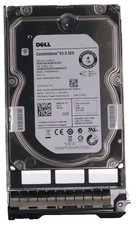
Dell 6P85J 4TB ST4000NM0063 7.2k 6Gb/s 3.5” SAS SED Hard Drive with Tray
$39.99
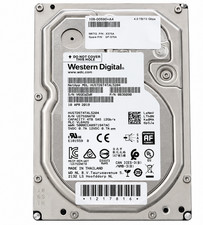
Western Digital HUS726T4TAL5204 4TB 7.2K SAS 12Gb/s 3.5" 512e HDD NetApp X375A
$64.00
Seagate ST8000DM004 8TB 3.5" 6Gb/s 256MB SATA HDD P/N: 2CX188-300 Tested
$149.99
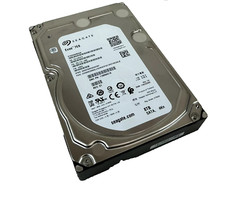
(ST8000NM0045) SEAGATE ENTERPRISE 8TB 7200RPM 4Kn SATA 6Gb/s 3.5" HARD DRIVE
$199.99
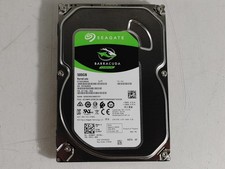
Seagate ST500DM009 BarraCuda 500 GB 3.5" SATA III Desktop Hard Drive
$14.99
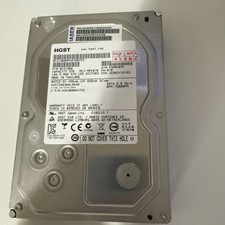
HGST Ultrastar 7K4000 3TB 7200RPM SATA III 3.5" Hard Drive HDD HUS724030ALA640
$39.99
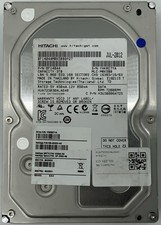
HGST HUA723030ALA640 3TB SATA 7200 RPM 3.5 in Enterprise HDD | 0F14044 (100%)
$45.00
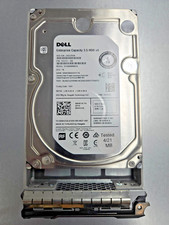
Dell ST6000NM0034 1HT27Z-150 NWCCG 6TB SAS 3.5 7.2K ENTERPRISE SERVER DRIVE
$68.99

DELL 2TB Enterprise HDD (7200RPM, 3.5", SATA III, 128MB Cache) HUS722T2TALA600
$49.95
Seagate Exos X16 ST12000NM001G 12TB 256MB 7200RPM 3.5" SATA 6Gb/s Enterprise HDD
$349.95



 Reply With Quote