

 Reply With Quote
?.. latest Knoppix 7.2.0 works nicely with Debian i386 wheezy ..
Verbose, please.What are you doing?


Hi:
In my hands, latest Knoppix 7.2.0 works nicely with Debian i386 wheezy. In contrast, with amd64 lenny (on a multi dual-opteron server), it fails to boot, with message:
/sbin/init cannot execute binary file
With that server I had to use the older version 5 of Knoppix, which worked nicely in analyzing mdadm.
I would be grateful for pointing out What is wrong with 7.2.0, or with my procedure with the new Knoppix.
thanks
chiendarret
?.. latest Knoppix 7.2.0 works nicely with Debian i386 wheezy ..
Verbose, please.What are you doing?
Hi:
I reported all that was displayed on the monitor.
How to run Knoppix in this case to get "verbose" output, or which log file should I look for?
thanks
chiendarret
First, don't expect us to be of much help with 7.2.0 right now. We are stuck with 7.0.2, but it's still less than 3 weeks old, so we can live with that.
Second, you have, as Werner points out, to describe the use situation producing the error more precisely. Knoppix 7.X can run on 64-bits architectures. But if you have a 32-bits minirt.gz, like the original one, it may not be able to start a 64-bits /sbin/init - but, then, where does that come from? Maybe a pure 64-bits botloader setup can also give problems, and you are not guaranteed binary compatibility across Debian releases - but this is just mentioning some examples of what might crash.
The problem I am at, is that I changed motherboard, CPU, and 2 x GPU, and the new system does not recognize the file system (grub2 on master record, raid1, md0). All other stuff is md1, LVM, vg1 seven partitions: home, user etc.
With Knoppix 7.2.0, this morning I could fully analyze this amd64 raid1, with a recent kernel. It worked nicely, although by the vendor I had no internet connection.
7.2.0 did not work, as I said, with a lenny server (kernel 2.6), while it worked with i386, recent kernel.
Knoppix 5.3.1 failed to work with the new CPU-GPU machine, while it worked with the old server.
So, it seems that one should use the Knoppix version according to the Debian kernel age of his hardware.
All that just to answer quickly your kind message. Now I am busy in getting the new machine to work (molecular dynamics). After that, should you want detailed tests from me, please ask and I'll try to do (I am a biochemist, not and expert in computers, however)
Thanks
francesco pietra
That kind of system surgery may be done fairly efficiently with Linux, and I have found old grub (legacy grub) to be simpler for such tasks. There may be any number of configuration issues involved in such a case. My experience is that one should count on them cropping up.Originally Posted by chiendarret

Why did you expect it to work? And the name "kernel 2.6" subsumes a few years of kernel development, through something like 39 major revisions. Again, I know nothing about Knoppix 7.2.0, but 7.0.2 easily becomes somewhat dysfunctional when you use it with older kernels. You may get it up and running, but typically some functionality will be broken because of wrong kernel modules/behavior. If you need older versions, the safest is to compile and install them, and often there will be limits to what you can do, so you may need patched versions of older kernels.With Knoppix 7.2.0, this morning I could fully analyze this amd64 raid1, with a recent kernel. It worked nicely, although by the vendor I had no internet connection.
7.2.0 did not work, as I said, with a lenny server (kernel 2.6), while it worked with i386, recent kernel.
And my question is, where you got it from that you can do kernel/system mixing and matching and still have a fully functioning system? The rule is, that you have to match kernel and system carefully, which is why you should never attempt kernel swapping with Knoppix before you have got the system running in a reasonably stable way with the native kernel of the release, which is 3.3.7 for Knoppix 7.0.2. With legacy grub, you may just create a new subdirectory of the /boot directory grub works from, throw the kernel and minirt.gz (initrd) stuff in there and make an entry referring to this in /boot/grub/menu.lst. You can have several kernels/minirts there, with a menu entry for each combination.Knoppix 5.3.1 failed to work with the new CPU-GPU machine, while it worked with the old server.
So, it seems that one should use the Knoppix version according to the Debian kernel age of his hardware.
A few days ago, I tried to install a 3.X kernel package with a 64-bits squeeze-based Knoppix remastering (running custom compiled 2.6.39.2), and I couldn't even get the package to install correctly. You may of course have luck and just graft on a different pre-compiled kernel with no apparent problems, but don't expect the world to be so kind to you next timeGood luck with your dynamics application!
Last edited by Capricorny; 06-18-2012 at 03:47 PM.
Hello chiendarret,
Assuming that you INDEED mean to say Knoppix 7.2.0 (and not 7.0.2), please let me know from where did you obtain it.
The problem which you describe, seems to be specific to the said version(7.2.0) and since I cannot make out where did you get it from, I am afraid I am unable to help in this matter.
Thank you,
 Posting Permissions


Dell Precision T5820 Workstation 3.70GHz W-2135 No RAM/ GPU/ HDD/ OS
$179.98
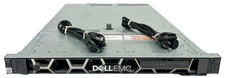
Dell EMC PowerEdge R440 Xeon silver 4215 2.5GHz 16 GB ram 2x 550W PSU No HDD
$275.00

Dell Precision Tower 7810 Xeon E5-2630 v3 @ 2.40GHz , 32GB Ram, NO HDD, NO OS
$239.99

Lenovo ThinkStation P520c Intel Xeon W-2133 6-Core 3.60GHz -NO RAM/ HDD/ GPU/ OS
$127.54
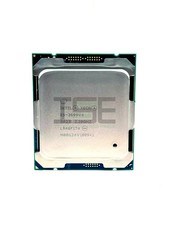
Intel Xeon E5-2699 V4 2.20GHz 55M 22-CORES LGA2011-3 Server Processor 145W SR2JS
$84.49

Dell Precision T7820 2x Xeon Silver 4114 2.20GHz 950W No RAM GPU HDD 4x SATA
$350.48
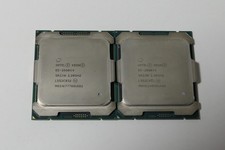
Matched Pair _ Intel Xeon E5-2698 V4 2.2GHz 20-Core Processor CPU LGA2011 SR2JW
$94.99

Intel Xeon E5-2690 v4 SR2N2 14 Core 2.6GHz 35MB LGA2011-3 CPU *km
$15.99
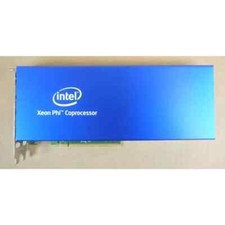
Intel Xeon Phi 5110P 60-Core 1.053GHz Coprocessor
$50.00
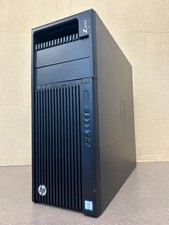
HP Z440 Workstation TWR Xeon E5-1603 v3, 8GB RAM, NVS310, SB1570, NO SSD/OS #95
$89.99