

 Reply With Quote
What are you missing?Originally Posted by howie


...I have successfully run as a persistent USB flash drive. And this is only because it come with it's own built in "Install to Flash Disk" utility.
I've messed with "Linux Mint", Debian, Ubuntu with various levels of success. If I did get it working, it wasn't very stable. Doing this by following step-by-step instructions or by using a tool like Universal-USB-Installer.
Being able to take your computing environment to any computer (that can boot from USB) is a very attractive alternative.
Keep up the good work! Looking forward to the next Knoppix with even more persistent USB options. It would be cool if it could run from USB and be no different then if it were running from hard drive.
What are you missing?
Hi utu,
Let me start by saying I'm no Linux expert so it's a good chance I don't know what I'm talking about.
With the other Linux distros (that didn't quite work out) I've had to specify all the different partitions. One for root "/", one for home "/home" and a swap partition. I'm assuming root is the only place additional software is installed and home is where my files go. The Knoppix USB persistent install is all on one partition with a max of 4 gig persistent space.
I may just be noticing the difference and assuming the other partitions are needed.
Having said all that, what I really would like to do is allocate the remaining space on my USB flash drive for persistent memory. I have a 16 gig flash drive and the highest I can allow for a persistent file is 4 gigs. I say this with the assumption that additional software is installed in the persistent area.
Thanks you for your time!
I'm also making the assumption the files I create are also stored in the persistent area. Now that I think of it, I'm not sure they would need to be.
Greetings again, Howie
With Knoppix 7.0.5 you have TWO choices for persistence files.
One choice is to create one within the same partition as the OS
using Fat32. This persistence file is not limited itself to 4 Gb, but files
placed on it must be less than 4 Gb. And the time it takes to
format a Fat32 persistence file is proportional to its size.
Formatting one larger than 4 Gb may make you think something's
gone haywire before it completes.
A new choice has been added which allows persistence to be
achieved with a separate reiserfs partition. This approach has
no similar 4 Gb file size limitation, and doesn't take any
time at all formatting.
There are a lot of good things about Knoppix and its LiveUSB
is my favorite choice of Linux.
Are you referring to the "experimental" USB flash drive utility? When I try to run that, it just errors. Perhaps I need to setup the partitions prior to running the utility?
Do you have any info on how to use this second approach?
Thanks in advance!
Hello again, howie.
The reisers approach is the new 'experimental' approach.
I didn't have any problem with it, myself.
I started with an 8 Gb SanDisk cruzer and/or a 16 Gb SanDisk
'camera card'. Both were formatted Fat32, single partition
at the factory.
Some users report usbs pre-formatted with several small partitions.
That may be a problem. By the way, don't provide the reiserf partition yourself,
let Knoppix do it.
I suggest you see what your usb looks like with gparted, and if
it is not single partition Fat32, then make it so and try again
with the 'experimental' option.
If that doesn't do it, then give our experts here more details
and they'll get to the bottom of it.
Howie, another possibility.
See the following thread.
http://knoppix.net/forum/threads/303...light=reiserfs
There is an acknowledged blip in the experimental setup for some folks.
see especially post #21.
If that's your problem you can try the solution in that thread or wait for Knoppix 7.1.
That'll likely be late March or April even.
That's my same problem. Thanks for the link! I'll try making that change.
Basically, there are two ways to get out of the 4GB persistent store squeeze without going into "experimental" features. First, running Knoppix off a Poor Man's Install on a file system allowing >4GB files (NTFS, ext3/4 reiserfs...), and extending the persistent file. This may also be done on a USB stick, creating a smaller boot partition, putting Knoppix on a larger storage partition, and micro-remastering.
In my experience, if 4GB persistent store is really too little, it is in many cases way better to go by the second route: You mount extra volumes, either directly as partitions, or as loop-mounted images. I routinely setup a large storage partition on the main hard disk, mount it on /store, and use it for all sorts of storage except for programs and program data. If I have to use a Windows PC and cannot re-partition the main disk, I set up a large loop file and mount that image as /store.
You can also extend persistent store within the FAT32 limitation by adding volumes knoppix-data2.img, knoppix-data3.img etc in the KNOPPIX directory, and, for example, modify /etc/rc.local to mount them on boot. Those will be copied with the directory when you use the plain old knoppix-to-flash function.
Last edited by Capricorny; 03-04-2013 at 09:49 AM.
 Posting Permissions

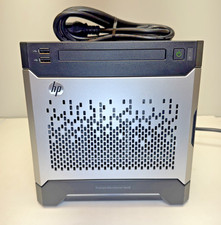
HP ProLiant MicroServer Gen8 G1610T @2.3 GHz, 16GB, 712317-001 NO HDD/OS
$199.00
$280.00
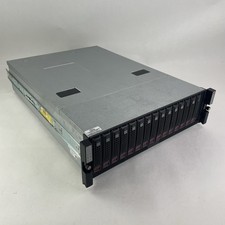
Supermicro CSE-937 3U Storage Chassis No CPU No HDD No Ram Tested & Reset
$129.99
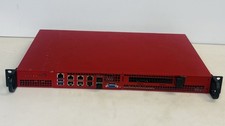
Supermicro 1U Network Server Appliance 16GB RAM 800GB SSD 6 LAN Ports Powers On
$450.00
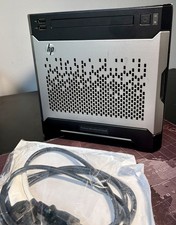
HP PROLIANT TPS-W003 MICRO- SERVER TOWER Gen 8, 16G RAM
$195.00
Supermicro 1027GR-TSF 1U Rackmount Server 2x Xeon 2.3GHz 128GB DDR3
$219.99
Supermicro 2U X10DRU-i 2x E5-2680 v3 2.5ghz 32gb Ram 240gb SSD 2x GPU *READ*
$369.99
SUPERMICRO CSE-836 XEON E5-1620 v3 @ 3.50GHz, 32GB RAM, NO HDD/OS
$299.99
Supermicro CSE-216 No CPU No Ram No HDD Tested & Reset
$149.99
Supermicro CSE-216 No CPU No Ram No HDD Tested & Reset
$149.99