-
Senior Member
registered user

Originally Posted by
utu

.
You might recall I now have two identically configured Dell Inspirons
One a 2009 Win7 and the other a 2013 Win8 computer.
The Win7 has dual pentiums, a boot menu that allows selection of boot
medium, and a legacy boot method. It also has three USB ports, two of
which are USB2, and an SD/SDHC port which acts as a USB port. For quite
some time I've used the USB2 and SD/SDHC ports for Linux LiveUSB
operation with a collection of SDs, SDHCs and Cruzer USBs.
The Win8 has dual celerons, no boot menu-but a Windows-To-Go option
which recognizes a plugged-in USB to be favored as a boot medium.
It also has three USB ports, two of which are USB3, and an SD/SDHC port
that does not act as a USB port. In further addition, this computer
has Secure Boot as an option and the choice of Legacy or UEFI boot
support.
I had overestimated the difficulty in bringing a Knoppix 7.4 LiveUSB
to the Win8 computer, and underestimated its inherent capabilites of
dual cpus and USB3 speeds. Having de-selected Secure Boot, leaving UEFI
support enabled, and opting for Windows-To-Go treatment of things
attached to a USB3 port, my trusty Knoppix 7.4.2 Cruzer LiveUSB2
works quite well, thank you.
All this without my really comprehending UEFI or Windows-To-Go, and
still not requiring any knowledge of dual booting procedures, per se.
I'm not sure a 16 Gb USB3 Cruzer will make much difference but for
$11 it's worth a look.
Very interesting and quite encouraging! Thank you very much for sharing your experiences!
Maybe we don't really need to comprehend UEFI and WtG fully? 
 Posting Permissions
- You may not post new threads
- You may not post replies
- You may not post attachments
- You may not edit your posts
-
Forum Rules

Windows XP, Vista, 8.1, Linux Knoppix, Office XP, (6 CDS)
$10.00
KNOPPIX 9.1 Linux Install & Live DVD 32bit & 64bit
$19.99
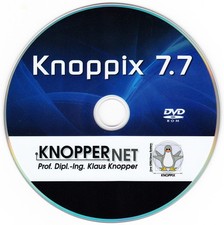
KNOPPIX USB DVD OS , BEST OF ALL HIGHLY RECOMENDED
$11.99

Knoppix Live GNU Linux System 9.1 on Bootable CD / DVD / USB Flash Drive
$5.99
Knoppix Linux Bootable OS v8.6 "Original Live Operating System" 16G USB Stick
$20.85
Knoppix NSM 1.2
$8.00

VINTAGE SOFTWARE | KNOPPIX STD 0.1 (SECURITY TOOLS DISTRIBUTION)
$7.57
Knoppix Linux Bootable OS v8.6 "Original Live Operating System" 32G USB Stick
$21.42
Hamshack Live DVD-ROM
$7.00

Knoppix 5.0.1 ULTRA RARE Linux DVD - Linux Pro Extra August 2006
$33.98



 Reply With Quote