-
Senior Member
registered user
Report of (some kind of) progress with Debian Live
I am quite a bit relieved to report that I have managed to coerce Debian Live into working quite similarly to a Knoppix Poor Man's Install.
Which means that I can use it with some degree of efficiency.
I byte-copied the ISO image onto a USB stick, created an ext2 partition on the rest of that stick, and created a live-rw file image there with an ext2 file system on it. Did some installs on it, it worked quite fine under qemu-kvm (necessarily 64 bit version).
So far, so good, but what about Poor Man's installs? I copied the /live directory from the ISO file onto a FAT32 partition (/dev/sda1), and the live-rw file onto an ext3 partition (/dev/sda8 ). Then I created a /boot/deb760_live directory on my boot partition (here /dev/sda6), copied vmlinuz and initrd.img from the live-directory there, and modified old legacy grub's menu.lst with an entry for Debian Live:
Code:
title Debian 7.6 64 bits live sda1
root(hd0,5)
kernel  (hd0,5)/boot/deb760_live/vmlinuz boot=live config quiet splash  initrd=(hd0,5)/boot/deb760_live/initrd.img persistence  keyboard-layouts=no
initrd (hd0,5)/boot/deb760_live/initrd.img
And it worked! Debian complained it didn't find the persistence file at /dev/sda2 as it expected, but got around to mounting it from /dev/sda8 anyway. It passed by a file with the same name at /dev/sda1 - that's fine with me. Documentation says that several such files may be mounted, provided they are in separate directories and have different, compatible, mount points defined.
One of the great attractions with Knoppix is that you can always do a remastering from the version you use. Debian Live takes an almost diametrically opposite approach, making the creation of new images extremely simple, but with little interest in using them and remastering them - it seems to be more designed as a vehicle for Debian installs. We'll see how this works out.
The iso-hybrid image doesn't work on USB in many BIOSes, and unetbootin which is recommended as an alternative for creating bootable sticks, crashed for me. So I'll rather work around that, using Knoppix methods, I think.
 Posting Permissions
- You may not post new threads
- You may not post replies
- You may not post attachments
- You may not edit your posts
-
Forum Rules

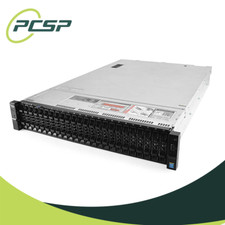
Dell PowerEdge R730XD 28 Core Server 2X Xeon E5-2680 V4 H730 32GB RAM No HDD
$378.93
Dell EMC PowerEdge R440 Xeon silver 4215 2.5GHz 16 GB ram 2x 550W PSU No HDD
$275.00
Dell Poweredge R630 2x Xeon E5-2680 v3 2.5ghz 24-Cores / 64gb / Raid / 2x 1Tb
$374.99
Dell Poweredge C4130 2x LGA2011-3 1U 4x GPU Rackmount Server CTO (NO CPU/NO RAM)
$299.95
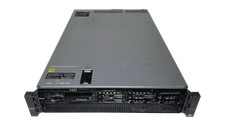
Dell Poweredge R810 4x Xeon X7560 2.26ghz 32-Cores | 256GB | 3x Trays | H700
$289.99
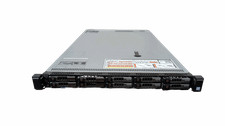
Dell Poweredge R630 2x Xeon E5-2680 v3 2.5ghz 24-Core | HBA330 | No RAM or HDD
$149.99

Dell PowerEdge C4130 1U AI GPU Server | 2x E5-2680 v3 | 32gb Ram | 2x 1600W
$409.99
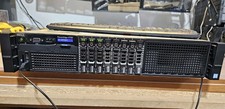
Dell PowerEdge R730 8 Bay Server 64Gb 1x80Gb SSD 3x900Gb SAS 2x12c v4CPU Proxmox
$620.00
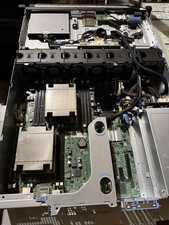
Dell PowerEdge R530 2x E5-2630v4 H330 iDRAC8 Port Card Riser No PSU/RAM/HDD
$99.99
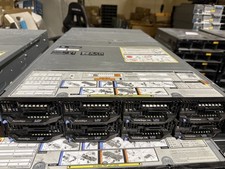
Dell PowerEdge FX2s + 8x FC430 Blades 16x E5-2630v4 160 Cores Rails No PSU/RAM
$699.00



 Reply With Quote