-
Senior Member
registered user
Some notes on overlays and instances
Debian-Live has a terrible way to handle overlays. All instances of live-rw encountered are sandwich-mounted together, even if the advertised label mechanism is used. So, basically, for safety one should use just one at a time, renaming the others.
How bad is this in practice? It turns out, it doesn't have to be that bad. With frequent remasterings, we don't really need much persistent storage for everyday use, and we can mount volumes to get what else we need.
Right now, I write this in a kvm window running Debian-Live without persistence in a Knoppix 7.0.5 host, with two other kvm instances simultaneously running from the same image, one with persistent store, the other without.
I run them with no modification, with the same command
Code:
kvm -m 1024 /dev/sda
to get the grub menu of the host, and I choose the same (!) alternative, Live-Debian without persistence, several times.
Under kvm, I mount and modify (different) disk partitions on the host. Typically, I can run one instance for database, another for application server (e.g. JBoss), and maybe a third for mailserver.
This is what I need to develop applications with realistic testing on just one machine.
While it was not possible to run kvm in the virtual machine, I could run VMware there..
Performance isn't hopeless, I may try remastering in a VM again.
There is a definite need for knoppification of several aspects of this live-version, but the need is not desperate.
-
Senior Member
registered user

Originally Posted by
Capricorny

Debian-Live has a terrible way to handle overlays. All instances of live-rw encountered are sandwich-mounted together, even if the advertised label mechanism is used. So, basically, for safety one should use just one at a time, renaming the others.
How bad is this in practice? It turns out, it doesn't have to be that bad. With frequent remasterings, we don't really need much persistent storage for everyday use, and we can mount volumes to get what else we need.
Have you decoded Debian-Live's minirt.gz?
-
Senior Member
registered user
Originally Posted by
utu
Have you decoded Debian-Live's minirt.gz?
Not so far this time around. I didn't like the init at all when working on a 64 bit version from the Knoppix side 3 years ago.
So, eventually, it may be knoppified, but it's not something I look forward to.
Obvious modifications are introductions of parameters fromhd, livedir and live-rw-dir.
I don't know if it is worthwhile to implement the full Knoppix overlay setup. Because there is a general mechanism in place to mount overlays on given mount points. Which in many ways is more precise.
-
Senior Member
registered user
Originally Posted by
Capricorny
Debian-Live has a terrible way to handle overlays.
Describing a process as 'bad' is not informative.
I suspect in this case, as in Knoppix's case, the process of combining
separate images is not bad, per se, but hazardous -unless cerain conditions are met.
I would like to know if in general one might find a working Debian-Live to
contain several squashfs images or devices that 'add-up' to a working
union of the expansions of these images. This should be obvious from the
decoded minirt.gz.
AFAIK, Klaus K has never issued any rules for combining images in Knoppix,
yet he continues to provide and use a latent capability to up to stack seven
additional images together in Knoppixes 6s & 7s.
I think the general rule in both Knoppix and Debian-Live might be that
so long as the expanded images do not land on the same locations with
different meanings, things will be ok. Segregating the information
contained onto separate devices may be one way to assure that the union
of expanded images will not be informationally corrupt.
I routinely make a read-only Knoppix 1 which contains all my /home tweaks
and all my added programs. My only current difficulty is in treating a
troublesome link which must be re-established after every new image is
added. This is without the precaution of providing /home its separate device.
Simplistically, adding things works ok, but removing things is problematic
in the union of expanded filesystem images.
I'd rather start with a CD-size iso and add things, 'cause all I need works really
well on 2 Gb SanDisk LiveUSBs. Now that 8 Gb Cruzers are so inexpensive,
I make DVD-size LiveUSBs and just add fewer things, but it's sure
wasteful bringing in a lot of stuff I never use, anyway.
I'm more interested in Debian-Live's live-build on-line capability to
define and create really tailor-made minimal isos. There's currently no
similar magic in Knoppix.
Last edited by utu; 11-25-2014 at 01:24 AM.
 Posting Permissions
- You may not post new threads
- You may not post replies
- You may not post attachments
- You may not edit your posts
-
Forum Rules

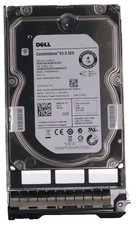
Dell 6P85J 4TB ST4000NM0063 7.2k 6Gb/s 3.5” SAS SED Hard Drive with Tray
$39.99
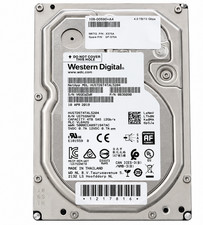
Western Digital HUS726T4TAL5204 4TB 7.2K SAS 12Gb/s 3.5" 512e HDD NetApp X375A
$64.00

Western Digital 1TB 3.5" SATA III 7200RPM Desktop Hard Drive
$34.99

DELL 2TB Enterprise HDD (7200RPM, 3.5", SATA III, 128MB Cache) HUS722T2TALA600
$49.95
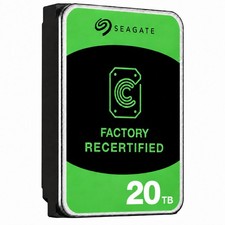
Seagate Exos ST20000NM003C 20TB CMR 7200RPM SATA6Gb/s 3.5" Enterprise Hard Drive
$509.99
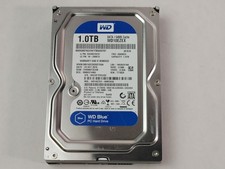
Western Digital WD Blue WD10EZEX 1 TB 3.5" SATA III Desktop Hard Drive
$23.99
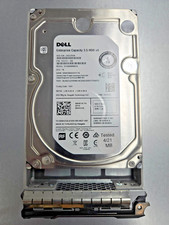
Dell ST6000NM0034 1HT27Z-150 NWCCG 6TB SAS 3.5 7.2K ENTERPRISE SERVER DRIVE
$68.99
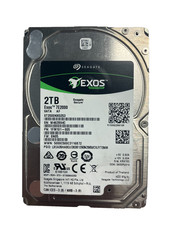
Seagate Exos ST2000NX0253 HDD 2TB SATA 7.2K 2.5" 512b/s
$55.00
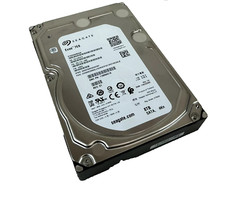
(ST8000NM0045) SEAGATE ENTERPRISE 8TB 7200RPM 4Kn SATA 6Gb/s 3.5" HARD DRIVE
$199.99
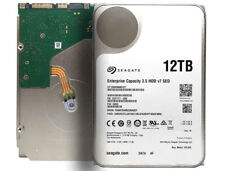
Seagate ST12000NM0127 12TB 256MB 7200RPM 3.5" SATA 6.0Gb/s Enterprise Hard Drive
$318.99



 Reply With Quote