-
Senior Member
registered user

Originally Posted by
ph349397
But why do I need 5 partitions? Why can't I just partition it like so:
/dev/hda1 primary NTFS wnixp 5G
/dev/hda2 primary linux swap 500MB
/dev/hda3 primary linux 3G
/dev/hda4 logical linux 4G
I guess I'm still not understanding the function of the "extended" partition. Would it be just another drive that I could store stuff on, and you described it as "extended" because the size of it would simply depend on how much space is left after the other partitions are defined?
Actually the extended partition doesn't hold anything except logical drives. In my example I list 5 partitions but there are only 4 that are actually available for use. You can't really do anything with #4. Besides- what about when you want to use the rest of the disc? Where are those partitions that you create going to go? Into partition #4 the extended partition.
-
well, i'm only planning on installing knoppix and that's it, so I don't have to worry about having an extended partition. Despite that, I'm confused as to why in your example you would designate the extended partition as /dev/hda4? Wouldn't it make more sense to have the extended partition be the last partition? What I'm saying is, instead of
/dev/hda1 primary NTFS wnixp 5G
/dev/hda2 primary linux swap 500MB
/dev/hda3 primary linux 3G
/dev/hda4 extended
/dev/hda5 logical linux 4G
wouldn't it make more sense to do it like this:
/dev/hda1 primary NTFS wnixp 5G
/dev/hda2 primary linux swap 500MB
/dev/hda3 primary linux 3G
/dev/hda4 logical linux 4G
/dev/hda5 extended
-
Senior Member
registered user
That's not how it works. The extended partition is ALWAYS number 4. Even if you only made 2 primary partitions and an extended partition the extended partition would still be number four. You have to put logical drives inside of the extended partition. All you need to do is make some partitions- you'll see it isn't that hard.
-
Senior Member
registered user
I would suggest a FAT primary partition(C:\) of 2-5G. This can be very useful for passing back and forth data. FAT is the format almost all OS can understand. Beside, it is easier to find a copy of bootable DOS(!) which can be used to fix things stored on FAT like the BOOT.INI, or GRUB's menu.lst etc.
Similar Threads
-
By Anna in forum The Lounge
Replies: 12
Last Post: 06-10-2004, 11:09 AM
-
By stokesg in forum General Support
Replies: 7
Last Post: 05-05-2004, 11:44 AM
-
By Pater in forum Tips and Tricks
Replies: 1
Last Post: 04-02-2004, 06:25 PM
-
By Tortoise in forum Hdd Install / Debian / Apt
Replies: 10
Last Post: 05-23-2003, 02:31 AM
-
By monkymind in forum General Support
Replies: 3
Last Post: 05-03-2003, 04:22 AM
 Posting Permissions
- You may not post new threads
- You may not post replies
- You may not post attachments
- You may not edit your posts
-
Forum Rules

SK Hynix 1TB PC801 M.2 NVMe PCIe Gen4x4 2280 SSD
$100.00
Samsung 2.5" 870 EVO SSD SATA III 250GB 500GB 1TB Internet Solid State Drive Lot
$60.00
External SSD 1TB 2TB 4TB Portable Hard Drive USB 3.0 Type-C High Speed PC Mac
$19.99
Dell Latitude 14" Laptop Computer Intel i5 Up To 32GB RAM 1TB SSD Windows 11 Pro
$545.25
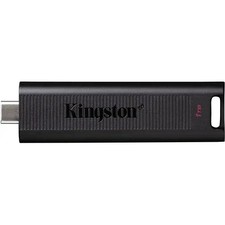
1TB Kingston DataTraveler Max DTMAX/1TB USB Type-C Flash Drive
$86.95
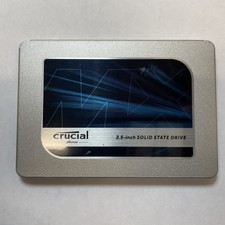
Crucial MX500 1TB 2.5" SATA III Internal SSD CT1000MX500SSD1
$99.99

SAMSUNG T7 Portable SSD 1TB Indigo Blue USB 3.2 Gen2 External MU-PC1T0H/AM
$159.99
Acer Predator Helios Neo 16S AI 16" i9 275HX 2S RTX 5070 Ti 32GB 1TB SSD Refurb
$1746.47

Seagate Desktop 1TB/1000GB SATA 3.5" HDD Hard Drive
$29.99

External Solid State Drive USB 3.2 Gen2, 1TB SSD External Hard Drive with C to A
$100.00



 Reply With Quote