

 Reply With Quote
No, essentially you only need to do it in extremely rare circumstances. As a rule, you're far better off leaving Linux filesystems to take care of themselves: if any action is needed, the system will post a warning.


I've been running Knoppix off my hard disk for nearly a month now. I'm wondering if I need to run a defragmenter on my hard disk (used to do this every month on Windows). I've found a tool that defragments ext2 drives, but my drive is formatted using ReiserFS.
I've done some web searching and come up with nothing really useful. Could anyone help?
No, essentially you only need to do it in extremely rare circumstances. As a rule, you're far better off leaving Linux filesystems to take care of themselves: if any action is needed, the system will post a warning.
But when you have a warning, what command to you have to use to defragment?
Is there any software that are available in the KDE evironment? Or are they all text based?
Ludo
After reading more about ReiserFS from http://www.namesys.com, I think it doesn't need to be defragmented. The following quote from the article
The way I understand it, because it uses balanced trees, file fragmentation should rarely occur. Fragmentation is where parts of a file are scattered over the harddisk. IIRC, an NTFS/FAT drive needs to be defragmented because it uses a table to store the locations of file fragments. Because of the way balanced trees work (look up a good book on programming algorithms on this), it reorders (i.e. reposition) file fragments each time a new file is added, preventing/minimizing fragmentation. That's why it mentions that people thought that balanced trees in filesystems would be slow.ReiserFS is based on fast balanced trees. Balanced trees are more robust in their performance, and are a more sophisticated algorithmic foundation for a filesystem. When we started our project, there was a consensus in the industry that balanced trees were too slow for filesystem usage patterns. We proved that if you just do them right they are better. We have fewer worst case performance scenarios than other filesystems and generally better overall performance. If you put 100,000 files in one directory, we think its fine; many other filesystems try to tell you that you are wrong to want to do it.
In short, you won't need to defragment. Cool.
GOSH, I was not thinking such thing was possibleOriginally Posted by Viro
I still have lots of things to discover about computers! eheh
But that's good if we do not need to defragment!
Ludo
 Posting Permissions

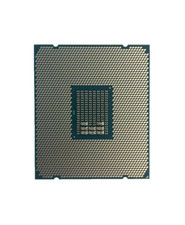
INTEL XEON E5-2680V4 SR2N7 2.40GHZ CPU
$11.00
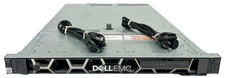
Dell EMC PowerEdge R440 Xeon silver 4215 2.5GHz 16 GB ram 2x 550W PSU No HDD
$275.00

Dell Precision Tower 7810 Xeon E5-2630 v3 @ 2.40GHz , 32GB Ram, NO HDD, NO OS
$239.99
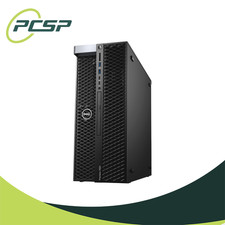
Dell Precision T7820 2x Xeon Silver 4114 2.20GHz 950W No RAM GPU HDD 4x SATA
$350.48
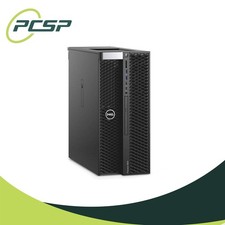
Dell Precision T5820 Workstation 3.70GHz W-2135 No RAM/ GPU/ HDD/ OS
$179.98
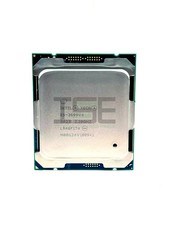
Intel Xeon E5-2699 V4 2.20GHz 55M 22-CORES LGA2011-3 Server Processor 145W SR2JS
$84.49
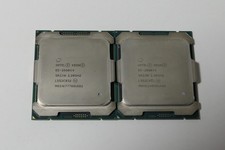
Matched Pair _ Intel Xeon E5-2698 V4 2.2GHz 20-Core Processor CPU LGA2011 SR2JW
$94.99
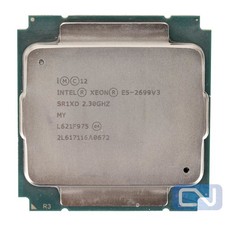
Intel Xeon E5-2699 v3 18 Core 2.3 GHz 45MB SR1XD LGA 2011-3 B Grade
$15.95
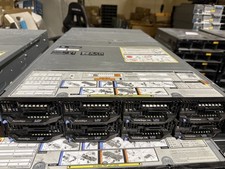
Dell PowerEdge FX2s + 8x FC430 Blades 16x E5-2630v4 160 Cores Rails No PSU/RAM
$699.00
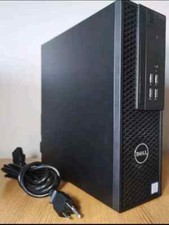
DELL Precision T3420 | Xeon 1240v6 | 525GB SSD |16GB RAM |Nvidia GPU |Win11
$149.00
