

 Reply With Quote
TO BIG! but maybe....


Why not Knoppix as a "boot from" selection in the BIOS?
This would be a PC that couldnt crash.
Bill Gates would sue!
TO BIG! but maybe....
Salve Earl Gibbs,
visit:
http://www.linuxbios.org
And try to fork a linuxbios with an option to boot Knoppix via
Internet/Intranet
*
rob
GeneralWhat is LinuxBIOS?
LinuxBIOS aims to replace the normal BIOS found on PCs, Alphas, and other machines with a Linux kernel that can boot Linux from a cold start. LinuxBIOS is primarily Linux - about 10 lines of patches to the current Linux kernel. Additionally, the startup code - about 500 lines of assembly and 5000 lines of C - executes 16 instructions to get into 32-bit mode and then performs DRAM and other hardware initialization required before Linux can take over.
Our primary motivation for the project was maintenance of large clusters, but not surprisingly interest and contributions have come from people with varying backgrounds. Why do we need LinuxBIOS?
Current PCs used as cluster nodes depend on a vendor-supplied BIOS for booting. The BIOS in turn relies on inherently unreliable devices such as floppy disks and hard drives to boot the operating system. In addition, current BIOS software is unable to accommodate non-standard hardware making it difficult to support experimental work. The BIOS is slow and often erroneous and redundant and, most importantly, maintenance is a nightmare. Imagine walking around with a keyboard and monitor to every one of the 128 nodes in a cluster to change one BIOS setting.
The LinuxBIOS gunzip's the Linux kernel straight out of NVRAM and essentially requires no moving parts other than the fan. It does a minimal amount of hardware initialization before jumping to the kernel start and lets Linux do the rest. As a result, it is much faster (current record 3 seconds), which has sparked interest in the consumer electronics community as well. Moreover, updates can be performed over the network.
Using a real operating system to boot another operating system provides much greater flexibility than using a simple netboot program or the BIOS. Because Linux is the boot mechanism, it can boot over standard Ethernet or over other interconnects such as Myrinet, Quadrics, or SCI. It can use SSH connections to load the kernel, or it can use the InterMezzo caching file system or traditional NFS. Cluster nodes can be as simple as they need to be - perhaps as simple as a CPU and memory, no disk, no floppy, and no file system. The nodes will be much less autonomous thus making them easier to maintain.
if you dont mind my saying so... THATS SOME COOL SHIT... k i feel better now
toast
 Posting Permissions

Samsung 2.5" 870 EVO SSD SATA III 250GB 500GB 1TB Internet Solid State Drive Lot
$100.00
Netac 2TB 1TB 512GB 256GB Internal SSD 2.5inch SATAIII Solid State Drive lot
$549.00
Samsung 860 EVO 250GB SSD MZ-76E250 2.5" SATA III Solid State Drive -
$39.99
256GB SATA III 2.5" SSD Solid State Drive - High-Speed Storage Upgrade
$75.99
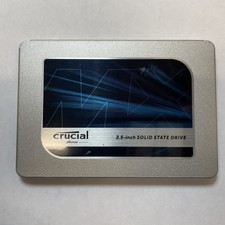
Crucial MX500 1TB 2.5" SATA III Internal SSD CT1000MX500SSD1
$99.99
Crucial MX500 250GB 2.5" SATA III SSD - Preowned
$29.00
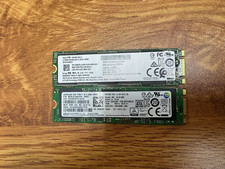
2 PACK 128 GB SSD M.2 2280 SATA Solid State Drive Major Brands, Samsung, LiteON
$28.00
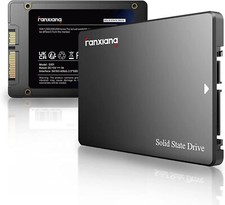
Fanxiang 1/2/5/10Pcs 2.5'' SATA SSD Lot 1TB 2TB 4TB 512GB 256GB TLC Internal SSD
$129.99

SSD 880EVO SATA III 2.5 4TB INTERNAL SOLID STATE DRIVE
$189.99
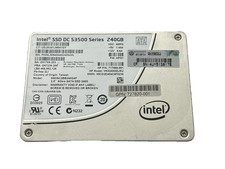
Intel Solid-State Drive DC S3500 Series 240GB Internal 2.5" (SSDSC2BB240G4P) SSD
$29.99
