-
Senior Member
registered user

Originally Posted by
vladx
l
Code:
vga=791
# /etc/lilo.conf - See: `lilo(8)' and `lilo.conf(5)',
# ---------------       `install-mbr(8)', `/usr/share/doc/lilo/',
#                       and `/usr/share/doc/mbr/'.

# +---------------------------------------------------------------+
# |                        !! Reminder !!                         |
# |                                                               |
# | Don't forget to run `lilo' after you make changes to this     |
# | conffile, `/boot/bootmess.txt', or install a new kernel.  The |
# | computer will most likely fail to boot if a kernel-image      |
# | post-install script or you don't remember to run `lilo'.      |
# |                                                               |
# +---------------------------------------------------------------+

# Support LBA for large hard disks.
#
lba32

# Overrides the default mapping between harddisk names and the BIOS'
# harddisk order. Use with caution.
#disk=/dev/hde
#    bios=0x81

#disk=/dev/sda
#    bios=0x80

# Specifies the boot device.  This is where Lilo installs its boot
# block.  It can be either a partition, or the raw device, in which
# case it installs in the MBR, and will overwrite the current MBR.
#
boot=/dev/hda

# Specifies the device that should be mounted as root. (`/')
#
root=/dev/hda2

# Enable map compaction:
# Tries to merge read requests for adjacent sectors into a single
# read request. This drastically reduces load time and keeps the
# map smaller.  Using `compact' is especially recommended when
# booting from a floppy disk.  It is disabled here by default
# because it doesn't always work.
#
# compact

# Installs the specified file as the new boot sector
# You have the choice between: bmp, compat, menu and text
# Look in /boot/ and in lilo.conf(5) manpage for details
#
install=/boot/boot-menu.b

# Specifies the location of the map file
#
map=/boot/map

# You can set a password here, and uncomment the `restricted' lines
# in the image definitions below to make it so that a password must
# be typed to boot anything but a default configuration.  If a
# command line is given, other than one specified by an `append'
# statement in `lilo.conf', the password will be required, but a
# standard default boot will not require one.
#
# This will, for instance, prevent anyone with access to the
# console from booting with something like `Linux init=/bin/sh',
# and thus becoming `root' without proper authorization.
#
# Note that if you really need this type of security, you will
# likely also want to use `install-mbr' to reconfigure the MBR
# program, as well as set up your BIOS to disallow booting from
# removable disk or CD-ROM, then put a password on getting into the
# BIOS configuration as well.  Please RTFM `install-mbr(8)'.
#
# password=tatercounter2000

# Specifies the number of deciseconds (0.1 seconds) LILO should
# wait before booting the first image.
#
delay=20

# You can put a customized boot message up if you like.  If you use
# `prompt', and this computer may need to reboot unattended, you
# must specify a `timeout', or it will sit there forever waiting
# for a keypress.  `single-key' goes with the `alias' lines in the
# `image' configurations below.  eg: You can press `1' to boot
# `Linux', `2' to boot `LinuxOLD', if you uncomment the `alias'.
#
# message=/boot/bootmess.txt
prompt
timeout=150
#	prompt
#	single-key
#	delay=100
#	timeout=100

# Kernel command line options that apply to all installed images go
# here.  See: The `boot-prompt-HOWO' and `kernel-parameters.txt' in
# the Linux kernel `Documentation' directory.
#
# append=""
append="hda=scsi hdb=scsi hdc=scsi hdd=scsi hde=scsi hdf=scsi hdg=scsi hdh=scsi apm=power-off nomce"

# Boot up Linux by default.
#
default=Linux

image=/boot/vmlinuz-2.4.22-xfs
	label=Fail-Safe
	initrd=/boot/initrd.gz
	read-only
#	restricted
#	alias=1

image=/boot/vmlinuz-2.4.22-xfs-test
        label=Knoppix
        read-only

image=/vmlinuz.old
	label=LinuxOLD
	read-only
	optional
#	restricted
#	alias=2

# If you have another OS on this machine to boot, you can uncomment the
# following lines, changing the device name on the `other' line to
# where your other OS' partition is.
#
# other=/dev/hda4
#	label=HURD
#	restricted
#	alias=3
other=/dev/hda1
  label="WinNT(hda1)"
root@navigator:~# ls -ltr /vmlinuz*
lrwxrwxrwx 1 root root 23 Nov 17 10:36 /vmlinuz -> boot/vmlinuz -2.4.22-xfs
root@navigator:~# ls -ltr /boot/vmlinuz*
-rw-r--r-- 1 root root 921593 Oct 3 21:01 /boot/vmlinuz-2.4.22-xfs
lrwxrwxrwx 1 root root 18 Nov 17 10:23 /boot/vmlinuz.old -> vml inuz-2.4.22-xfs
-rw-r--r-- 1 root root 970618 Nov 17 13:31 /boot/vmlinuz-2.4.22-xfs -test
lrwxrwxrwx 1 root root 23 Nov 17 13:31 /boot/vmlinuz -> vmlinuz -2.4.22-xfs-test
root@navigator:~#
But in the boot lilo menu only Linux and WinNT(hda1)
You have the symbolic links wrong and with the errors lilo will ignore the entries with them and not display them in the menu. This is how I have set it up on my computer:
Code:
HappyTux:/home/stephen# ll /vmlinuz*
lrwxrwxrwx    1 root     root           26 2003-10-20 04:56 /vmlinuz -> boot/vmlinuz-2.4.22.031019
lrwxrwxrwx    1 root     root           35 2003-08-29 02:36 /vmlinuz.failsafe -> /boot/vmlinuz-2.4.20-bf2.4-failsafe
lrwxrwxrwx    1 root     root           26 2003-09-15 03:38 /vmlinuz.old -> boot/vmlinuz-2.4.22.030915

HappyTux:/home/stephen# ll /boot/vmlinuz-2.4.2*
-rw-r--r--    1 root     root         1.3M 2003-08-29 02:31 /boot/vmlinuz-2.4.20-bf2.4-failsafe
-rw-r--r--    1 root     root         993K 2003-09-15 03:24 /boot/vmlinuz-2.4.22.030915
-rw-r--r--    1 root     root         973K 2003-10-19 23:18 /boot/vmlinuz-2.4.22.031019
The /etc/lilo.conf entries:
Code:
# Boot up Linux by default.
#
default=Linux

image=/vmlinuz
        label=Linux
        read-only
#       restricted
#       alias=1

image=/vmlinuz.old
        label=LinuxOLD
        read-only
        optional
#       restricted
#       alias=2

image=/vmlinuz.failsafe
        label=LinuxFailsafe
        read-only
        optional

# If you have another OS on this machine to boot, you can uncomment the
# following lines, changing the device name on the `other' line to
# where your other OS' partition is.
#
other=/dev/hdb
        label=KDE_CVS
#       restricted
#       alias=3
BTW how did you compile the new kernel it looks like you did not use the Debian method with the kernel-package program it will make a .deb package that you can install and it will take care of all this trouble you are having with updating the lilo.conf and making the correct symbolic links. A guide to creating a custom Debian package with the kernel-package tool. And now that I look at the posts again I see that when you have run /sbin/lilo after having made the changes you did to the lilo.conf it errored because you have no label=Linux entry left in the file so it is still using the old configuration written to the MBR. You need to fix the links and clean up the lilo.conf if you are not going to use a Linux entry as the default=Linux then you have to change it to the name of the label=of_image_you_want_to_use in the sections below it.
Similar Threads
-
By whoeverheis in forum Hdd Install / Debian / Apt
Replies: 2
Last Post: 03-25-2005, 07:13 PM
-
By tomjermy in forum Hardware & Booting
Replies: 1
Last Post: 03-17-2005, 01:07 AM
-
By emartinson in forum Hdd Install / Debian / Apt
Replies: 2
Last Post: 06-21-2004, 04:22 AM
-
By JockVSJock in forum General Support
Replies: 7
Last Post: 04-09-2004, 10:42 AM
-
By sminotti in forum Hdd Install / Debian / Apt
Replies: 5
Last Post: 08-04-2003, 03:59 AM
 Posting Permissions
- You may not post new threads
- You may not post replies
- You may not post attachments
- You may not edit your posts
-
Forum Rules

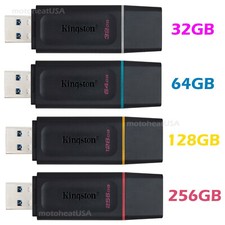
Kingston 32GB 64GB 128GB 256GB USB 3.0 Flash Drive Thumb Memory Stick Pen lot
$285.90

SK Hynix 32GB 4Rx4 PC4-2133P-LD0-10 HMA84GL7MMR4N-TF TD DDR4 Server Memory RAM
$110.00

TF/SD Card Adapter Camera Reader Android Type-c For iPhone17 Pro Max Plusm lot
$573.98

Micron MTC40F2046S1RC48BA1 DDR5 64GB (1x64GB) 4800MHz RDIMM ECC Server Memory
$2599.99

Lot Of 16 X 16GB ECC DIMM Server Memory SK Hynix HMA42GR7MFR4N-TF PC4-17000 DDR4
$800.00
Intel Optane NMA1XXD128GPS DDR4 2666 4Rx4 ECC 128GB Server Ram
$80.00

USB 3.0 Micro SD SDHC TF Card Reader Memory Adapter for PC Laptop Camera lot
$3.75
Cisco 64GB DDR4 ECC Registered RDIMM 288-Pin PC4-2400T UCS-ML-1X644RV-A
$265.00

Lot Of 50 8GB DDR4 RAM PC4-2666V-UA2 DIMM Desktop Memory Mixed Brands TESTED
$1750.00
LOT OF 30 8GB 2Rx4 PC3L-10600R-9-11-E2 MT36KSF1G72PZ-1G4M1FF DDR3 Server RAM
$274.99



 Reply With Quote