

 Reply With Quote
It really depends on what linux distribution you go with. Mandrake is nice and friendly for newbies (from what I hear, I dont have any linux "yet")
Ask around, and check back here.


Hello everyone,
I wish to understand Linux a bit more than just superficially.
At this point (being so *new* to Linux) the whole thing looks like a random scrampbling of files put together in every which way, with numerous configuration files thrown randomly into the mix and a network of dependencies that look like an old box of cassettes with their tape unwound, tangled and chewed out...
Are there any concise introductions/instructions anywhere (on the net or in Books) that explain the overal paradigm of the Linux OS (I am tired of coping peoples command-line snippets without knowing what they mean)?
P.S. I am not looking for a 2000page "door-stop" type of book, just something (a graphical map maybe) quick to click me into the "groove".
Thanks
It really depends on what linux distribution you go with. Mandrake is nice and friendly for newbies (from what I hear, I dont have any linux "yet")
Ask around, and check back here.
I also want to understand Linux more.
I'm going to order this book. I hope it helps.
http://www.amazon.com/exec/obidos/tg/detail/-/0321159985/103-7446593-4578247[/url]
Spydie,
I HAVE the book you speak of...
I got it directly from our (local) bookstore, cost of 35 USD, so, the price from Amizon is EXTREMELY competitive.
I have used it, read through many chapters, and is VERY easy to follow.
The book takes things as a noob, even before someone has used Windows, but does GLEEM when it comes to information specific to Linux. Like, Installations from Mandrake, Red Hat, and even comes with a (customized) version of Knoppix Live CD. It looks at custimizations of the Desktop, Users, protection, and has lots of links for web downloads - software for kids, entertainment/action/card/role playing/etc... games. I am constantly looking into for information when I am stumped. It suggests security issues, and other things.
Good purchase, IMHO,
Cuddles
Google Linux is a good place to start enter the keywords "linux newbie" and it should come up with thousands of links just checked about 273,000. This site has a few Debian specfic pages http://newbiedoc.sourceforge.net/Originally Posted by massai
Does this book give a good snapshot of the Linux infrastructure/architecture ?I HAVE the book you speak of...
I got it directly from our (local) bookstore, cost of 35 USD, so, the price from Amizon is EXTREMELY competitive.
I have used it, read through many chapters, and is VERY easy to follow.
Will it explain the Linux paradigm?
As for example:
-Why is it using config files all over instead of a registry,
-how are these files being accessed, why and when.
-What command lines are available,
-what is the structure of the file system.
-What are considered devices,
-what are considered modules.
-What is KDE, what files are related to KDE, how can it be updated or uninstalled.
-What is the core Kernel, where is it, how can it be updated,
-What scripting languages does Linux understand..
...and so on and so forth....
but I would like this information in a summary form !!
Like someone opening the hood of a Corvette taking a snapshot of the engine giving me a schematic (the shop manual) and labeling the components for me (but do not go into so much detail as to the theory of internal combastion engines)
I do have some background in C, C++, VisualBasic, Unix (but I am not a guru, meaning that I have taken a couple of courses from each a while back but, by far, I am *not* a computer major)
I found this web page helpful.
http://newbiedoc.sourceforge.net/tut...n#KERNEL-GLOSS
I will be picking up my copy of "Moving to Linux:" in the morning.
I was going to order it online, but I called around and found a copy at a store that is not to far away.
I can't wait to start reading it
Hi everyone,
After devoting an entire afternoon on this subject; (spending a few hours in the bookstore as well as browsing online tutorial sites) trying to seperate the wheat from the chaff, I came up with the following sources that I would like to start with.
Websites:
http://www.tldp.org (The Linux Documentation Project)
http://www.linux.org/lessons/beginner/toc.html This beginner guide is not bad (I am half way through it) and they also have an intermediate guide I see)
Books:
After skimming numerous books at the store I came to the conclusion that the O'Reilly books are the most comprehensive (without being excessive).
Particularly I liked the: "Running Linux" http://www.oreilly.com/catalog/runux4/. This book is not too superficial, but it is not overwhealming either (this is probably exactly what I was looking for)
"Moving to Linux" (as some people suggested) was ok, but it approaches things mostly from the GUI standpoint. It offers some neat tricks but lacks the depth that I am looking for. As for example, I remeber, when setting my printer I run into problems and had to use "http:localhost:631" to make a working setup. In this case (and some others) this book wouldn't help me. Having said that, I do think it is very good/helpful at explaining the Linux GUI.
Verdict
A combination of the two books (above) as well as the websites will be it for me !!!
Many Thanks to all for your suggestions.
massai,
Great find, I'm glad you posted the links to the web sites you found.
The book "Running Linux" also looks like it would be very helpful.
Thanks!
--The Windows Registry is a flaming NIGHTMARE, you need to have special utilities like Norton to keep it from getting out of control. Give me good old straight-text config files every day. Having config files means you can run scripts on them to find things, modify things, etc. and you can use Any Old Text Editor (I use jstar) to make your changes.
--Most config files are in /etc. A lot of them also have man pages. For instance ' man fstab '. Configuration files are a lot like .ini files in Windoze, or perhaps more like config.sys and autoexec.bat. A given program will access its files in /etc as it's starting up, but some programs (like init) can be told to re-access their config files if you've made changes.
--What command lines are available... What do you mean? There are different types of "command.com" equivalents such as bash, zsh, pdksh, stuff like that. If you want a list of command-line examples then visit my homepage (the "WWW" link at the bottom of this post.)
--Structure of the filesystem: ' man hier '
--Devices are similar to what's in DOS but with more complexity (like permissions) and are usually found in /dev. For instance, /dev/hda is your primary hard drive (IDE 1, master) - /dev/hdb is (IDE 1, slave); /dev/null is equivalent to NUL in DOS. In Linux, "everything is a file" so you can read from it, talk to it, ad infinitum.
--Modules are device drivers, that connect the files in /dev/ to specific hardware and allow communication. Sometimes you need to recompile your kernel to add functionality as new devices / fixes to drivers come out.
--The Kernel is the OS. Usually the binary is located in /boot, the source code is usually in /usr/src/linux. The Kernel sets up devices and defines the structure of how things look and talk to each other. You can look at what your kernel did during boot by entering ' dmesg | less '.
--Linux understands a whole bunch of languages like Python, Perl, C, C++, REXX, you name it we prolly got it. There are a bunch of Linux books available at http://oreilly.com/
--Root == GodMode, you can do ANYTHING. Root is what you need to be when doing System Maintenance. Be very careful when root. For stuff like deleting files, I use ' mc ' and have not trashed a filesystem yet (well there was that one time with DD, but that's a different story.)
--MY advice:
o Google is your friend
o Go to my Linuxtips page, print it out, study it and try out the commands
o Buy / borrow books about what you're interested in (also check your local library)
o Find a Linux Guru in your area and pay / barter with him to train you (Some like $$, some like Doritos and Mountain Dew)
 Posting Permissions

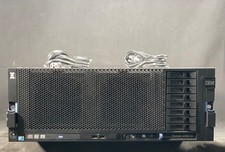
IBM System X3850-X5 Server w/4x Intel Xeon E7-4870 CPU , 512 GB DDR3 RAM,NO HDD
$1299.99
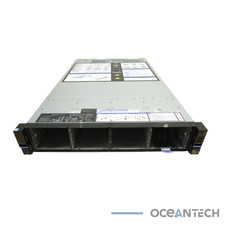
IBM QRadar xx29 2x Xeon E5-2650v4 2x 900W PSU M5120 12x 3.5" Bay Server No RAM
$149.99
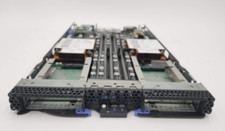
IBM ADP Server Type 7870 AC1 NO HDD | 128GB RAM PC3L | 2 x Xeon E5620
$199.99

Unused IBM 09P0037 MAINBOARD For RS/6000 7044-170 P-Series
$375.00
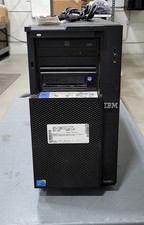
IBM SYSTEM X3500 M3 SERVER 7380AC1 TOWER Server XEON E5620 8GB RAID SEE NOTES
$108.92
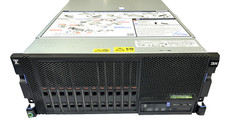
IBM Power S824 12Bay 4U Server - 2x Power8 CPU, 512GB DDR4, MT: 8286-42A
$1731.00

IBM X3650 M5 5462-AC1,2 X E5-2640V3 2.6GHZ 8C, 16 GB, DUAL 750W, 2 X 1TB SERVER
$349.99
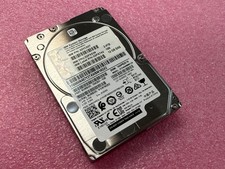
IBM 02YC027 Seagate ST2400MM0129 2.4TB 10K SAS 12Gb/s 2.5" Server Hard Drive
$200.00
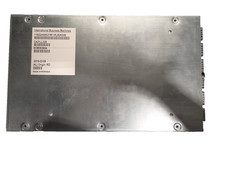
IBM 02AN553 01LL325 IBM I/OADAPTER PCIe / PCN Internal Server Systems Adapter
$199.99
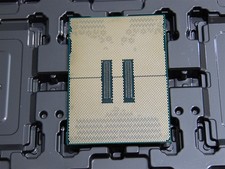
DELL POWEREDGE HP IBM SERVER XEON GOLD 5415+ 8 CORE PROCESSOR 2.9 GHZ SRMGC
$1299.00
