-
Senior Member
registered user
Re: Knoppix 3.3 - HDD Install - Autodetect gone???

Originally Posted by
Cuddles
As subject suggests, I installed Knoppix 3.3 on my system, to a 40gig HD, onboard video card.
I had a lot of problems with memory issues, and finally think we have all 512meg RAM working as it should.
During this testing, we attempted to test boot with a monitor that is far less capable then my monitor at home. The hardware tech only could handle a high resolution of 800x600, or possibly 1024x768 - whereas, my monitor at home takes the full resolution of something like 16xx something. What we had problems with was when he tried to get Linux to boot, with his monitor, it would go out-of-sync, or get sync lines across the screen, making visable testing imposible.
First Question: When doing testing like this at the h/w tech's, how can one drop resolution to lower values, when LILO just fires off Linux, and never gives you a chance to do anything? It appears the boot is working fine, just get sync problems when I think we go into XServer.
In an attempt to get one of his monitors working, we tried putting in a secondary video card, one from TNT, GForce, etc... The on-mother-board video card is very poor in arcade games, so I wanted to upgrade the video card, but, for the life of both of us, we could never get the AGP video cards to sync, or even show login screens when coming into XServer, even with my monitor.
Even without a prompt display (lilo screen) there should be a delay of a couple of seconds when it first starts to boot after it goes through the BIOS check where you can press the CAPS, SHIFT or ALT key (I think there a couple of more keys as well) that will interupt the boot process and give you a boot: prompt where you would have been able to type in Linux single which would have booted you to the single user recover mode. You would not have booted the X server just to a command prompt at the console and you would be root without even typing in the password this is unless you have changed the lilo configuration to require a password to do this. To have gotten X to work with the new monitor you should have edited your XF86Config-4 after having booted to the single user recover mode and put in the proper HorizSync and VertRefresh values for the spare monitor and then used init 5 to take you to run level 5 with the X server running and it should have worked fine.
For your problems with the second card being put in and trying to use your monitor the are a couple of things that you could have checked. In your BIOS there should have been a setting to disable the onboard video and this should have been done on the first boot after having put the card in. There are also other settings (in my BIOS at least) which control the checking of the cards as to which to boot as your primary display ( I have the option of PCI or AGP) which may have allowed you to leave the onboard enabled while booting to the temporary AGP you had put in and finially you would have had to change the "Driver" section in the XF86Config-4 to change the driver being used to from the onboard to the "nv" for the card(s) you put in while testing or "vesa" that could have been used for any generic VESA 2.0 compliant card (which is almost every card made these days) and X should have started.
Question #2: I thought Knoppix was better than Debian because it always does a auto-detect every time it boots? Appears this isn't the case. How can one upgrade hardware? Don't tell me I have to go through another HD Install to get new hardware to run? I was about to buy a newer, more capable, video card to run as the main video card, but we could never get Knoppix to work with one, and we tried about half a dozen of them.
Solutions to these would be incredibly helpful, if not for the answer, for the ability to upgrade this video card to something than can play Chomium at least

Thanks for any help,
Cuddles
When Knoppix is installed to the HD the script tries to get it back as close as possible to the "standard" Debian install therefore the auto-detect is removed. To achive close to the same in Debian IIRC the packges that need to be install are discover, read-edid and hwdata. These should not be necessary however for something as simple as putting in a new video card (unless you go bleeding edge then good luck with the drivers) the steps to put a new one in would be either having done so before shutting down the computer or by booting and letting the X server fail, you would change the driver being used for the card to the correct module for the card in the XF86Config-4 and got the proper settings in the BIOS for the card to be used as primary device on the boot. In the case of editing before shutdown and booting with the proper settings in the BIOS it should just boot straight to X no problems, in the case of getting the proper settings in the BIOS and letting the X server fail on the boot then you still have to edit the config file for the module and then /etc/init.d/kdm restart and the X server should start.
A little extra on the best way to buy hardware for Linux is get the last years best thing since sliced bread never buy the latest and "greatest" unless you know for a fact that you can get the proper driver. This has nice side effect of getting you hardware that is more than powerful enough to run on Linux dirt cheap in the clearout sales and most likely supported with proper drivers while at the same time you check and make sure that you can get the latest firmware to solve the inevitable problems that there always are with new hardware.
[edit]
Left out part of the xserver failing, when it does the CTRL + ALT + F1 key will take you to the first console where you can login as regular user and then use su to become root and make the changes and restart kdm.
[/edit]
Similar Threads
-
By m in forum Hardware & Booting
Replies: 0
Last Post: 02-04-2005, 06:45 PM
-
By Overand in forum Hdd Install / Debian / Apt
Replies: 0
Last Post: 01-26-2005, 08:17 AM
-
By Cuddles in forum General Support
Replies: 31
Last Post: 02-03-2004, 03:57 AM
-
By sqrl in forum The Lounge
Replies: 2
Last Post: 07-13-2003, 08:28 PM
-
By koolmoose in forum Hardware & Booting
Replies: 1
Last Post: 04-19-2003, 01:05 PM
 Posting Permissions
- You may not post new threads
- You may not post replies
- You may not post attachments
- You may not edit your posts
-
Forum Rules

Dell PERC H755 3KDWX 8GB 12Gb SAS RAID Controller With Battery & Cables
$949.99
Broadcom 9600-24i RAID Controller PCIe Gen 4.1 Tri-Mode NEW 05-50111-01004
$649.99
EMC KTN-SL3 15-Bay Disk Array Enclosure w/2x 303-108-000E Cards, Dual PSU,No HDD
$239.99
Intel VROC Premium RAID Controller Card PCIe Add-On Module VROCPREMMOD
$265.00
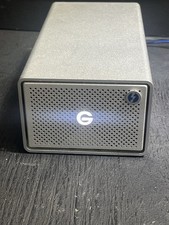
G-Technology G-RAID 24TB Dual-Drive External HDD TB3 USB 3.1 7200RPM Silver
$299.99
MegaRAID 9580-8i8e 16-port 12G SAS/SATA/NVMe 8GB PCIe RAID - 05-50076-00
$1619.19
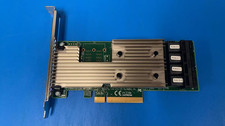
Broadcom LSI 9305-16i 12Gbps SAS-3 PCIe x8 HBA 16-Ports Raid Controller
$64.99
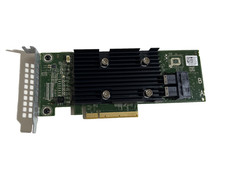
Dell PowerEdge HBA330 LP PCI-E 12GBs RAID SAS Controller Adapter J7TNV
$18.95
Areca ARC-1882IX-24 (16i4e)24-Port RAID Controller Card w/BBU /HDD Monitor Board
$300.00
Intel® Integrated RAID Mezzanine Module RMS3HC080 SAS/SATA H24093-204
$24.97



 Reply With Quote